


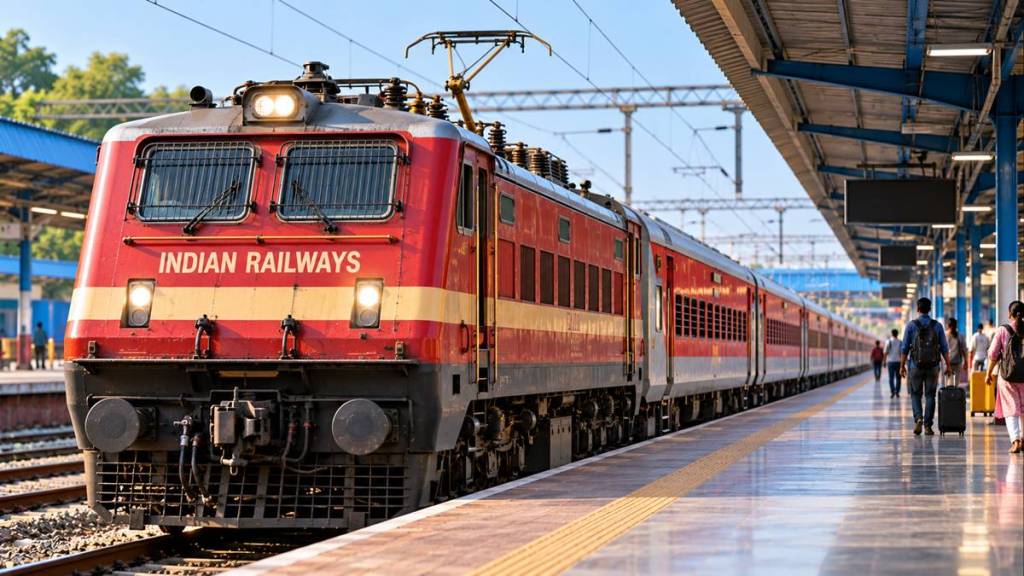

Growing competition among companies that transport goods by rail is making it harder for them to increase profits, even as more goods are moved by train, India Ratings and Research (Ind-Ra) said in a report. Companies are expanding their fleets and competing for customers, making it difficult to raise transport charges.
The rating agency is expecting rail freight volumes to grow by 8-10% annually between FY27 and FY29. However, higher volumes might not lead to a similar rise in profits as operators face pressure on prices and changes in the types of goods they carry.
Competition is increasing as private container train operators expand their fleets and offer more services to attract customers. The expansion of the recently completed western dedicated freight corridor (WDFC), which allows freight trains to move more efficiently, and the development of more railway terminals are expected to support growth. But better infrastructure alone is not going to guarantee higher profits.
“Full commercialisation of WDFC, increasing containerisation, and terminal expansion are expected to support rail freight volumes and operating efficiency. Nevertheless, operational efficiency and the ability to maximise laden and double-stack container movement will be important determinants of operating profitability,” Ind-Ra said.
The report’s concerns are particularly relevant to the container transport business, where private companies compete to move goods for domestic customers, exporters and importers. Rail transport also faces competition from road operators, particularly for shorter journeys and deliveries requiring greater flexibility.
Indian Railways carried about 1,670 million tonnes of freight in FY26. Of this, container traffic accounted for 93.69 million tonnes, or around 5.6% of the total market. Coal, iron ore, cement, fertilisers and steel account for much of the remaining freight.
The wider rail freight business includes several types of companies. Indian Railways transports bulk goods such as coal and iron ore in freight wagons. Container Corporation of India (CONCOR) and private operators run container trains carrying goods for businesses. Other logistics companies provide services such as warehousing, cargo handling and road transport to connect railway terminals with factories, ports and customers.
Ind-Ra has maintained a neutral outlook for the rail logistics sector and a stable rating outlook for FY27. “Credit differentiation will increasingly depend on route economics, terminal connectivity, asset utilisation, and liquidity strength, rather than sector growth alone,” the report said.
The agency said the financial strength of individual companies would increasingly depend on how efficiently they operate, the quality of their terminal connections and their ability to meet expenses.