


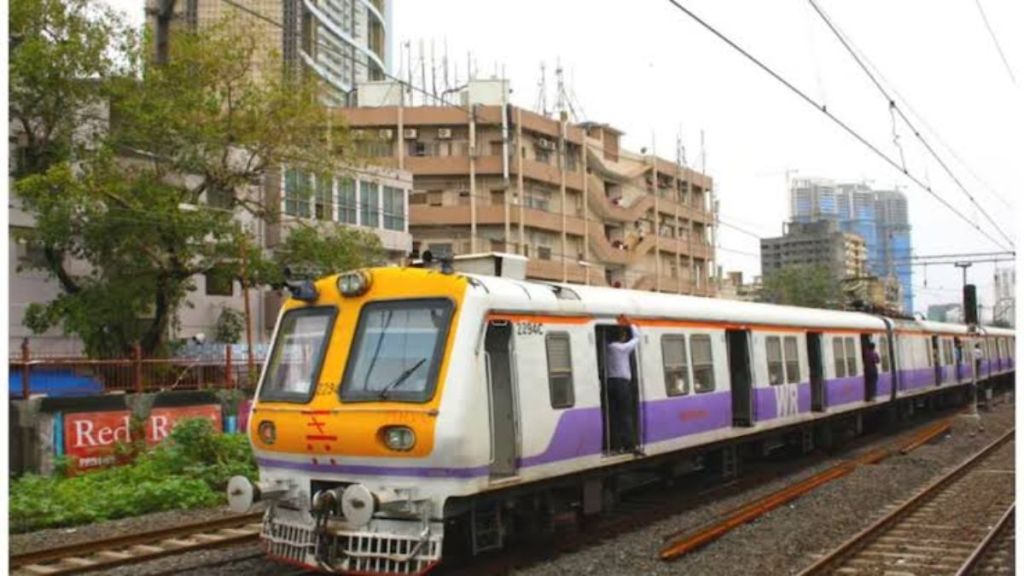

Mumbai’s suburban train services on the Central Railway network faced delays during the Monday morning rush hour after a wire was spotted hanging from the overhead equipment between Mulund and Thane stations, reported PTI.
Commuters on the Central Railway mainline reported delays of around 15 to 20 minutes, affecting services during the busy morning period.
According to PTI, Central Railway’s Chief Public Relations Officer Swapnil Nila said the “foreign wire” was detected at 9.23 am on the down slow line, at kilometre 31.146 from Chhatrapati Shivaji Maharaj Terminus (CSMT).
Following the discovery, Central Railway arranged an overhead equipment block at 10 am to carry out the necessary work, Nila said.
Central Railway mainline services affected
Mumbai’s suburban railway network is a key mode of transport for daily commuters. The Central Railway mainline runs from CSMT in south Mumbai to Kalyan in Thane district, where it divides into two routes. One corridor continues towards Kasara in Thane district, while the other extends to Khopoli in Raigad district.
The disruption came during the morning peak period, when a large number of passengers rely on local trains to reach workplaces and other destinations.
Central Railway books first molasses export consignment from Yeola
In a separate development, Central Railway recorded its first export freight movement to Bangladesh from Yeola Goods Shed, with a consignment of molasses dispatched to Benapole on October 23, 2026.
The shipment comprised 50 BTPN wagons carrying 2,714 tonnes of molasses. Booked by Shree Laxmi Exports, the consignment generated freight revenue of Rs 1.11 crore.
The indent for the shipment was registered on October 2, marking the start of a new international freight movement from the goods shed.
Yeola Goods Shed has traditionally handled onion and maize consignments. The addition of molasses exports is expected to broaden its freight traffic and support rail-based logistics for international trade.
Central Railway attributed the development to efforts by its Business Development Units to identify new freight opportunities and attract export-oriented cargo to the railway network.