


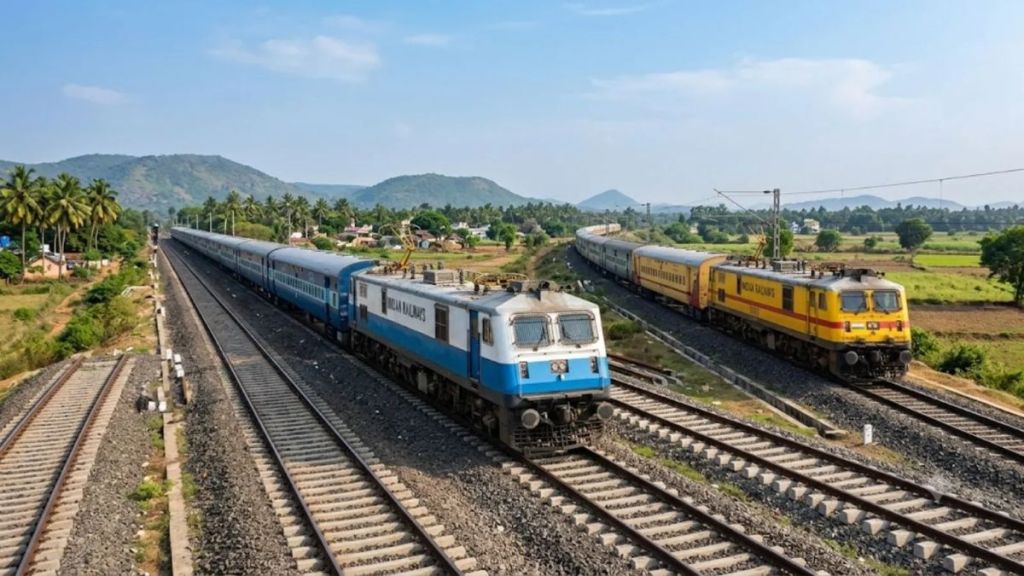

A busy railway stretch in Odisha’s mineral-rich region is set for an upgrade, with Indian Railways approving a Rs.122 crore project to add a second track between Barbil and Bolanikhadan.
The 6-km section is an important link for moving iron ore from mining areas to steel plants and ports.
The project is expected to make freight train operations smoother on the route and prepare the section for higher traffic in the coming years.
The existing line already carries significant iron ore traffic, making additional rail capacity important as mining and industrial activity expands in the region.
Barbil-Bolanikhadan route: What the project involves
The Barbil-Bolanikhadan section currently operates as a single-line stretch. The approved work will add another track along the 6-km route, allowing railway operations to handle a higher volume of freight.
At present, the section carries around 9 million tonnes of traffic every year. Around six loaded rakes of iron ore originate from the area each day.
The second track will help improve the movement of these freight trains and reduce delays caused by limited capacity on a single-line route.
Once the project is completed, the section is expected to support an additional 8.9 million tonnes per annum of freight traffic.
Where does the iron ore go?
The railway section plays a role in transporting high-grade iron ore and pellets from mining and industrial facilities in the area. A major source of this traffic is SAIL’s Bolani mines.
Freight also originates from private sidings associated with Rungta and Khatau Narbheram. From these locations, the material is transported by rail to steel plants and ports.
This makes the short Barbil-Bolanikhadan stretch important beyond its 6-km length. Any improvement in its capacity can help freight trains move more efficiently through a wider mineral transportation network.
Part of Indian Railways’ mineral corridor
The Barbil-Bolanikhadan section has been identified as part of Indian Railways’ Energy, Mineral and Cement Corridor. Such routes are used for the movement of large volumes of bulk commodities, including minerals required by industries.
For the existing single-line section, train movements have to be managed within the available track capacity.
The addition of another line is expected to ease this constraint and provide greater operating capacity for freight services.
For businesses dependent on rail transportation, smoother movement can also help improve the movement of raw materials towards their destinations.
New capacity ahead of future demand
The project has also been planned with the expected growth in the region in mind. SAIL’s mine expansion and additions in plant and port capacity could increase the amount of material that needs to be transported in the future.
Building the additional track before these expansions are fully realised will give the railway section greater capacity to handle the expected increase in traffic.
The ₹122-crore project will therefore upgrade a relatively short section while supporting a much larger freight network connecting Odisha’s mining areas with steel plants and ports.