


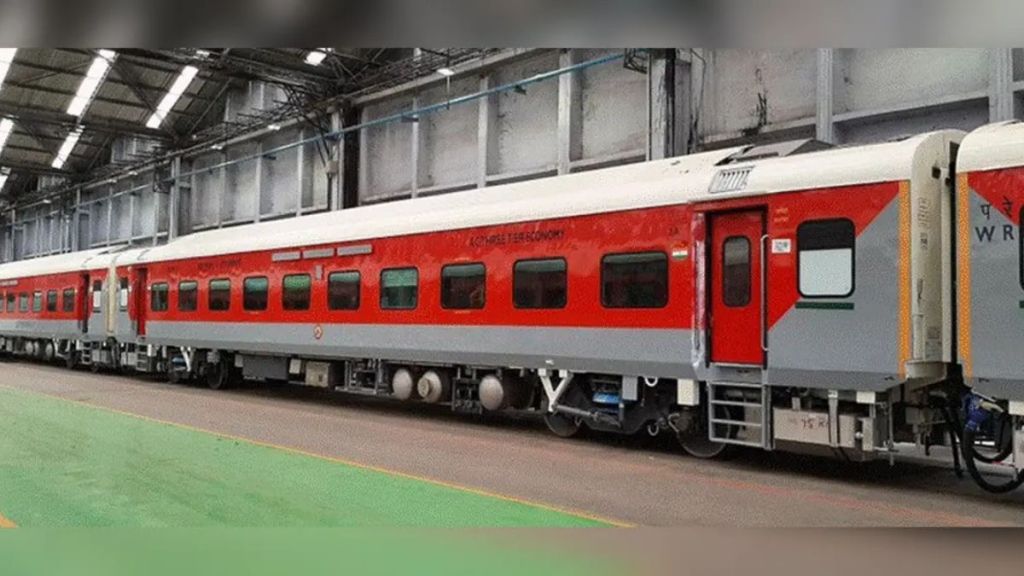

Senior railway engineers have raised concerns over heavy corrosion in the bogies of Linke Hofmann Busch (LHB) passenger coaches despite the use of corrosion-resistant materials and improved cleaning practices, reported PTI.
The issue was discussed at a recent conference of principal chief mechanical engineers (PCMEs), where senior technical officials asked three coach manufacturing units, Integral Coach Factory (ICF) in Chennai, Rail Coach Factory (RCF) in Kapurthala and Modern Coach Factory (MCF) in Rae Bareli, to examine the problem and suggest corrective measures.
“Heavy corrosion in LHB bogies is a cause of worry,” the minutes of the conference, compiled by the Railway Board, said, reported PTI.
Railway officials have advised greater focus on the maintenance of both air-conditioned and non-air-conditioned LHB coaches, saying corrosion in bogie components could become a passenger safety concern.
Why LHB coach bogies are developing corrosion
The Railway Board has asked all zones to examine the issue and give special attention during scheduled maintenance to components and sub-assemblies identified in a detailed corrosion report prepared by Eastern Railway in March.
The report analysed corrosion in LHB AC and non-AC coaches based on the age of the coaches as well as individual components.
Engineers said that while the shift from conventional coaches manufactured at ICF to German-designed LHB coaches represented a major change in Indian Railways’ passenger coach technology, corrosion in certain areas at an early stage has emerged as a maintenance concern.
The affected locations include parts of the underframe and areas around lavatories. According to the findings, water can seep through the lavatory floor or defective pipe fittings and reach structural components below the coach.
“Although bio-toilets are designed to treat waste, any accidental overflow or leakage of effluent which is acidic and rich in chlorides causes rapid corrosion of the trough floor, sole bars and headstock,” the Eastern Railway report said.
The report also identified cleaning methods, dents or damage to steel surfaces and gaps around vinyl advertisement wrappers as possible contributors to water ingress and corrosion.
Coastal exposure, washing practices add to corrosion risk
Coaches operating in coastal areas face another source of corrosion because of exposure to saline air.
“Coaches running in coastal regions are exposed to saline air. The high salt (NaCl) content acts as a powerful electrolyte, accelerating the electrochemical process of corrosion,” the experts said.
The technical recommendations include avoiding aggressive cleaning chemicals and high-salinity or untreated water while washing coaches. Railway officials have also been advised to ensure proper rinsing and drying after washing so that corrosive residues do not remain on metallic surfaces.
The experts have further recommended keeping drain holes, slots and passages in underframe and bogie areas free of blockages to prevent water from accumulating. Improvements to corrosion-protection systems have also been suggested.
The Railway Ministry has directed railway zones to examine the identified safety-critical areas and follow the precautionary measures recommended by the technical teams.
The issue is now being examined by the coach production units as well as zonal railways, with the Railway Board seeking measures to prevent premature corrosion and ensure that maintenance practices adequately address the problem.