


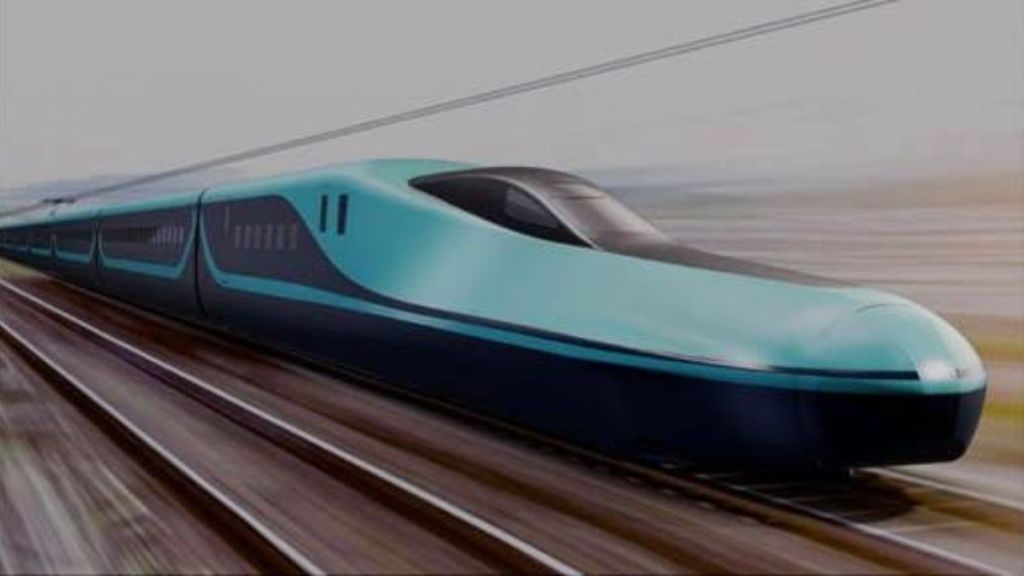

What happens if an earthquake strikes while a Bullet Train is travelling at more than 300 kmph? On India’s first high-speed rail corridor connecting Mumbai and Ahmedabad, a dedicated safety system is being put in place to detect seismic activity and respond before stronger earthquake waves reach the railway infrastructure.
The 508-km corridor will have 28 seismometers across Maharashtra and Gujarat. The system will use these sensors to monitor earthquake activity and send an immediate warning to the railway’s safety systems, allowing trains in the affected area to be stopped.
How will the Bullet Train respond to an earthquake?
The system is based on technology used on Japan’s Shinkansen network. It will detect the faster primary waves generated at the start of an earthquake, rather than waiting for the stronger waves that follow.
Once seismic activity crosses the required threshold, the power supply in the affected section will be shut down automatically. The train will recognise the loss of power and activate its emergency braking system.
This early response is important for a high-speed train, as it gives the railway system a window to react between the arrival of the initial earthquake waves and the stronger tremors that follow.
Where will the 28 seismometers be installed?
Twenty-two of the 28 seismometers will be installed along the Mumbai-Ahmedabad High-Speed Rail alignment. These will be located at traction substations and switching posts.
Eight sensors will be placed in Maharashtra, covering Mumbai, Thane, Virar and Boisar. Gujarat will have 14 sensors at locations covering Vapi, Bilimora, Surat, Bharuch, Vadodara, Anand, Mahemdabad and Ahmedabad.
The other six sensors will be installed away from the railway alignment. These are known as inland seismometers and will cover earthquake-prone locations in the region.
Four of these locations — Kheda, Ratnagiri, Latur and Pangri — are in Maharashtra, while Adesar and Old Bhuj are in Gujarat.
Why are six seismometers being placed away from the route?
The additional sensors are meant to monitor seismic activity in areas that have experienced significant earthquakes in the past.
Locations near the Bullet Train alignment where earthquakes above magnitude 5.5 were recorded during the last 100 years were surveyed before the sites were selected. Japanese experts were involved in the assessment, while soil conditions at the proposed locations were examined through micro-tremor tests.
The inland sensors will therefore provide earthquake-related information from areas beyond the immediate railway alignment.
Mumbai-Ahmedabad Bullet Train Project – All you need to know
The Mumbai-Ahmedabad High-Speed Rail Corridor is India’s first high-speed rail project and is currently under construction. The corridor will stretch 508 km between Mumbai and Ahmedabad, covering parts of Maharashtra, Gujarat and the Union Territory of Dadra and Nagar Haveli.
The project has an estimated cost of around ₹1.08 lakh crore. It will have 12 stations, with eight located in Gujarat and four in Maharashtra.
The stations on the route are Mumbai, Thane, Virar, Boisar, Vapi, Bilimora, Surat, Bharuch, Vadodara, Anand, Ahmedabad and Sabarmati. The trains are planned to operate at speeds of up to 320 kmph, while the corridor has a design speed of 350 kmph.
BEML gets Rs.5,400 crore rolling stock contract
The trainsets for the corridor are also taking shape. BEML recently secured a contract worth around ₹5,400 crore for the project’s rolling stock. The contract covers the design and manufacture of the high-speed trains, along with their supply, testing and commissioning.