


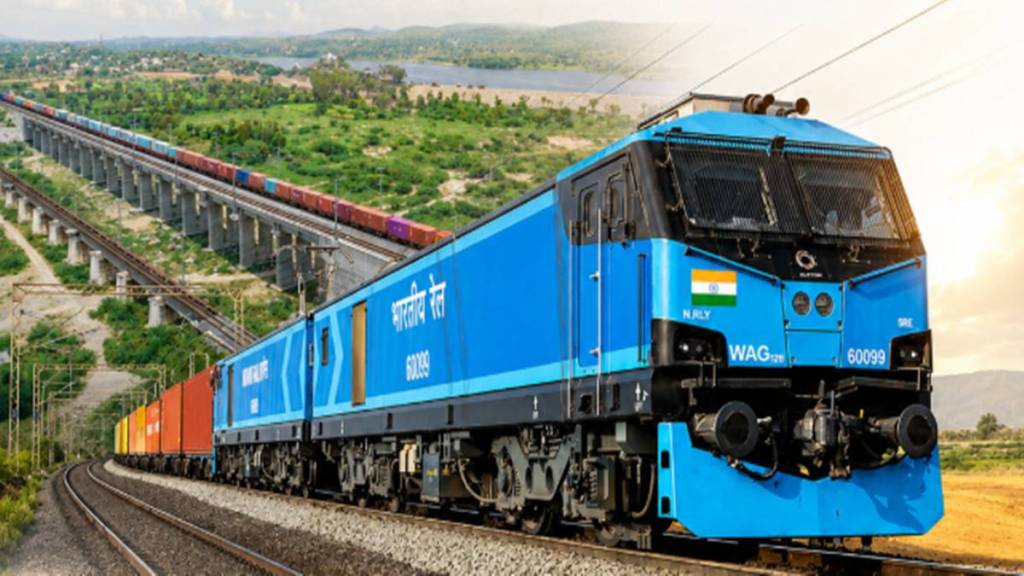

India’s freight trains now have a 2,843 km dedicated railway network designed to move larger volumes of goods faster and with more capacity. The network consists of two corridors: a 1,337-km stretch connecting Ludhiana in Punjab to Sonnagar in Bihar and a 1,506-km expanse running from Dadri in Uttar Pradesh to the Jawaharlal Nehru Port Terminal in Maharashtra.
As per the official post shared by Southern Railway on X, the entire 2,843-km Dedicated Freight Corridor (DFC) network is operational. Out of this, the Eastern corridor spans 1,337 km, whereas the Western corridor covers 1,506 km.
Underlining the scale of the network, Southern Railway stated, “Two corridors, one stronger network-2,843 km of dedicated, electrified track moving freight faster with higher capacity.”
Dedicated Freight Corridors at a glance
Total operational network: 2,843 km
Network: Dedicated and electrified tracks
Western DFC: 1,506 km
Eastern DFC: 1,337 km
Why was a separate freight network needed?
Moving freight efficiently becomes difficult when railway tracks face congestion and capacity restrictions. Southern Railway highlights track congestion, limited industrial capacity, delayed freight movement and longer transportation time among the challenges behind the need for dedicated freight infrastructure.
Explaining the purpose in simple terms, Southern Railway said in an X post, “Track congestion. Limited capacity. Delayed freight. The Dedicated Freight Corridor fixes all three.”
The DFC network offers dedicated railway infrastructure for freight, allowing goods to be moved without depending entirely on the conventional railway network.
What makes Dedicated Freight Corridors different?
The biggest difference is that these corridors are designed specifically for freight movement. This infrastructure is designed to move larger freight volumes in fewer trips. It also has the ability to manage longer trains and double-stack containers, helping increase the amount of cargo that can be carried.
The focus, therefore, is not simply on adding railway tracks but also on creating infrastructure suited to the requirements of large-scale freight movement.
Dedicated tracks allow freight operations to be managed more efficiently and help reduce delays. The corridors are also designed to interlink important parts of India’s supply chain, including markets, production centres and ports.
Southern Railway termed the network as ‘India’ freight backbone”, stating the 2,843 km dedicated freight network moves larger volumes faster, whereas connecting production centres, markets and ports across India.
What does the network mean for logistics?
Faster movement of goods can have a broader impact on the logistics system. The key benefits of the DFC network are better logistics and stronger supply chains.
The dedicated and electrified corridors are also aimed at raising freight capacity along with supporting lower carbon intensity and sustainable growth.
In simple terms, the two corridors give freight trains dedicated tracks, greater capacity and infrastructure built around moving goods. With the 1,337 km Eastern DFC and 1506-km Western DFC operational, the combined network now covers 2,843 km.