


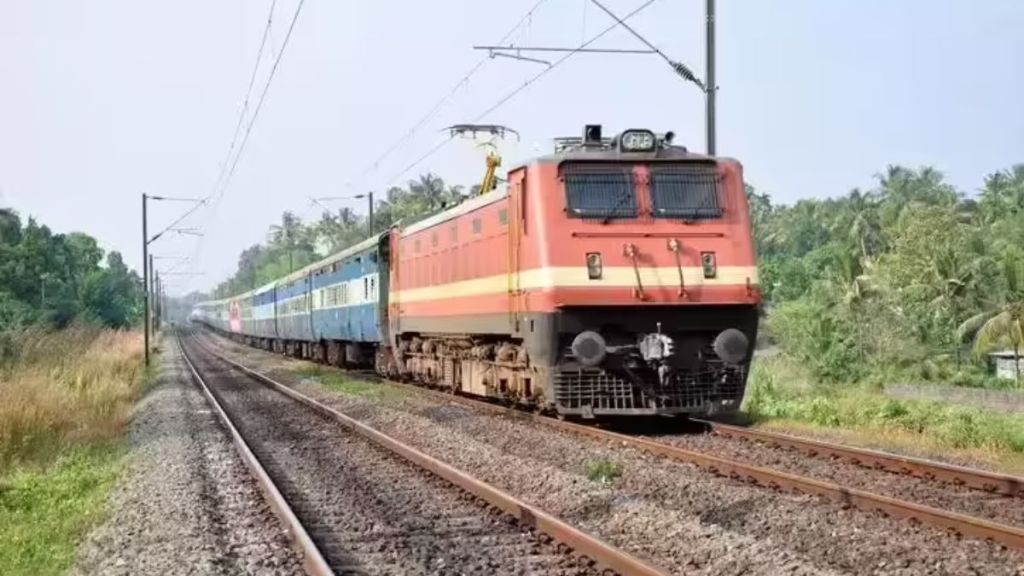

The Cabinet Committee on Economic Affairs (CCEA), chaired by Prime Minister Narendra Modi, on Wednesday approved three railway multi-tracking projects worth Rs 10,783 crore, aimed at expanding rail capacity across five states and easing congestion on key routes.
The projects include construction of a fourth line on the Kharagpur-Jharsuguda and Katni-Pendra Road sections, along with a third line between Bilaspur (Uslapur) and Pendra Road. Together, the projects will add around 656 km to the Indian Railways network and cover 14 districts across West Bengal, Jharkhand, Odisha, Madhya Pradesh and Chhattisgarh.
656-km rail expansion to connect 4,790 villages
The capacity expansion is expected to improve train movement and operational efficiency on some of the important routes passing through the five states. According to the government, the projects will improve rail connectivity for around 4,790 villages with a combined population of nearly 56 lakh.
“The increased line capacity will significantly enhance mobility, resulting in improved operational efficiency and service reliability for Indian Railways. These multi-tracking proposals are poised to streamline operations and alleviate congestion,” a press note said.
The projects have been planned under the PM Gati Shakti National Master Plan, with an emphasis on integrating different modes of transport and improving logistics efficiency. The government said the additional railway capacity will support the movement of passengers, goods and services while improving multimodal connectivity.
The expanded network is also expected to improve access to several tourist and religious destinations located along or near these railway corridors. These include Taratarini Temple, Shri Khetra Jagannath Temple near Jharsuguda, Bandhavgarh Tiger Reserve, Virateshwar Temple, Amarkantak Temple, Jwaleshwar Dham, Achanakmar Tiger Reserve, Khutaghat Dam, Malhar Archaeological Site and Ratanpur Mahamaya Temple.
Rail capacity expansion to support 27 MTPA additional freight
The projects are also expected to strengthen freight movement along routes that are important for transporting commodities such as coal, cement, iron and steel.
“The proposed projects are essential routes for transportation of commodities such as coal, cement, iron and steel, etc. The capacity augmentation works will result in additional freight traffic of magnitude 27 MTPA (Million Tonnes Per Annum),” the government said.
The additional lines are expected to provide greater capacity for freight trains while creating more room for passenger services. By reducing bottlenecks on busy sections, the multi-tracking works could help improve the movement of both passenger and freight trains.
The government also highlighted the environmental benefits of shifting more freight towards rail. It said the projects could help reduce the country’s dependence on oil imports by 12 crore litres and cut carbon dioxide emissions by 62 crore kg.
The estimated emissions reduction is equivalent to the environmental benefit of planting around 2.48 crore trees, according to the government. The Railways’ lower energy intensity compared with road-based transportation is also expected to contribute to reducing logistics costs and supporting India’s broader climate objectives.
Overall, the three projects are aimed at adding capacity to existing railway corridors rather than creating entirely new routes, with the focus on addressing congestion, improving freight movement and strengthening connectivity across eastern and central India.