


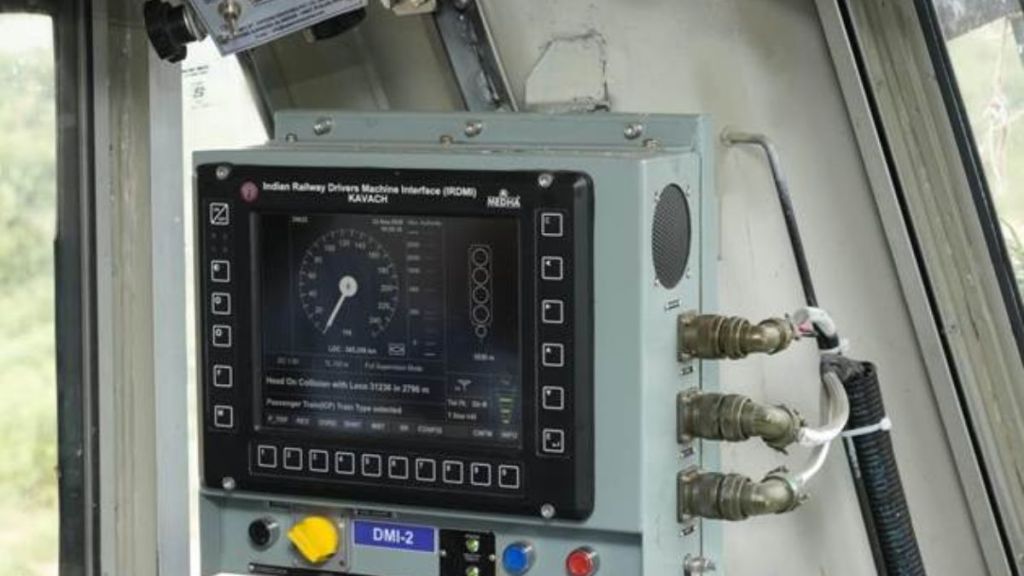

Indian Railways is set to strengthen train safety in Uttar Pradesh with a Rs 223 crore project to bring Kavach 4.0 to the Varanasi Division of North Eastern Railway.
Kavach will track train movement and signals and can intervene when a train is in a risky situation. For example, if a train passes a stop signal, the system can take action and apply the brakes when needed.
The project is part of Indian Railways’ wider plan to bring Kavach to more routes across the country and add an extra safety layer to train operations.
Rs 223 cr Kavach project: What is being covered?
The approved work covers 614.75 route km under the Varanasi Division. These are existing railway sections where Kavach has not yet been installed.
The project is not about building new railway lines or stations. Instead, the work will focus on installing the equipment needed to connect Kavach 4.0 with existing signalling and train systems.
Once the system is in place, trains running on these routes will have an additional automatic safety layer to support safer train operations.
How Kavach 4.0 works
One of Kavach’s main functions is to prevent Signal Passing at Danger (SPAD). This happens when a train passes a signal that tells it to stop.
The system keeps checking the train’s movement and signals. If a train is moving towards an unsafe situation and the required action is not taken, Kavach can automatically apply the brakes.
This means the system can intervene during critical situations and provide an extra layer of safety for train crews.
What the Varanasi rollout means
The new project will bring more sections of the Varanasi Division under Kavach as the installation work moves ahead. This will help provide automatic train protection across a larger part of the division’s railway network.
The project is also part of Indian Railways’ wider plan to roll out Kavach on more routes across the country. As more sections get the system, it will work along with existing signals and other safety measures to help manage train movement.