


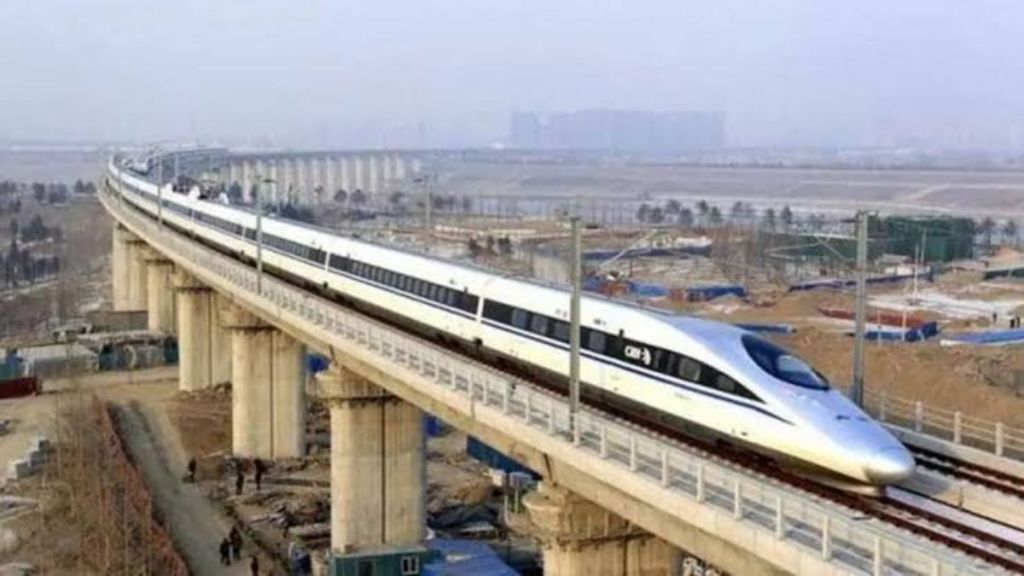

The Mumbai-Ahmedabad bullet train project involves building an elevated corridor across existing railway infrastructure, including busy Indian Railways lines in Vadodara. One of the engineering challenges is the crossing over the Delhi-Mumbai Rajdhani route, where construction has to account for active railway operations and limited space.
All 14 portal beams at the crossing had been launched about two weeks before this report. The milestone clears the way for the next stage of construction, which involves installing 40-metre composite girders to support the elevated bullet train corridor.
Why the Vadodara stretch presents an engineering challenge
The 8.3-km section in Vadodara crosses five Indian Railways lines, including two main lines. The bullet train alignment crosses the Delhi-Mumbai Rajdhani route diagonally, making the construction sequence and coordination with the existing railway network particularly important.
Of the 14 portal beams, 10 are located between Vadodara Bullet Train station and Vishwamitri Railway station on the Surat side. The remaining four are between Vadodara Railway station and Chhayapuri Railway station on the Ahmedabad side.
Portal beams provide the structural framework needed to install the elevated corridor’s girders. With their installation completed at the Rajdhani crossing, the project can move towards placing the composite girders across the structures.
How the elevated corridor will be built
The next stage involves launching 40-metre composite girders over the 14 portal beams at the Rajdhani crossing. At other portal beam locations, the project uses the Span-by-Span method to construct the elevated viaduct.
The girders are being cast in situ because of the constraints of the worksite and the presence of active railway infrastructure. Each girder weighs around 1,500 tonnes and measures approximately 37 metres long, four metres wide and four metres high.
Constructing each girder requires about 590 cubic metres of concrete and a reinforcement cage weighing around 55 tonnes. The scale of the structures calls for specialised equipment, including cranes, hydraulic jacks, long-boom concrete pumps and surveying instruments.
Construction over operational railway lines requires careful sequencing and monitoring. The work also involves coordination with Indian Railways, including arranging railway blocks wherever required to carry out activities safely.
The completion of the portal beams marks an important step in preparing the Vadodara crossing for girder installation. The subsequent work will help advance construction of the elevated viaduct on this section of the Mumbai-Ahmedabad bullet train corridor.