


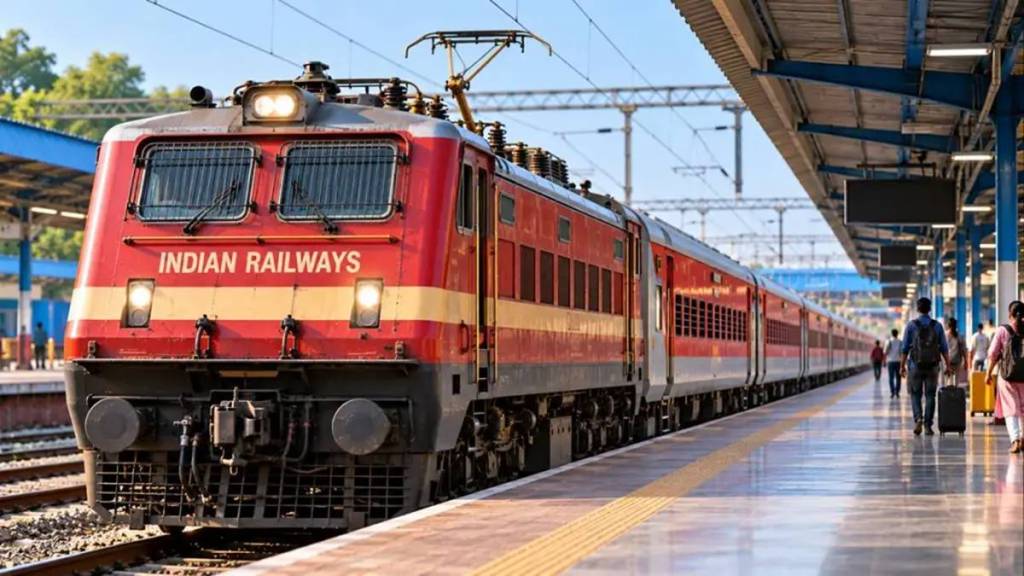

Are trains in India becoming more punctual? The Ministry of Railways has shared its latest figures, indicating an improvement in train punctuality over the past eight years. It has also refuted social media claims suggesting a decline in performance as “misleading”.
According to a recent PTI report, Indian Railways registered 77.11 per cent punctuality in 2026-27 so far, in comparison with 69.2 per cent in 2018-19. Officials attributed the improvement to better monitoring, timetable rationalisation, maintenance and infrastructure upgrades.
Indian Railways punctuality: What do the figures show?
A senior Railway Ministry official told PTI that punctuality has remained above 77 per cent over the last three financial years, including the current year.
“If we look at the punctuality data, it has improved from 69.2 per cent in 2018-19 to 77.43 per cent in 2026-26 and 77.11 per cent in 2026-27 so far,” the official stated.
| Financial year | Punctuality |
| 2018-19 | 69.20% |
| 2023-24 | 73.62% |
| 2024-25 | 77.12% |
| 2025-26 | 77.43% |
| 2026-27 (so far) | 77.11% |
Source: Railway Ministry/PTI; 2024-25 figure from PIB.
Why has Railways rejected social media claims?
The minister said the comparisons with Covid-19 years were inappropriate because significantly fewer trains operated during 2020-21 and 2021-22. “Hence, the higher punctuality marked by the Indian Railways during the Covid period is not an appropriate benchmark for comparisons,” a senior official stated to PTI.
The official also explained that punctuality returned closer to its long-term average after normal train operations resumed and has eventually improved.
How does Indian Railways measure punctuality?
As per the PIB March 2026 release, punctuality is measured based on trains arriving at their destination stations within the prescribed time limit. The official release also mentioned that 24 railway divisions recorded punctuality above 90 per cent, whereas another 19 achieved between 80 and 90 per cent during 2025-26 up to February.
What steps are being taken to reduce delays?
Several measures, including improved train monitoring, timetable adjustments, maintenance planning and infrastructure upgrades. The official release also mentioned digital monitoring through the Integrated Coaching Management System (ICMS), National Train Enquiry System (NTES) and Control Office Application.
Operational challenges such as fog, maintenance work, congestion and unforeseen obstructions can still impact train schedules.
What should passengers know?
Although overall punctuality has improved, the national average does not guarantee that every train will arrive on time. Passengers, especially those planning connecting journeys, should check their train’s latest running status through official railway enquiry services before travelling.