


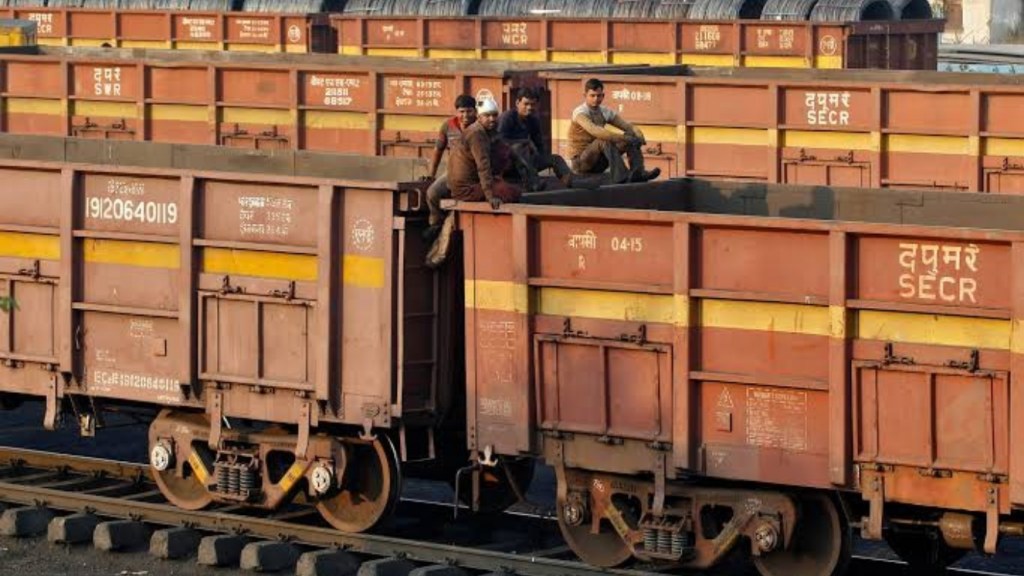

The freight traffic on the Indian railways jumped 8.3% year-on-year to a record 145.07 million tonnes (MT) in October as higher coal transportation to power plants and a sharp increase in foodgrain movement lifted volumes. The railways ministry on Wednesday said the foodgrains recorded the highest growth among major commodities with loading rising 26.3% in October. Domestic coal transportation jumped 16% while loading of other goods grew 11%. Clinker, used in cement manufacturing, recorded a 10.4% increase followed by domestic containers at 6.3% and iron ore at 5%.
However, coal continues to be the biggest contributor to railway freight volumes accounting for nearly half of total loading. The railways supplied an average of 469.8 coal rakes daily to power plants in October, up from 393.2 rakes a day a year ago.
In fact, the freight traffic has gathered pace in recent months after growing just 1.3% in May. Growth improved to 4% in June and 9% in July, before staying above 6% in August and September. Overall, freight loading during April-October period grew 4.7% to 978.8 MT against 935.1 MT a year ago, the ministry noted.
Experts said that a combination of higher industrial activity, infrastructure spending and improved railway capacity could be supporting the latest growth. The increase in freight movement has also been attributed to sustained government spending on infrastructure, housing and roads, which has created demand for commodities such as steel and iron ore. Better wagon availability and faster turnaround times have also helped the railways carry more goods.
“The growth remains uneven with finished steel loading increasing just 0.5%. Higher tonnage alone does not establish gains in market share or profitability; freight earnings, haulage distances and operating costs also matter. Sustaining this performance requires dependable rake availability, predictable delivery and faster terminal handling. With passenger traffic also increasing, effective capacity planning will be essential to accommodate both passenger and freight demand,” said Lalit Chandra Trivedi, former general manager, East Central Railway.
Meanwhile, freight transportation remains the main source of revenue for the railways, helping it cross-subsidise passenger services, which are largely loss-making. Freight revenues are expected to account for 62.4% of the national transporter’s revenues in FY27, while passenger services are projected to contribute around 28.9%, according to budget estimates. The surplus from freight operations helps offset losses in passenger services and keeps the railways’ operating ratio below 100%.