


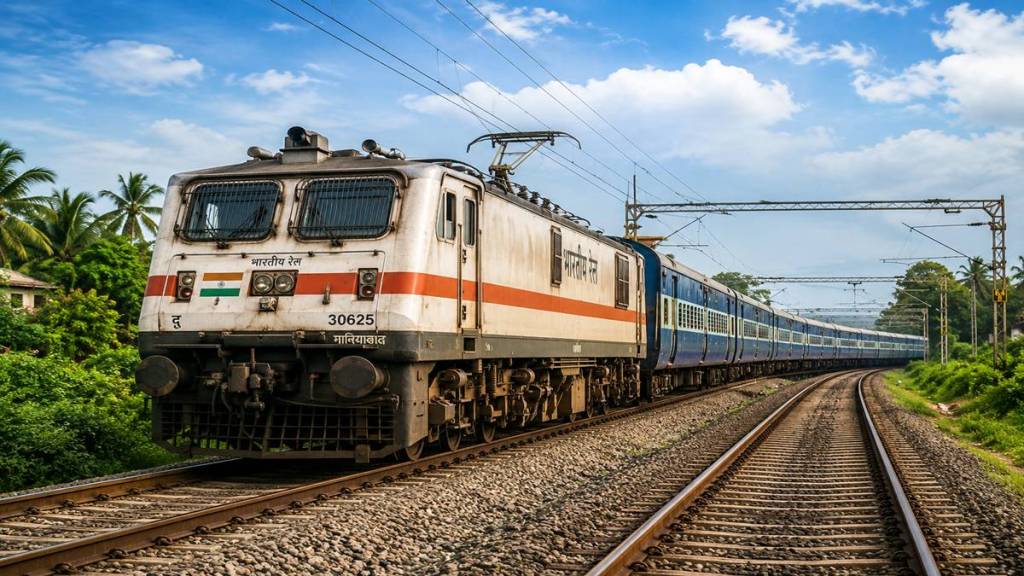

Assam has completed electrification of its entire Broad Gauge (BG) railway network, covering around 2,589 route km. The development brings all BG railway routes in the state under electric traction and marks an important step towards smoother and more efficient train operations.
The work has been carried out under the Northeast Frontier Railway (NFR) zone, which oversees railway operations and infrastructure development in Assam.
With the final section now electrified, trains can operate on electric traction across the state without requiring a change of traction on the previously non-electrified stretch.
Lumding-Badarpur section completes electrification
The Lumding-Badarpur Hill section was the final major link in Assam’s railway electrification programme. As per the Indian Express reports, a key milestone was achieved in June with the energisation of a 132 KV transmission line connecting the Haflong Grid Sub-Station with the New Haflong Traction Sub-Station.
The completion of this work enabled electric traction to be extended across the section, completing electrification of the state’s entire BG railway network.
How full electrification will improve train operations
With the network fully electrified, railway operations can become more streamlined. Electric locomotives can now be used across the state without the need for traction changes at locations where electrification was previously incomplete.
The move is also expected to improve the utilisation of electric locomotives and provide greater flexibility in train operations. Over time, electric traction can help lower locomotive operating and maintenance requirements.
What it means for passengers and freight movement
The shift to electric traction is expected to support more efficient movement of passenger and freight trains across Assam. It can also help the railway reduce its dependence on fossil fuels and move towards more energy-efficient operations.
For passengers, the completion of electrification provides a more uniform traction system across the state and can support smoother train operations.