


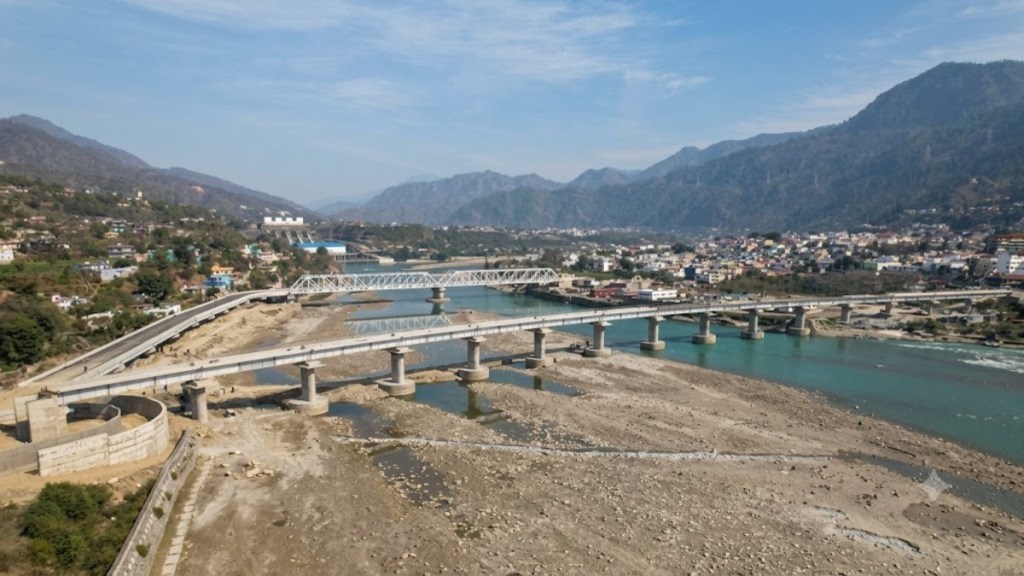

Rail connectivity in Uttarakhand is set to improve with the upcoming 125-km Rishikesh–Karnaprayag rail project, which will link important religious and tourist destinations in the Himalayan region with Rishikesh.
The line is expected to make travel to these areas easier for pilgrims and tourists while improving access to towns in the state.
Railway Minister Ashwini Vaishnaw recently highlighted the scale of the project in a post on X, describing it as “Engineering through the Himalayas”. He pointed to the 125-km length, 12 stations and the fact that 83% of the route passes through tunnels, calling the railway line Uttarakhand’s “lifeline to the future”.
Engineering through the Himalayas!
125 km, 12 stations, 83% tunnels.
The Rishikesh-Karnaprayag rail line is not just a track, it’s Uttarakhand’s lifeline to the future.— Ashwini Vaishnaw (@AshwiniVaishnaw) October 22, 2026
Rishikesh–Karnaprayag rail line: Route and 12 stations
The railway line will pass through five districts: Dehradun, Tehri Garhwal, Pauri Garhwal, Rudraprayag and Chamoli. It will connect Rishikesh with Devprayag and Karnaprayag, bringing rail access closer to several religious destinations and towns in the Himalayan region.
The 12 stations planned along the route are Rishikesh, Shivpuri, Byasi, Devprayag, Janasu, Maletha, Srinagar, Dhari Devi, Tilani, Gholtir, Gauchar and Karnaprayag.
For passengers, the new line will provide a railway link deeper into Uttarakhand’s mountainous areas. It is also intended to improve access to places that have remained difficult to connect by rail because of the region’s geography.
83% of the rail line will pass through tunnels
Building a railway line through the Himalayas means cutting through mountains, which is why most of the Rishikesh–Karnaprayag route will run through tunnels.
The 125-km project includes 16 main tunnels spanning around 104 km and 12 escape tunnels measuring approximately 98 km.
Specially designed tunnel boring machines (TBMs) are being used to dig through the mountains. So far, around 101 km of the main tunnels and more than 95 km of the escape tunnels have been completed.
11 of 19 major bridges completed
The railway line also requires major bridges to cross rivers, valleys and other natural obstacles. A total of 19 important and major bridges are part of the project, of which 11 have been completed. Work on the remaining bridges is underway.
The bridges are a crucial part of the route, working alongside the tunnels to carry the railway line through the difficult Himalayan landscape.
Project focuses on sustainable railway infrastructure
The project also includes measures to support greener infrastructure along the route. Plans include bee-foraging floral corridors to provide flowering plants for bees and other pollinators.
Treated water will also be reused to maintain greenery alongside the railway tracks, helping reduce the need for fresh water for trackside vegetation.
Rail link to connect Devprayag and Karnaprayag with Rishikesh
The new railway line will connect Rishikesh with Devprayag and Karnaprayag, two important destinations in Uttarakhand’s religious and tourist circuit.
With 12 stations along the route, the project will bring rail connectivity to towns across five districts, giving pilgrims and tourists another way to reach the Himalayan region. For local residents, the railway line could also improve access to places along the route.