


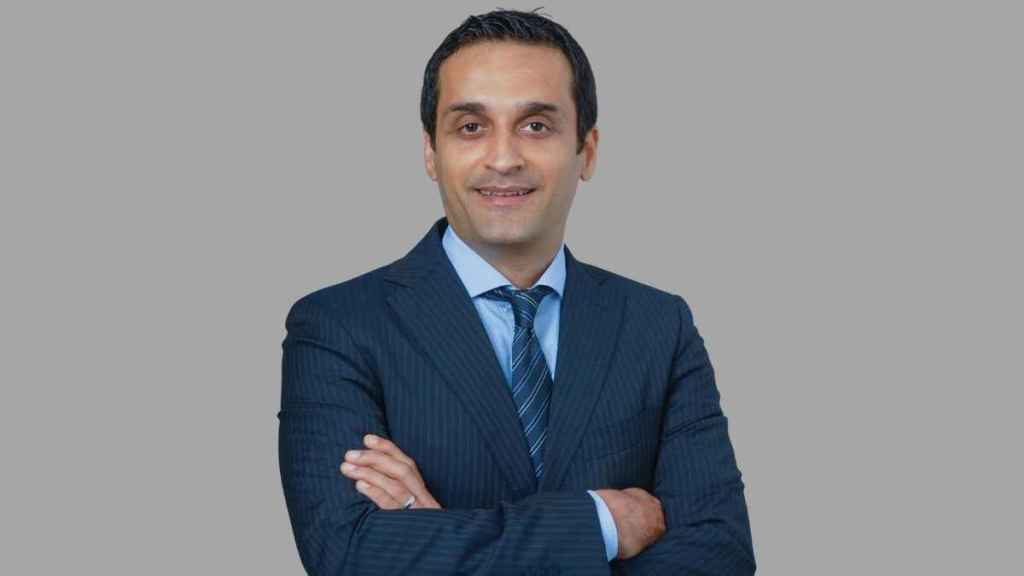

After its successful NCR foray, Oberoi Realty is scouting for opportunities in the region and other cities. , Oberoi Realty has lined up a number of projects in Mumbai Metropolitan Region which analysts said will position it well to ride next leg of growth. In an interview, Vikas Oberoi, chairman and managing director of the company, speaks to Raghavendra Kamath about their strategy in the current residential markets and challenges faced by the sector.
How are residential sales behaving now? How are festive sales looking in your core market of MMR?
Demand for the right product in the right location has held up well. The buyer today is largely an end user, and end users buy homes they can trust will be delivered, in neighbourhoods they want to live in, from brand names they know. That has worked very well in our favour. MMR remains a deep and resilient market, and the festive period has historically brought serious buyers to the table. Sentiment going into the season is healthy. What we are seeing is a clear flight to quality, where established developers with a delivery track record continue to see steady traction while the broader market is more selective.
Many developers are calibrating launches due to approval delays and market softness. What has been your strategy?
Our approach has always been disciplined rather than reactive. We launch when the product is ready, when the approvals are in place, and when we believe the market is right. A strong balance sheet gives us the patience to wait for the right moment, and that patience is a competitive advantage, not a compromise. Approvals in this business also require perseverance, and we have built the internal capability to navigate that without cutting corners.
Experts say there is an oversupply of luxury properties above Rs 20 crore in Mumbai, Bengaluru and NCR. What is your take?
Luxury is not one single market, and I would be careful about treating it as one number. There is genuinely differentiated product in prime, scarce locations, and there is me-too product that borrows the luxury label without the substance. The first continues to find committed buyers. The second is where the pressure shows up, and that is not an oversupply problem as much as a differentiation problem. At the very top end the buyer is highly discerning about the product, its location, design, brand and delivery record. When you get that right, demand follows. When you do not, no price point protects you.
What is your launch pipeline for FY27 and what GDV are you looking at?
We do not put out forward-looking guidance on launches or GDV. What I can say is that we have a strong land bank and a clear sense of the quality and scale of what we intend to build. We would rather let each project announcement carry its own weight when the time is right, than commit to numbers in advance. Our record of what we have delivered is the fairest guide to what we are capable of delivering.
How do you view the redevelopment opportunity in Mumbai, and what are the challenges?
Redevelopment in Mumbai is a great opportunity for the city to get rebuilt. A large part of its building stock is ageing, and redevelopment is how the city renews itself and unlocks real value for both residents and developers. The opportunity is genuine and it is large. The challenges are equally real. You are dealing with societies and members, rehabilitation commitments, consent, and long approval timelines, all before a single tower comes up. It is as much about trust and patience as it is about capital. This is precisely where a developer with a balance sheet, a delivery record and the credibility to see a project through has a natural advantage, because members are handing you their homes and their faith.
How has the West Asia conflict impacted players such as you?
Our business is domestic and largely end-user driven, so the direct impact on us is limited. Global uncertainty of this kind tends to show up indirectly, through commodity and input costs, and at times through sentiment. It can also cut the other way, since instability elsewhere often reinforces Indian real estate as a stable, tangible place to put capital. We watch the macro picture closely, as anyone running a large business must, but the core drivers of our market remain domestic demand, incomes and confidence in the product. On that front the fundamentals are intact.