


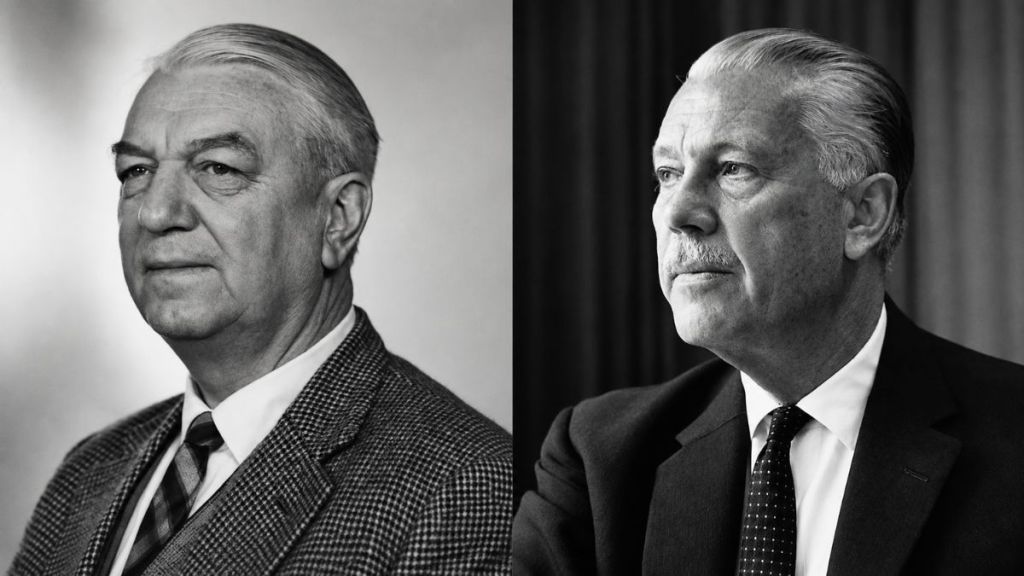

This story begins with a joke that turned out to be true. When Henning Holck-Larsen told his boss he wanted to leave and build something on his own, his boss laughed him off. “You will find that it is an illusion,” he said. Eighty-odd years later, that illusion employs more than four lakh people and builds warships for the Indian Navy.
Well, that’s how the iconic Larsen & Toubro came into being.
L&T founders: Where it all began
Holck-Larsen was born in Denmark on 4 July 1907, and Toubro came a year and a half before him, on 27 February 1906, so by the time they crossed paths at school they were already headed in similar directions. Both trained as engineers, Holck-Larsen in chemistry and Toubro in civil work, and both eventually landed at the same Danish firm, F.L. Smidth & Co., which is where a friendship was formed. The one that would outlast the company
They were never alike in temperament, and that turned out to matter more than anything else in their partnership. Holck-Larsen chased risk the way some people chase weather, while Toubro moved carefully and thought twice before committing to anything. Decades later, people still described the company as a product of that friction between them.
F.L. Smidth sent them to India on separate assignments years apart, both tied to cement plants. Neither of them had any idea at that time that the country would end up altering the course of their future.
Toubro went first, in 1934, commissioning equipment near Coimbatore and at a factory close to the Sukkur Barrage, in what is today Pakistan. Holck-Larsen followed a year later to evaluate cement groups that would eventually merge into ACC. Something about the place got under their skin before they’d even thought about building anything there together.
Toubro absorbed more than just engineering experience. He came across a report in the Bombay Chronicle quoting Mahatma Gandhi, and the idea in it stuck with him – an independent India would mean real opportunity for its ordinary people, not just a change of flag over the same old arrangements. It’s the kind of detail that made his decision to build a life in India feel less circumstantial and more like a deep conviction.
The Rs 20,000 genesis: Sharing a single desk in Ballard Estate
Holck-Larsen resigned from F.L. Smidth first, and Toubro joined him soon after. On 1 May 1938, they formalised their partnership, agreeing to represent a cluster of Danish and other European engineering firms across India.
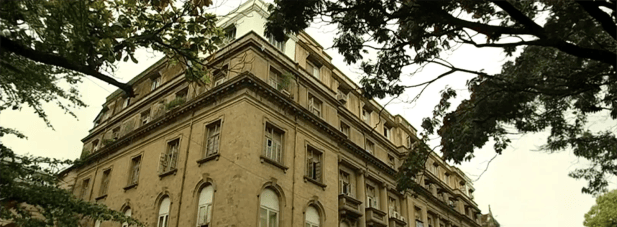
Their entire operation fit into one room in Ballard Estate, in the southern end of Bombay. It was so cramped that only one of them could actually work inside the room at any given time. So they took turns: one manned the desk while the other went out chasing business, and between them they somehow made it look like a functioning company from the outside.
There was no family money behind any of this, no existing industrial network to lean on, just around Rs 20,000 as starting capital. Their first tagline said as much: “In Service Lies Success.”
WWII & Caterpillar: Turning supply chain crises into opportunity
Whatever momentum they’d built nearly evaporated when the Second World War broke the trade routes their business depended on. Germany’s invasion of Denmark in April 1940 cut off the passage for Danish machinery that they’d been importing and reselling in the first place. Overnight, the entire foundation of the company disappeared.
They didn’t fold, though. Instead, they opened a small workshop on Calicut Street and started manufacturing what they could no longer import. While they were on the lookout for new businesses, the company began repairing ships that had suffered damage during the war. The British Admiralty gave them an Italian ship the Allies had captured, named Hilda. The new line of business was christened ‘Hilda Ltd’.
The real windfall from those war years, though, came almost by accident. American troops stationed in northeast India had shipped in large numbers of Caterpillar tractors to clear jungle, and when the war ended and the Japanese surrendered, nobody wanted to ship the machines back home. L&T stepped in as Caterpillar’s sales and service agent in India. It needed more money than two founders could raise between them, which is what finally pushed L&T to look outside for capital.
L&T: From humble beginnings to becoming a force to reckon with
L&T was formally incorporated as a private limited company on 7 February 1946, a year after the founders had already set up Engineering Construction & Contracts, the entity that would eventually grow into the group’s construction arm. Offices followed in Calcutta, Madras and New Delhi by 1947, and in 1948 the company bought 22 hectares of marshland at Powai that would later become one of its major manufacturing sites.

By the time L&T went public in December 1950, with paid-up capital of Rs 20 lakh, its turnover for the year stood at Rs 1.09 crore. Modest numbers by any later standard, though not modest at all for two men who’d started out sharing a single desk twelve years earlier.
Nuclear & Aerospace: Transitioning into strategic infrastructure
What followed reads almost like a running list of India’s industrial ambitions. L&T kept turning up wherever the country needed heavy engineering next. Utkal Machinery came in 1960, Audco India in 1961, and Eutectic Welding Alloys in 1962 through a partnership Holck-Larsen personally helped put together. Tractor Engineers followed in 1963.
Then the work got more strategic. Homi Bhabha, chairman of India’s Atomic Energy Commission, had approached L&T back in the 1950s to fabricate reactor equipment, and by 1965 the company was building nuclear reactor components outright. In the 1970s, Vikram Sarabhai brought L&T into ISRO’s orbit as a manufacturing partner, and just like that, a firm that had once sold imported dairy machinery found itself working on nuclear power and space hardware in the same decade.
L&T’s foray into construction: Turning necessity into opportunity
Construction needed its own breakthrough moment, and it arrived in 1976, when ECC, the group’s construction subsidiary, bid for a major airport project in Abu Dhabi. The trouble was that ECC’s balance sheet wasn’t strong enough on its own to even qualify for the bid, so L&T folded ECC into itself just to meet the requirements.
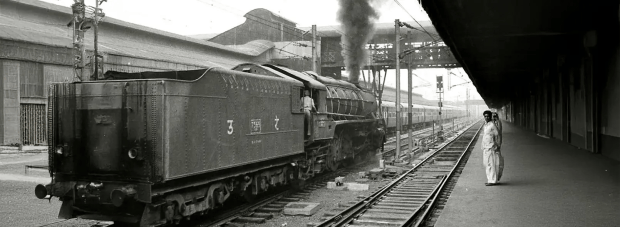
ECC eventually became L&T Construction, and construction went on to become the single largest contributor to group revenue.
Holck-Larsen, the Dane who called India home
Holck-Larsen’s attachment to India went well past business, which set him apart from most expatriate executives of his generation. He and his wife Karen got married at a church in Mumbai. The couple supported Indian technical journals and backed the country’s contemporary artists long before that kind of patronage was fashionable for a foreign businessman. A.M. Naik, who would later run the company, once said Holck-Larsen was more Indian than most Indians.
He kept homes in both countries but never stopped calling India his adopted homeland, and was honoured with the Padma Bhushan in 2002. In his own words, India had always had a special place in his heart, and the award told him he’d earned one in return.
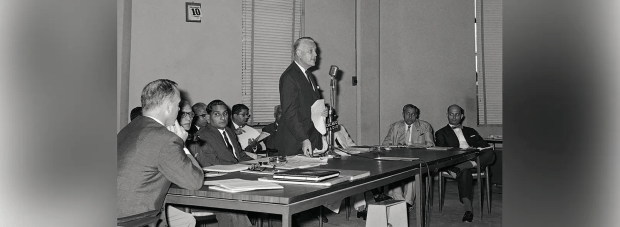
Recognition piled up steadily over the decades that followed. The National Association of Danish Enterprise honoured him in 1968, and Denmark made him honorary consul general in Mumbai in 1972.
In 1976 he became the first business executive to win the Ramon Magsaysay Award, cited for proving that Western technology could raise Asian living standards without losing sight of human welfare in the process. Denmark knighted him in 1977; India gave him the Padma Bhushan in 2002 and a commemorative postage stamp in 2008.
S.K. Toubro’s legacy: The perfect counterweight to Larsen
Toubro’s story followed a different course. He remained a company director until 1981, though he’d effectively stepped back from active management two decades earlier, around 1962 or 1963, drawn home to Denmark by family ties.
Even so, he kept his board seats at both L&T and ECC for nearly twenty more years after leaving India behind.
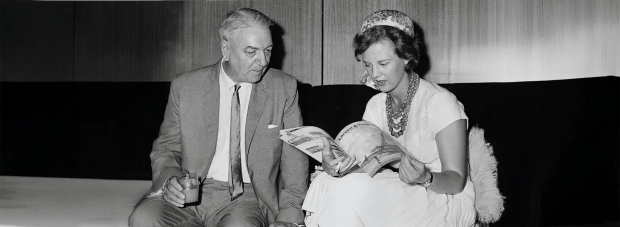
Colleagues remembered him as a brilliant engineer and the perfect counterweight to Holck-Larsen’s restlessness, someone who cared as much about customer satisfaction and the smallest details of a job as he did about the big strategic calls. He trained people patiently, and the discipline he instilled outlasted him by generations.
When he finally retired to Denmark in 1981, it came after nearly five decades tied to India, a country he never fully let go of even from a distance. He kept a house and estate in Kodaikanal, and his family maintained ties there long after he’d left for good. He died in Denmark on 4 March 1982, at 76, leaving behind two children.
L&T’s ownership structure
As the initial euphoria settled in, L&T’s story took an unusual turn, quite unlike most major Indian business houses of the era. Holck-Larsen and Toubro never built a family conglomerate, and neither family ever tried to seize control once the founders stepped back.
The company stayed professionally run and widely held instead, with large stakes sitting quietly with institutions like LIC and UTI.
That choice made L&T resilient in one sense, since no single family’s fortunes could sink it. It also left the company exposed in a way few realised until someone actually tested it. With no promoter family holding a controlling stake, L&T was an obvious target for anyone with enough capital and enough nerve.
The Corporate Raider Battles: Fending Off Ambani and Birla
That test arrived in 1987, when Dubai-based businessman Manu Chhabria began quietly buying up L&T shares. His stake never crossed even 1%, yet it was enough to rattle management, and by the late 1980s the idea of an outsider seizing control of one of India’s biggest engineering companies had become a genuine corporate anxiety rather than a hypothetical one.
L&T turned to Dhirubhai Ambani and Reliance Industries to fend Chhabria off, and Reliance bought around 12.5% of the company on the open market, a stake that later grew to roughly 18%. Ambani joined the board and brought his sons Mukesh and Anil along with him.
Reliance had its own reasons to like what it saw, particularly L&T’s cash-rich balance sheet. The two companies were already tied together through L&T’s work building Reliance’s petrochemicals complex.
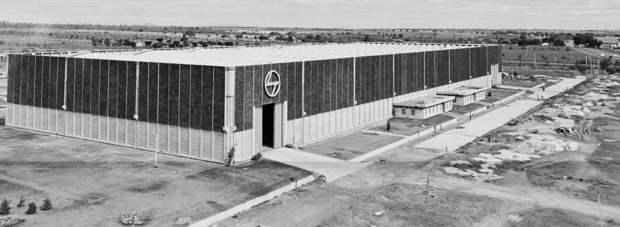
A conflict of interest eventually surfaced, and the government of the day took the view that a company as deeply involved in aerospace, nuclear power and defence as L&T needed to stay publicly-held rather than pass into any single promoter’s hands.
Government-linked institutions retained enough influence to make a Reliance takeover impractical, so Reliance settled into life as a passive investor for more than a decade, though the episode is still credited with pushing L&T to start thinking and expanding at a genuinely bigger scale than before.
L&T and Aditya Birla Group
Reliance eventually sold its remaining L&T stake to Grasim Industries, part of the Aditya Birla Group, on 18 November 2001, at a 46% premium to the market price. Kumar Mangalam Birla’s interest was specific and unambiguous: he wanted L&T’s cement business.
Grasim followed through with an open offer for 20% of the company at Rs 190 a share in October 2002, and once SEBI had investigated and cleared it, Grasim ended up holding about 15.7% of L&T through its subsidiaries.
A.M. Naik, who was running L&T’s management by then, chose negotiation over another drawn-out corporate fight, and in June 2003 L&T and the Birla group struck a deal to demerge L&T’s cement business entirely. Grasim took the cement operations, which became the foundation of UltraTech Cement, and later that year the Birla group exited its remaining L&T stake for good, selling it on to a newly formed employee trust.
That settlement let L&T stay independent while Birla walked away with the cement business, and in doing so it cemented something bigger too: L&T’s identity as one of the very few large Indian companies run professionally, with no promoter family standing behind the curtain.
L&T acquires Mindtree: ‘Tech’ing stock of changing industry dynamics
By 2019, L&T was sitting on more than $2 billion in cash and had decided to grow its existing IT footprint through acquisition rather than wait for organic growth to catch up, and Mindtree became the target.
The opening came through VG Siddhartha, the Café Coffee Day founder, who held roughly 20% of Mindtree and was under serious financial pressure at the time. L&T bought his stake outright, instantly giving it a bigger holding than Mindtree’s own founders held between them, then picked up another 25% from the open market before making a formal open offer to the remaining shareholders at Rs 980 a share.
Mindtree’s leadership pushed back hard, arguing the company was worth closer to Rs 1,081 a share, but the market disagreed with them: the open offer ended up oversubscribed 120 times over. L&T walked away with roughly 60% of Mindtree, the deal closed on 27 June 2020, and Mindtree’s founders left the board and their executive roles not long after.
It was a strange kind of full circle. The company that had spent decades fending off raiders had quietly become one itself.
L&T today: From small beginnings to mega transition
From a single rented room and Rs 20,000 in starting capital, L&T has grown into a sprawling engineering and technology group that now employs more than 400,000 people, and its 2026 revenue stood at roughly Rs 2.9 lakh crore. As of today, L&T commands a market cap of Rs 5.34 lakh crore or nearly $55 billion.
Larsen & Toubro’s revenue from operations rose 11.8% in FY26, while EBITDA climbed 10.3% to Rs 29,151 crore, holding margins steady at 10.2%. Consolidated profit after tax grew 7% to Rs 16,084 crore, up from Rs 15,037 crore the year before, with earnings per share improving to Rs 116.93.
Its businesses now stretch across EPC projects, infrastructure, technology, green energy and renewables, and its defence portfolio includes warships and submarines for the Indian Navy alongside weapon and missile systems like the K9 Vajra howitzer.
It has supplied ISRO with critical equipment across the space programme going all the way back to the earliest launches, and in March 2025 it won its largest single contract ever, a roughly $4 billion LNG project for QatarEnergy.
A.M. Naik, the man who steered L&T through its most dangerous ownership battle, eventually stepped aside from active service and now holds the title of chairman emeritus, much as Holck-Larsen once did. S.N. Subrahmanyan runs the company today as chairman and managing director.
Its two Danish founders once took turns sitting at the same desk because they couldn’t afford two of them. Neither man lived to see the mega avatar that the company has transformed into today from its humble beginnings.
Editorial Note: This profile is based on original reporting, including direct communication with L&T. To ensure a comprehensive perspective, FinancialExpress.com corroborated this information with public records and third-party sources. FinancialExpress.com retains full editorial independence and final authority over all editorial decisions.