


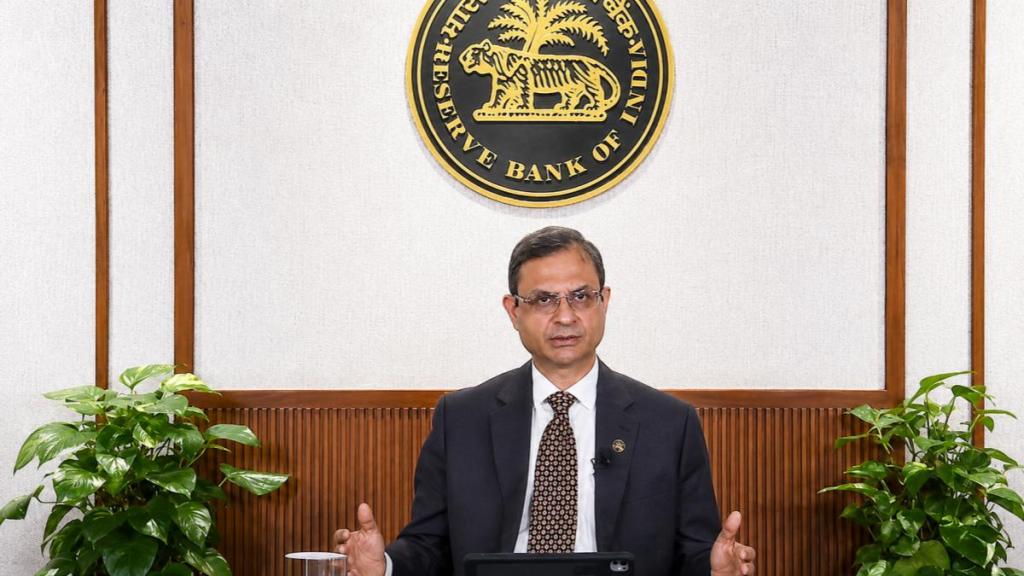

Reserve Bank of India (RBI) Governor Sanjay Malhotra on Thursday urged fintech companies to treat customer data as a fiduciary responsibility rather than a business asset, while calling on them to expand financial services to underserved sections of the population.
Speaking at the Global Fintech Fest 2026, Malhotra said the potential of fintech innovation would be fully realised only when it reaches the last mile, including informal-sector workers, women entrepreneurs, MSMEs, farmers and customers in Tier-3 and Tier-4 towns.
“Connecting the last man standing in the queue remains the focus of today’s innovation,” Malhotra said, adding that fintechs could play a significant role in reaching customers that traditional financial service providers find uneconomical to serve. Modern underwriting and credit assessment tools, he said, have made products such as small-ticket credit, micro-insurance and small pensions commercially viable for previously underserved segments.
Malhotra also stressed the importance of trust as financial services become increasingly digital and artificial intelligence (AI) plays a greater role in decision-making. “A financial system that moves at the speed of light, but that people do not trust, will not find takers,” he said.
Safeguarding Consumer Data
The governor said financial and non-financial data held by fintech firms belonged to real individuals and should be collected for a clear purpose, used only within the consent provided and adequately protected.
He said the account aggregator framework was built around this principle, enabling purpose-limited and consent-based data sharing without allowing any single entity, including the aggregator, to access or exploit the underlying data.
Malhotra also cautioned fintechs against building businesses around gaps between regulatory categories and seeking clarity only after scaling up. Firms should instead use the RBI’s regulatory sandbox and pilot mechanisms to engage with regulators early, test assumptions and validate their business models, he said.
As fintech firms grow in payment volumes, lending books or user base, their responsibilities extend beyond their own balance sheets, Malhotra said. Operational resilience, business continuity and cybersecurity should be treated as “the price of the scale a firm has achieved” rather than costs to be minimised.
Global Ambitions
On global ambitions, Malhotra said India’s fintech ecosystem had an opportunity to move beyond the domestic market and develop solutions for other emerging economies. India’s expertise in financial inclusion, digital identity, interoperable infrastructure and affordable payments could be adapted for global markets, he said.
He added that self-regulatory organisations could help establish industry-led standards, promote responsible conduct and facilitate engagement between the industry and regulators.
The RBI is also developing digital public infrastructure for next-generation financial services, including the Unified Lending Interface, Mule Hunter, the proposed Digital Payments Intelligence Platform and pilots on programmable central bank digital currency, Malhotra said.
He added that the central bank would continue with a proportionate and activity-based regulatory approach based on the principle of “same activity, same risk, same regulatory treatment”, while calibrating regulation to the capacity and scale of individual entities.