


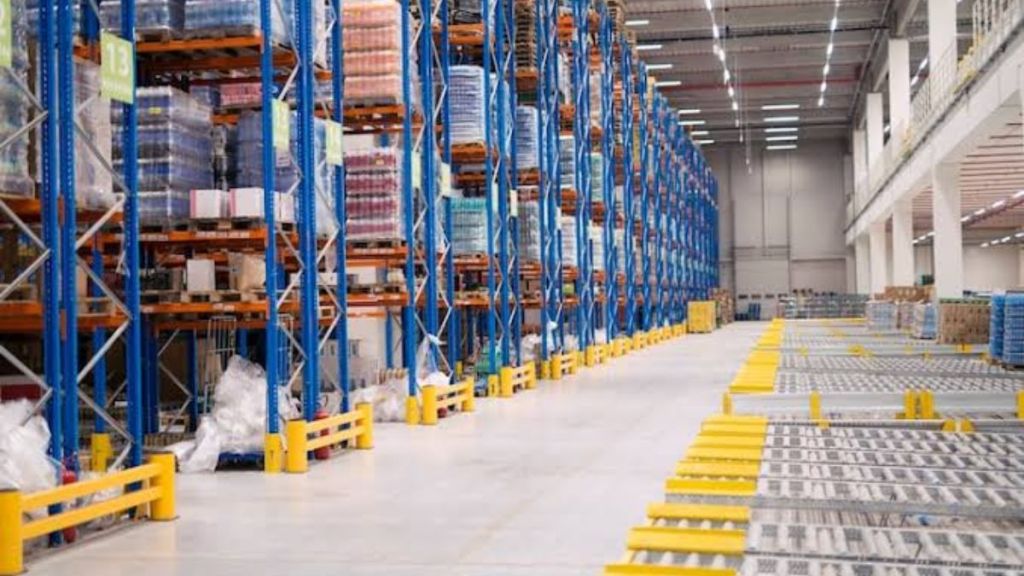

Warehousing may not be glamorous, but there’s money in it. Returns aren’t what they were a couple of years ago. Land takes time to assemble, and approvals are almost always delayed. Yet business houses such as the Welspun Group and the TVS Group are ready to place bigger bets on the sector, seeing opportunity across storage, allied services, logistics and leasing.
The reason is scale. India’s warehousing market is expected to grow from about Rs 2.5 lakh crore today to around Rs 4 lakh crore by 2031, a CAGR of 8.5%, according to Mordor Intelligence.
Demand is also changing shape. It is moving beyond traditional consumption, says Ramnath Subramaniam, joint managing director, TVS ILP. Organised retail, e-commerce, manufacturing and the growing use of third-party logistics are all driving demand for Grade A space.
For TVS ILP, the opportunity goes beyond conventional warehouses to integrated industrial and logistics ecosystems. The group’s infrastructure investment trust has raised over Rs 1,300 crore, and around 11 million sq ft of operating assets have been transferred to the InvIT. “As assets are developed they can be transferred to the InvIT, enabling us to recycle capital for the next project,” Subramaniam told FE.
Many formats, one boom
At Welspun One, chief customer officer Neeraj Balani sees the opportunity spread across formats. Grade A distribution centres, free trade warehousing zones (FTWZs), SEZ-led warehousing, urban fulfilment centres, built-to-suit facilities and vertical warehouses are all gaining traction. “We see the opportunity across these evolving formats, depending on the requirements of the occupier and the location,” he said.
Welspun One leased over 2.5 million sq ft in FY26, taking its total past 6 million sq ft.
Newer players are scaling up fast too. Logicap Advisors, the industrial and logistics platform backed by Alta Capital, has grown from 2 million sq ft in 2022 to 25 million sq ft in nearly four years. That makes it the country’s fastest-growing warehousing and industrial platform and the third-largest by portfolio size, says Abhay Goyal, chief investment officer, Logicap Advisors.
The war chests
The expansion plans are sizeable. TVS ILP plans to commit about Rs 2,500–2,700 crore over the next three years, growing its portfolio from around 12 million sq ft to nearly 20 million sq ft by 2028. The money will go into new assets and into emerging industrial and logistics markets, mainly in northeastern and central India and Tier 2 and Tier 3 cities, Subramaniam said.
Welspun One is targeting over 10 million sq ft of additional leasing over the next three years, backed by a multi-city development pipeline of more than 13 million sq ft across large-format warehousing, in-city distribution and port-led infrastructure. The expansion will be funded through equity raised in the group’s alternative investment fund, Balani said.
Logicap is lining up Rs 1,500–1,900 crore of equity to invest over the next three years. “We remain open to an IPO for Logicap as the platform scales, depending on market conditions,” Goyal said.
NDR InvIT plans to deploy Rs 450 crore to acquire nearly 8.2 lakh sq ft of under-construction warehousing across Chennai, Pune and Hyderabad, along with assets in Cochin, said Naidu Amrutesh Reddy, director, NDR InvIT. It also has about 390.5 acres available for development, which could yield roughly 9.76 million sq ft of warehousing space, with more assets on the table if demand picks up.
The catch
It isn’t all smooth going. Land is not always available where developers want it, Goyal notes. Assembling large, well-located parcels takes time, adds Subramaniam. “Differences in the approval processes across states can affect project timelines,” he said.
Returns are also thinning as more investors crowd in. Yields on operational properties have fallen from 8.5–9% a couple of years ago to 6.5–7% now. For development assets, yield on cost has dropped from 11.5–12% to 9–9.5%, as land prices have shot up while rents have risen more slowly.
Developers aren’t complaining. Balani sees the squeeze in the context of the sector’s long-term potential. “Land, construction and financing costs may have risen faster than rentals in some markets. But India is becoming a global manufacturing and supply-chain hub and that is creating a structural requirement for logistics infrastructure,” he said. As more companies set up operations, he expects demand for warehouses that store and move raw materials, components and finished goods to keep growing.
The numbers back the optimism, with a caveat. Annual leasing across manufacturing and warehousing is expected to hit 60 million sq ft in 2026, up 9%, and rents are expected to rise 4–6% a year, says Chandranath Dey, operations head (India), business development, industrial consulting & integrated logistics, JLL.
“While this outpaces the APAC average of 2-3%, the low starting base means rents must sustain this pace over the next five years to make developer investments financially viable,” he said.