


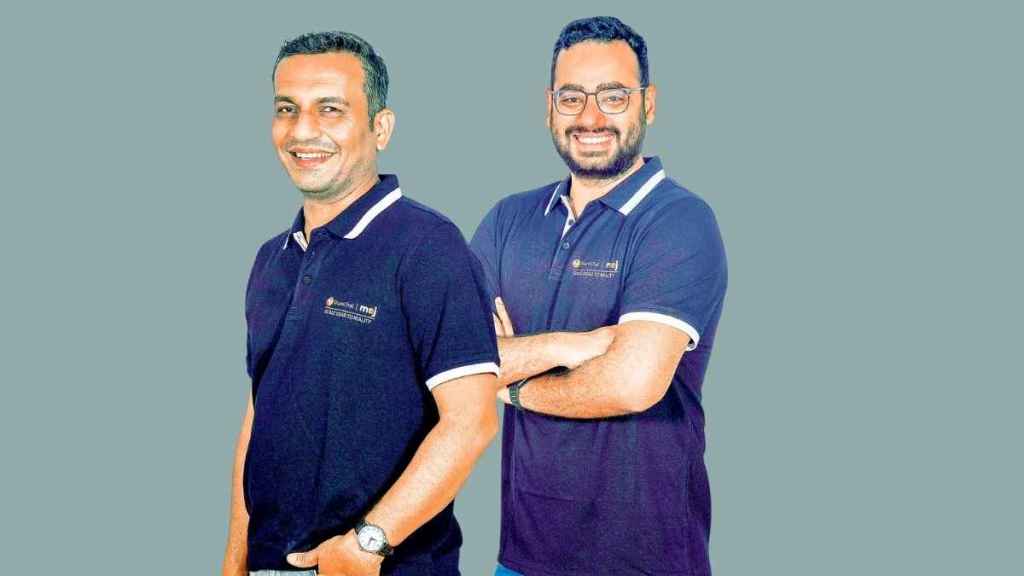

In November 2014, Ankush Sachdeva, then a final-year student at IIT Kanpur, came across a post on a Sachin Tendulkar fan club on Facebook. It had nearly half a million likes and asked users to leave their phone numbers in the comments to be added to a Tendulkar WhatsApp group. Around 50,000 people had responded.
Sachdeva copied the numbers and created the group. Strangers began posting photographs, jokes and shayaris, while treating him, simply because he was the admin, as an authority. “These guys are so starved of content that they are putting their phone numbers out in public forums,” he says.
The observation was simple: India’s emerging Internet users wanted content, but much of what was available was not in their language or built around their interests. That insight became ShareChat, the social and content platform operated by Mohalla Tech, which today also runs short-video platform Moj and microdrama service QuickTV.
The company did not arrive at ShareChat directly. Sachdeva had already experimented with finding unmet demand. In Class 10, he discovered that school and affiliation codes could be used to access the CBSE results system and began distributing results and admit cards before their official release. “That was my first product-market-fit (PMF),” he says.
He met Farid Ahsan and Bhanu Pratap Singh at a Yahoo! hackathon in Kanpur in 2012. The three went on to build more than a dozen products, including a property listings platform, a crime-data analyser for the Delhi Police and a debating platform. ShareChat emerged from those experiments.
Launched in October 2015, it started as a directory of discoverable groups designed to work on 2G. The product then changed as India’s Internet changed. Jio’s entry in 2016 brought millions of users online and sharply reduced the cost of mobile data. ShareChat introduced a feed and moved towards user-generated content.
The next major shift came in 2020, when the company launched Moj within days of TikTok being banned in India. Advertising became a revenue stream that year, followed by live streaming and virtual gifting. But short video also created a technology challenge: recommendations had to identify which video an individual user was likely to watch. The company assembled a London team of engineers from Meta, Pinterest and Twitter to build that capability.
Investors backed the expansion. Twitter led its Series D in 2019, followed by Google, Times Group, Temasek and Alkeon. Tracxn valued Mohalla Tech at $4.35 billion in June 2022. It also acquired MX TakaTak from Times Internet for around $700 million and merged it with Moj. Overall, the company has raised $1.23 billion.
Then the funding market changed. Jeet11 was shut in December 2022, followed by further layoffs. More than 850 employees left across four rounds of cuts, while Ahsan and Singh stepped down from their operating roles. Headcount is now 491, according to Tracxn.
A $49-million convertible round in April 2024 valued the company at just below $2 billion.
The response was a shift from growth to economics. Manohar Charan, who joined in 2019 to manage investors and later became CFO, led the reset. FY25 revenue was Rs 723 crore, against Rs 718 crore the previous year, while adjusted Ebitda loss narrowed to Rs 219 crore.
That discipline is now being applied to the company’s next bet: microdramas. Charan says India has about 100 million monthly microdrama viewers, with 70 million watching through the company’s platform. Daily episode views have crossed a billion. More than a million users send virtual gifts to creators each month, while 3.5 million pay for subscriptions.
Production costs are also falling. Human-shot microdrama costs about Rs 20,000 a minute, Charan says.
AI-generated content, which cost Rs 25,000-30,000 a minute a year ago, is now around Rs 10,000 and could fall below Rs 5,000 within a year. Mohalla Tech plans to invest `100 crore in AI production workflows.
FY26 revenue is expected to cross Rs 1,000 crore, with adjusted Ebitda loss narrowing to about Rs 120 crore. “First quarter of FY27 we turned Ebitda profitable. Free cash flow arrived end of FY26,” Charan says. The company expects Ebitda margin to move from minus 30% to minus 12% and then to a positive 2-3% this fiscal.
The next test is the public market. Mohalla Tech is targeting an IPO in four to five quarters, with the DRHP expected in about three quarters. Competition is also increasing, with Jio’s Tadka, Yash Raj Films and newer players such as Kuku, StoryTV, Dashverse and RiggiTV entering the space.