


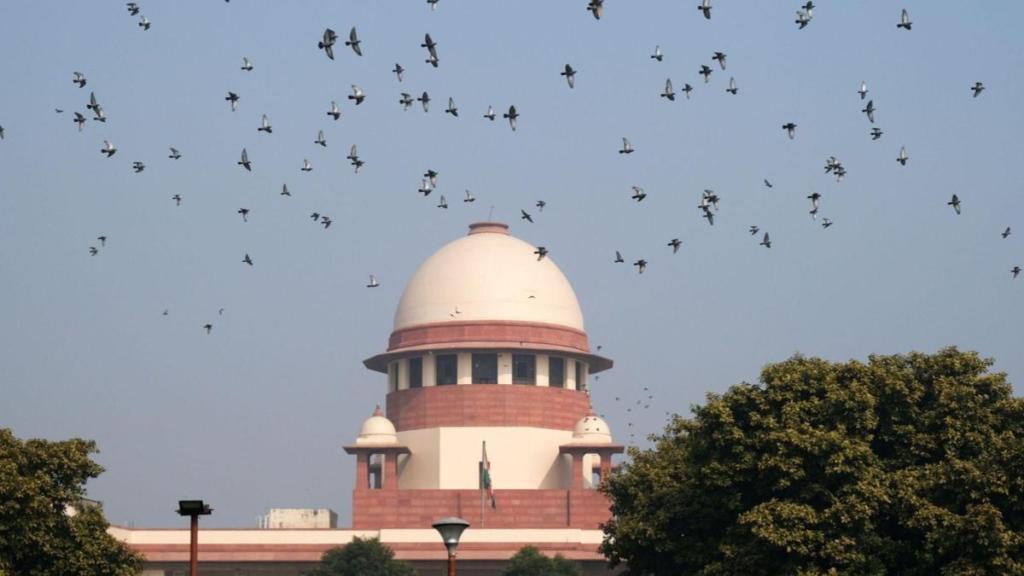

The Supreme Court on Thursday questioned the ministry of corporate affairs’ (MCA) alleged excessive control over the functioning of the National Company Law Tribunal (NCLT), which is vested with adjudicatory powers under the Companies Act and the Insolvency and Bankruptcy Code. The apex court observed that the NCLT’s administration had been “completely hijacked” by the ministry, raising concerns over its autonomy.
The court said the power to appoint staff should rest with the NCLT president and issued notice to the Centre on a petition challenging the outsourcing of recruitment to a private company. It also directed the presidents of the NCLT and the National Company Law Appellate Tribunal (NCLAT) to submit detailed proposals within four weeks on their staffing, buildings, land and other infrastructure needs.
The dispute began after the MCA awarded a contract to a private company to provide staff for the NCLT, including deputy registrars, assistant registrars and stenographers. The move raised concerns among existing contractual employees, who feared losing their jobs.
Although the court declined to protect the existing staff from removal for now, it questioned whether employees hired without a competitive selection process had a right to continue in their jobs. The bench stressed that the issue must be examined in the larger public interest, rather than solely to protect the jobs of existing employees.
The NCLT is also facing a major staff shortage. For instance, the court was told that only 67 of the tribunal’s 320 regular administrative posts were filled, leaving 253 vacant. The shortage comes as the tribunal handles insolvency cases and company disputes, making enough support staff important to ensure cases move on time and court records are properly maintained.
To address the shortage, the bench suggested bringing experienced government officials on deputation as an immediate step, followed by regular recruitment in phases, with support from central recruitment agencies.
The SC also observed that cases under the Companies Act were being delayed as insolvency cases were given priority.
Subodh Dandawate, associate director (regulatory advisory) at Nexdigm said the court’s observations highlight the need to protect the NCLT’s independence. “While administrative oversight is necessary, recruitment and staffing mechanisms must ensure accountability without compromising judicial independence. A structured, transparent approach to appointments is essential for the tribunal’s effective functioning,” he said.
Separately, the NCLT Bar Association flagged poor facilities at the tribunal’s main bench in Delhi. To improve day-to-day functioning, the bench suggested appointing an officer of deputy registrar or joint registrar rank at every NCLT bench to maintain court records. It also asked the Attorney General to urge the Centre to provide basic facilities without delay.