


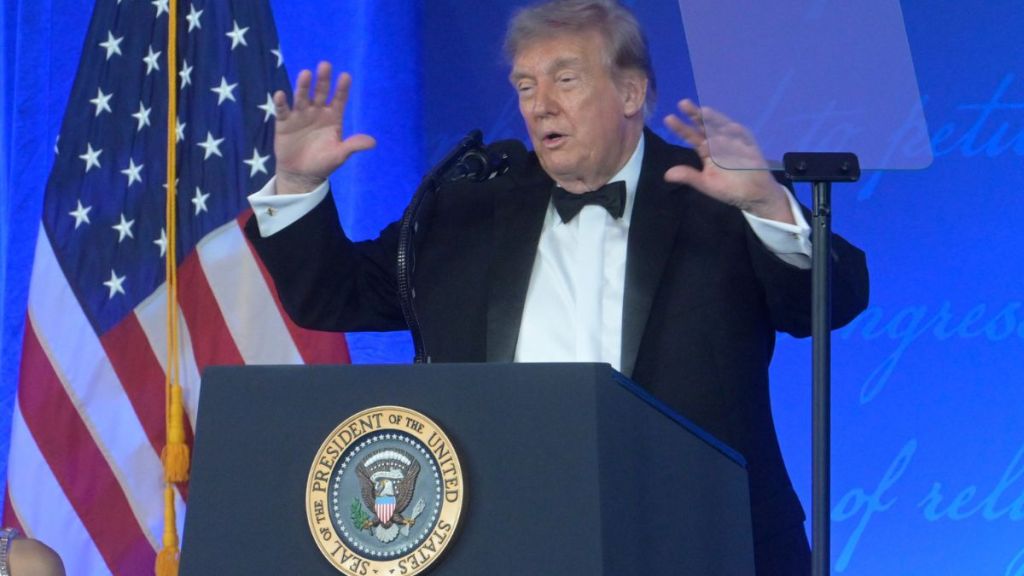

The US House of Representatives has passed a major sanctions bill targeting Russia, its officials, banks and energy trade, in a move that could also expose countries such as India to tariffs of up to 100 percent. The bill will now be sent to President Donald Trump’s desk for his signature.
The bill cleared the House by 262 votes to 159, with lawmakers from both parties split over the legislation. It had earlier passed the Senate in a much more bipartisan 86-11 vote in August.
The package supports the idea of pressuring Russia’s economy and forcing President Vladimir Putin to end the war in Ukraine, which began with Russia’s invasion in 2022.
The legislation, named the Lindsey O. Graham Sanctioning Russia and Iran Act of 2026, is named after the late Republican Senator Lindsey Graham. It was the result of more than a year of negotiations.
Trump’s support was important in getting the bill through. The legislation includes a provision sought by Trump to extend existing sanctions on Iran for another five years.
What does the bill target?
The bill expands sanctions against Russian officials, financial institutions and banking authorities. It also targets vessels that are part of Russia’s so-called “shadow fleet”, which is used to keep Russian energy shipments moving despite Western restrictions.
The legislation also gives the president the power to impose tariffs of up to 100 percent on the five biggest buyers of Russian oil and natural gas.
There is an exception for countries that buy less than 15 per cent of Russia’s natural gas exports and have taken significant steps to reduce those purchases.
Why India is in focus
India and China are among the biggest buyers of Russian crude oil. As a result, both countries have emerged as key targets of the tariff provisions.
The idea behind the measure is to use access to the huge US market as pressure on countries that continue buying Russian energy. Washington wants to reduce the money flowing to Russia from its oil and gas trade, which the US says helps finance the war in Ukraine.
For India, however, one point is important: the bill does not automatically put a 100 percent tariff on Indian goods.
Instead, if Trump signs the legislation, it would give his administration a legal route to impose tariffs of up to 100 per cent on Indian imports if the conditions set out in the law are met. The final decision on whether to use that power would remain with the president.
‘A moral issue’
Republican Rep. Michael McCaul of Texas backed the legislation and said the US needed to do everything it could to stop the war.
“This is a moral issue that requires moral courage,” McCaul said.
“I want us to be able to say that we did everything possible to end this war. That we understood the threat. That we had the courage to do what was right — to cripple the Russian war machine and turn the tide toward peace.”
House vote shows party divide
The House vote also showed the growing political divide in the Republican Party over US support for Ukraine.
A total of 58 House Democrats joined most Republicans in voting for the bill.
On the other side, seven Republicans joined most Democrats in voting against it. Support for Ukraine has become a major point of disagreement within the Republican caucus in recent years.
The Senate had passed the legislation in August with an 86-11 vote, showing much stronger support from both parties than the House vote.
However, its progress slowed in the House as lawmakers argued over the tariff powers given to the president. Some lawmakers have raised concerns that the bill gives Trump too much freedom to impose tariffs.
With the House now approving the legislation, it moves to the White House. If Trump signs it, his administration will have additional powers to impose sanctions on Russia and potentially use tariffs against countries that continue to buy Russian energy.
Zelenskyy backs the legislation
Ukrainian President Volodymyr Zelenskyy had openly pushed for the bill before the House vote. He appealed to US lawmakers to support the measure.
After the vote, Zelenskyy said on social media: “During the war, it is sometimes better to make a not-so-perfect decision than to do nothing.”
The legislation is seen as the biggest US legislative move in support of Ukraine since Trump returned to the White House. It follows nearly two years of gridlock in Congress after the emergency Ukraine aid package passed in 2024.