


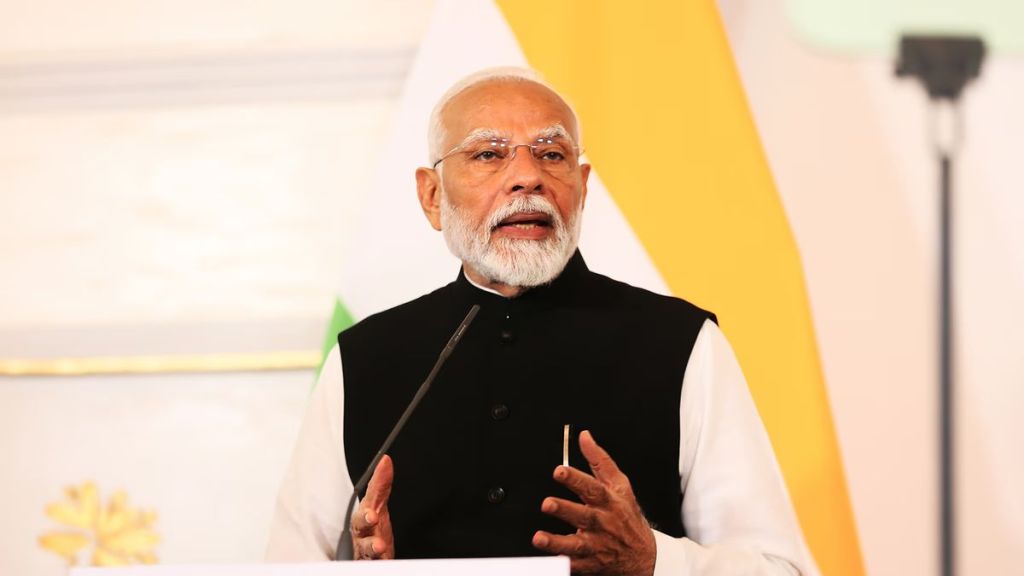

Prime Minister Narendra Modi on Sunday proposed that a BRICS Startup Innovation Fund be created to foster greater cooperation among start-ups, incubators and entrepreneurs in the eleven countries that are part of the grouping. Addressing the BRICS Summit here, Modi said an incubator network under the gruping would help create new opportunities for innovation and collaboration and to develop scalable solutions.
The proposals come as BRICS seeks to deepen economic and technological cooperation and ensure that innovation is not limited to government-led initiatives.
In the Declaration adopted on Saturday, the grouping underscored the important role of BRICS economies in fostering innovation and advancing technological cooperation, including in areas related to Industry 4.0, while promoting deeper engagement among start-ups and SMEs through intra-BRICS initiatives and exchanges.
On Sunday, Modi stressed the need to strengthen resilience amid growing global conflicts, pandemics, climate-related disasters and supply-chain disruptions.
“In today’s interconnected world, no crisis remains confined to a single region,” he said, highlighting India’s emphasis on building resilience within BRICS. He pointed to agreement on a BRICS Integrated Early Warning System for the prevention of and response to infectious diseases, along with Early Warning Data Integration Guidelines for disaster management and a BRICS Logistics Supply Chain Cooperation Framework aimed at making supply chains more reliable and resilient.
Innovation in agriculture was another major focus, with Modi highlighting the BRICS Network on Digital Agriculture, which he said would connect artificial intelligence, geospatial technology and Digital Public Infrastructure with farmers’ needs.
Modi underlined India’s efforts to broaden BRICS cooperation beyond governments and bring entrepreneurs, farmers, researchers, women, youth and citizens into the grouping’s activities. He highlighted BRICS CONNECT, aimed at advancing skills, employability, women’s participation in the workforce, social security and capacity building, as well as the BRICS MSME Cooperation Portal, which seeks to connect small enterprises with knowledge, finance and new markets. He also cited the BRICS Urban Mobility Hub, established to enable cities to share best practices.
He highlighted the establishment of the BRICS Digital Centre of Excellence for Smart Grids and Energy Storage, which is intended to support more reliable, efficient and accessible clean-energy systems. He also pointed to the Centres of Excellence for Agro-Ecology and Regenerative Agriculture, which aim to combine traditional knowledge with modern science and strengthen climate adaptation.
Linking these initiatives to the broader interests of developing countries, Modi said BRICS should ensure that solutions developed within the grouping are also accessible to the wider Global South. “The benefits of solutions developed within BRICS should not remain confined to BRICS alone,” he said, stressing that such solutions should be adaptable to the needs of developing countries.
Modi said the growing confidence of the Global South in BRICS reflected the grouping’s approach of listening to countries, respecting their experiences and developing solutions jointly. “Their voices are heard. Their experiences are respected. And solutions are developed not for them, but together with them,” he said.
In his concluding remarks, Modi said: “BRICS is entering its third decade. The world expects concrete results from us, not just ideas and commitments.” Modi described diversity and cooperation as the central strengths of BRICS.