


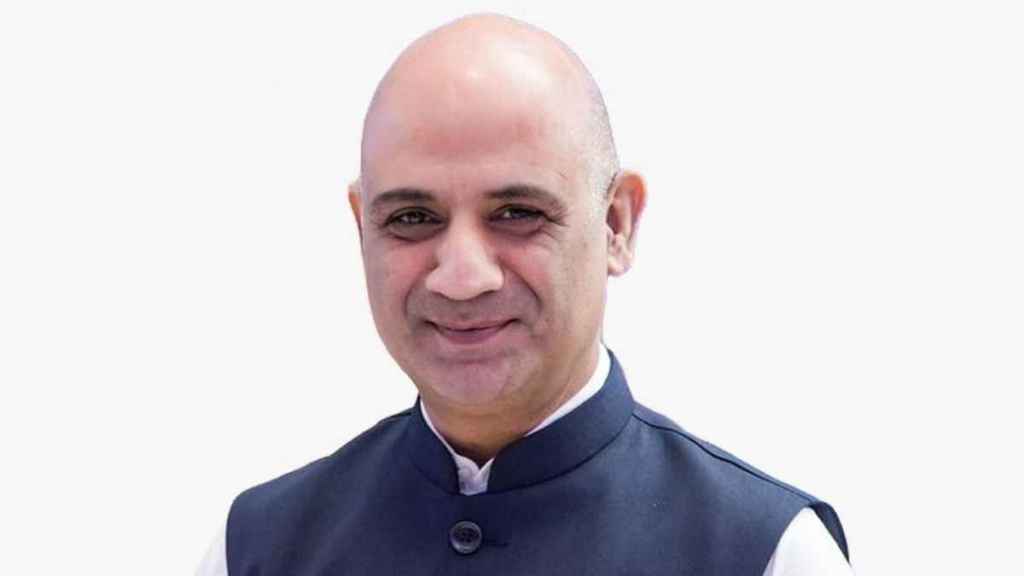

Perfios MD and CEO Nitin Chugh believes financial institutions will take time to embrace agentic AI, with multiple layers of oversight and governance needed before agents can handle end-to-end financial workflows. In an interview with Kshipra Petkar, Chugh discusses agentic payments, AI-led lending, fraud prevention, cybersecurity and the evolving role of fintechs. Excerpts:
Having moved from banking to a technology company serving banks and NBFCs, what is the biggest gap you see today in the way financial institutions use technology?
I maintained this view as a banker and continue to hold it today: technology availability is no different for banks and fintechs. The gap is increasingly about capability and specialisation. The opportunity for us, and for others specialising in different areas, is that there will be a greater need for domain expertise. Banks will have the scale and capability to execute, but specialist skills will increasingly come from fintechs.
With lending or payment decisions increasingly being taken by AI agents, who is ultimately responsible if something goes wrong?
It will be a shared responsibility because there are several layers involved. At the base are the foundational or frontier models, which have their own guardrails. On top of those, companies such as Perfios build applications or agents with guardrails defining what an agent can and cannot do. Banks then overlay their own policies, governance frameworks and guardrails.
Around all of this are regulatory, legal, compliance and observability requirements. So, it is difficult to say that one party will be responsible if an agent behaves incorrectly. The positive aspect is that there is significant traceability. Evidence is captured through audit trails, so if something goes wrong, it should be possible to identify where it happened and fix it relatively quickly.
How do you see agentic payments evolving?
Agentic commerce and payments are already being discussed, but the ecosystem is still evolving. We are not going to be in a hurry to leave everything to agents just yet. Multiple agents will need to work in sync, and people, banks and customers will need time to become comfortable with them. Agentic payments will evolve alongside agentic lending and other financial services.
AI is also creating new cybersecurity risks. How is Perfios approaching the possibility of AI being used to attack AI-based systems?
Security operates across several layers. Our responsibility is to ensure that the products and applications we provide to banks are protected within the parameters we control. Banks, meanwhile, have to reinforce their overall perimeter as well as individual applications as attack vectors evolve.
It is a continuous process. As the nature of attacks changes, security controls and employee training also have to keep pace.
How important is real-time action in tackling mule accounts and fraud?
There is increasing focus on taking action as close to real time as possible because the objective is to prevent money from moving out of the network. Once money moves from one bank to another, stopping it requires significant coordination and technology.
There is also growing collaboration at the network, industry and international levels. Ultimately, fraud is a perpetual race. You have to keep pace with changing fraud vectors and become better at detecting and preventing them than you were yesterday.
What is the broader strategy behind acquisitions such as Clari5, CreditNirvana and IHX, particularly as you expand internationally?
The acquisitions have broadened our coverage by adding complementary businesses. When we speak to a bank or NBFC, we can now offer much wider coverage, and the same applies in international markets.
What is changing is that clients increasingly want these capabilities stitched together rather than deployed as standalone solutions. We are therefore working on solution-based platforms and workflows where two or three capabilities from different group companies can come together.
Could AI and alternative data eventually reduce the importance of traditional credit bureau scores, particularly for segments such as MSMEs?
Bureau scores have always been just one input into a lending decision. Banks typically look at multiple parameters, so I don’t see AI making bureau scores irrelevant. What AI can do is bring many more signals into the decision-making process.
In MSME lending, for instance, traditional processes involve documents, verification, field visits, KYC checks, financials and stock statements. AI can enable banks to incorporate additional signals from public and consented sources and bring all that information together.
An AI agent can orchestrate these inputs and present them in a way that enables the underwriter to make a more informed decision.
Will AI reduce the role of humans in banking, or will it change the nature of their work?
I think humans will get better at what they do. AI can release a significant amount of efficiency that can then be used productively elsewhere. The learning curve for freshers can also become shorter. AI does not give someone 30 years of experience overnight, but it can expose them to the nuances and ways of working much earlier.
What is your mandate at Perfios over the next two to three years?
We are in a growth phase, so we have to grow the existing business while also building new lines of business using the knowledge, skills and engineering capabilities we have. Increasingly, we will be manifesting many of these businesses as agentic solutions. We have showcased four areas in particular — agentic onboarding, agentic underwriting, agentic fraud detection and agentic collections. Earlier, we may have powered parts of these value chains; increasingly, we are moving towards complete agentic workflows. The mandate is to build the platforms and products for these workflows and work with banks as the industry gradually develops the ability to absorb them.