



South Indian Bank expects gold loan demand to remain robust ahead of the festive season and sees no major asset quality concerns despite the sharp correction in gold prices. Its assessment comes even as some non-banking financial companies (NBFCs) have flagged early signs of repayment stress in gold loans, the country’s second-largest retail lending category after mortgages.
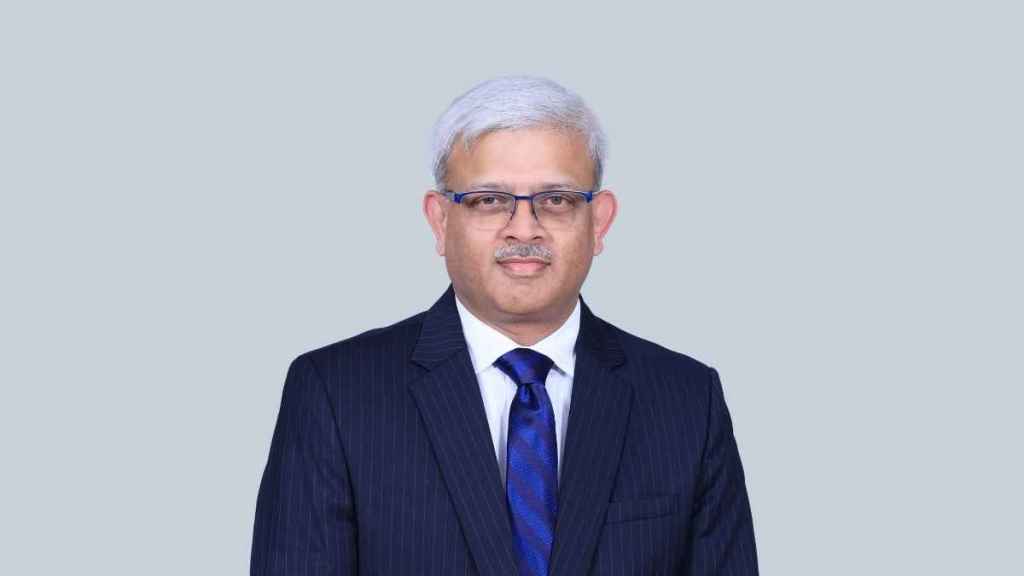
“There are no strains on asset quality because in India people don’t consider gold as an option that they can leave from their asset book,” Mahesh Pai, MD & CEO, South Indian Bank told FE. “Even if the prices are coming down, people will not allow the gold to get out from their books. I think the gold loan growth is consistent and it will continue.”
Gold prices have corrected from their record highs earlier this year, which Pai said was also helping borrowers meet their repayment obligations.
Gold prices have eased from an all-time high of ₹1,83,050 per 10 grams for 24-carat gold in January 2026, which remained elevated in February amid geopolitical uncertainty, inflationary concerns and safe-haven buying. Domestic prices have since corrected, with 10 grams of 24-carat gold closing at ₹1,48,310.60 on Thursday. “We are currently in one of the lower ranges,” Pai said.
South Indian Bank’s gold loan portfolio grew 41% year-on-year to ₹26,603 crore in the first quarter of FY27, the sharpest increase among its asset classes.
His comments comes at a time when some NBFCs have flagged emerging repayment risks in the segment. Piramal Finance MD & Chief Executive Jairam Sridharan said 15-23% of gross gold loan disbursements across the industry in 2025-26 went to borrowers who were more than 90 days overdue on at least one other outstanding loan. He pegged the value of such disbursements at ₹4.7 trillion. “Today, presence of a gold loan on file is not an indicator of higher risk on the portfolio, but these data points are worth noting and tracking,” Sridharan said during the company’s first-quarter earnings call.
Bajaj Finance, meanwhile, reported an increase in Stage 2 assets, comprising loans overdue by 31-90 days, in the July-September quarter. The company attributed ₹1,047 crore of the increase to short-tenor gold loan schemes introduced after the Reserve Bank of India’s revised gold loan guidelines came into effect. “It’s better to manage it through risk rather than manage it through auction,” Rajeev Jain, vice-chairman and MD of Bajaj Finance, said during the earnings call.
However, Pai said the correction in gold prices has also provided a cushion against potential collateral risks for the lender. “Our average Loan-to-value (LTV) is somewhere closer to 70-75% range. So that in itself has around 20-25% margin. This is even considering the interest portion of the LTV. We have sufficient cushion,” Pai said, adding that there was not much to worry about LTV at this point.
The revised RBI norms require lenders, from April, to classify gold loans based on their end use as income-generating (productive) or consumption (non-productive) loans. Pai said lending norms allow higher LTVs for certain categories, particularly agriculture, while the rules are more restrictive for non-productive purposes.
“In some of the segments, we can give 85% (LTV), especially in the agriculture side. There is demand but again the RBI norms are not very pushy towards the non-productive purposes,” Paid said.
South Indian Bank is looking to increase the share of retail, agriculture and micro, small and medium enterprises (RAM) in its overall loan book to 64–65%, while reducing corporate lending to 35–36%. “We were at 43% of the corporate (loan book).” That consistently has been coming down to now currently 39%,” Pai said, adding that MSME and gold loans within the retail portfolio would drive this diversification in the medium term.
The bank’s gross advances grew 19% year-on-year to ₹1.09 lakh crore as of September 2026.