


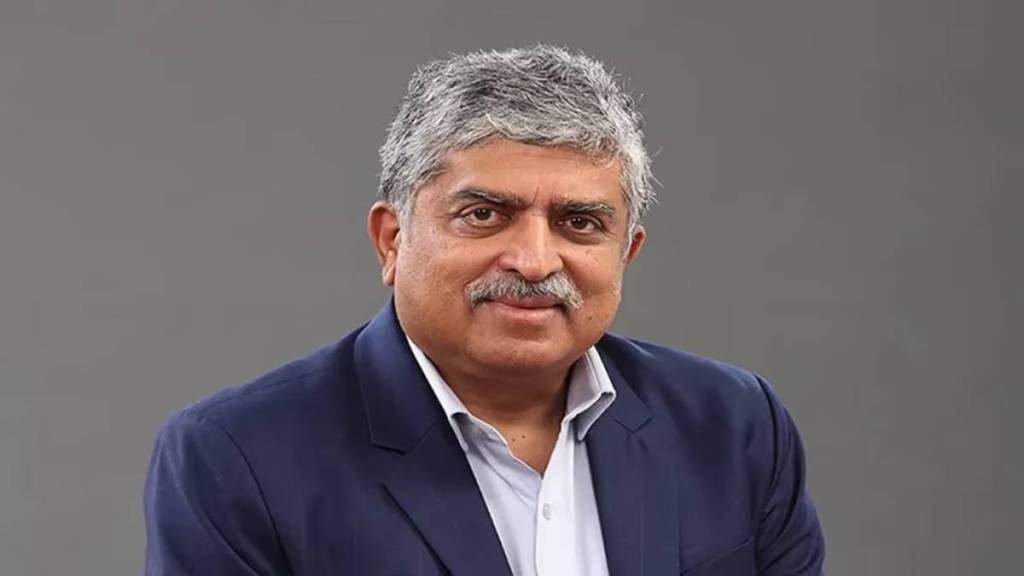

Infosys co-founder and the architect of India’s digital public infrastructure, Nandan Nilekani, on Thursday said tokenisation needs to move beyond financial assets and be taken to population scale, outlining use cases ranging from cows and farm produce to loans and invoices as part of his vision for the Finternet.
Speaking at the Global Fintech Fest, Nilekani said real-world assets could be bundled with their attributes into portable digital tokens, allowing them to be transferred across networks and potentially used to access financing from multiple lenders.
Population-Scale Tokenisation
“If you want to accelerate tokenisation across all asset classes for all use cases, you have to think at population scale,” he said. One of the use cases involves tokenising a cow along with info such as its identity, owner, health and ownership status. The token could then be shared with lenders as the basis for obtaining credit, allowing the borrower to potentially approach lenders beyond the cooperative bank with which the farmer may traditionally deal.
A separate use case is aimed at farmers storing rice, wheat and other produce in warehouses. Nilekani said tokenising warehouse receipts could make them portable, allowing the underlying inventory to be presented to multiple lenders. The token would carry information such as the quantity and quality of the produce, its warehouse and insurance status.
“That bargaining power goes to the farmer because you can choose which lender,” Nilekani said, referring to the ability to take the token to different lenders.
The broader Finternet proposition is to create an open and interoperable financial architecture in which tokens representing assets can move between networks rather than remain confined to individual platforms. For Nilekani, however, simply creating a digital representation of an asset is not enough.
“A token is a trustable unit because it has all its attributes but it still has to reach the right place on time,” he said, highlighting the need for interoperability and liquidity for tokenised assets to have real-world utility.
Role of AI Agents
The next layer of the Finternet, according to Nilekani, will be artificial intelligence. AI agents could eventually transact in tokenised assets without manual intervention. An agent, for instance, could take an invoice, convert it into a token and offer it to multiple lenders to obtain financing.
The combination of programmable assets and AI agents could also help smaller businesses access capabilities that are currently available mainly to larger companies, Nilekani said. “You can have a small business, can have a 24/7 agent, the best analysis on the internet, a token that took itself and the marketplace can sell it or give a loan against it,” he said.
Nilekani also used the forum to flag the employment implications of AI, highlighting that large companies could face greater job displacement because their work is more structured and therefore easier to automate.
His answer, Nilekani said, is not to rely on a small number of large companies for employment but to create an economy with millions of small businesses. Such businesses, he suggested, could also use AI agents and open digital marketplaces to access capabilities previously available only to larger enterprises.