


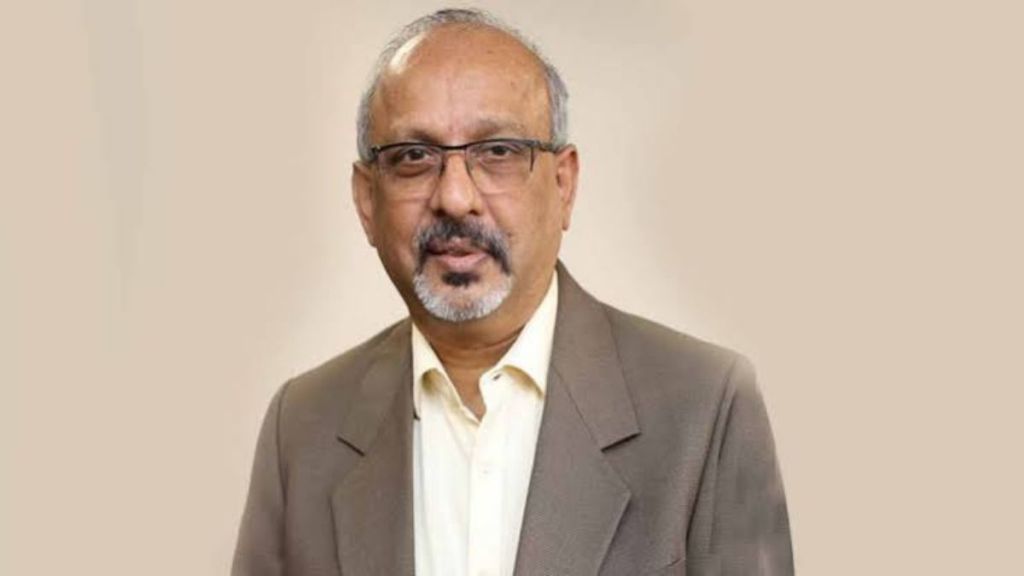

Investors should avoid choosing funds simply based on recent performance and the focus should remain on financial goals and time horizon. For first-time investors, a broad-market index fund can be a good starting point, says Kailash Kulkarni, chief executive officer, HSBC Mutual Fund. In an interview with Saikat Neogi, he emphasises that investors need to stay disciplined amidst market volatility even as they look for greater flexibility and diversification. Edited excerpts:
Why are investors shifting from large-cap funds towards flexi-cap funds and multi-cap funds?
I would see this less as investors moving away from large caps and more as investors looking for greater flexibility and diversification. Large-cap companies remain an important part of an equity portfolio but the opportunity set is widening as the Indian economy grows. Flexi-cap funds can move across market-cap segments based on opportunities while multi-cap funds provide exposure to large, mid and small caps with a minimum investment mandate of 25% under each market cap as per the categorisation of schemes. Investors should, however, avoid choosing funds simply based on recent performance. Market leadership changes, so the focus should remain on goals and time horizon.
Are index funds a good starting point for first-time investors?
For a first-time investor, a broad-market index fund can be a good starting point as it offers diversified equity exposure and is easy to understand compared with selecting individual stocks. Investors should not judge an investment only by its short-term returns, as equity markets move through different cycles. A longer investment horizon allows investors to participate in the potential growth of the market over time.
Why should portfolios of Indian investors now include global exposure?
Global exposure provides access to businesses and sectors that may not be available in India, giving investors broader opportunities. Different geographies can perform differently across market cycles. While one country may underperform, another may outperform, helping reduce dependence on any one market. Hence, 10–15% of the portfolio can be considered for international exposure.
As returns from many systematic investment plans (SIPs) turn negative for those who have invested in the last two years, what should investors do?
Staying invested for the long term is important. Data shows that one good year following a few not-so-good years in the market can lead to substantial growth in the value of a SIP portfolio, as the units accumulated at lower NAVs can benefit when the market recovers. The bigger challenge is investor behaviour. Staying disciplined through periods of volatility is key to making the most of the SIP approach. Ideally, SIPs should be looked at over a longer time horizon and not just a 1–2 year period.
HSBC MF’s RedHex Hybrid Long-Short Fund has crossed Rs 1,000 crore in AUM within two months of launch. Why are specialised investment funds (SIFs) becoming popular?
SIFs are gaining interest as investors look for differentiated strategies that offer greater flexibility and diversification. They have the potential to generate higher returns than traditional investment avenues while managing portfolio risk. They give fund managers additional tools to navigate different market conditions, including long-short and hedging strategies. The ability to combine asset classes such as fixed income, equity arbitrage, Real Estate Investment Trusts (REITs) and Infrastructure Investment Trusts (InvITs) can help generate returns across different market cycles. However, I would not look at SIFs only through the lens of whether they are beating benchmark indices. The objective is to manage downside while seeking better returns. The strong response to RedHex Hybrid Long-Short Fund reflects the growing appetite for such differentiated solutions.
At a time when equity returns are muted, how can multi-asset funds help investors get higher returns?
Multi-asset investing is not necessarily about getting higher returns, it is about improving the quality of returns by managing risk across asset classes. Equities, fixed income, gold and silver can behave differently across market cycles. When one asset class is under pressure another may provide stability or diversification. This can help reduce overall portfolio volatility and provide a smoother investment journey. Rather than trying to predict which asset class will perform next, investors can benefit from having exposure to multiple sources of return. Ultimately, asset allocation is more important than trying to time the market.
If an individual has Rs 10 lakh to invest now, what would be your portfolio advice to put the money to work?
I would first understand the investor’s goals and time horizon. For a long-term objective, my recommendation would be a diversified portfolio with a focus on equities. For a short to medium-term horizon, fixed-income investments may be more appropriate. If the investor is uncomfortable investing the entire amount at once, it can be deployed in a staggered manner. The focus should be on diversification and asset allocation not market timing.