



Tata Motors plans to leverage IVECO’s global manufacturing and sales network to locally assemble commercial vehicles in overseas markets, using its proposed $4.4-billion acquisition of the Italian truck maker as a springboard to transform itself into a globally diversified commercial vehicle company. The acquisition, the largest in Tata Motors’ history, is expected to close by the end of Q2 FY27 after receiving most regulatory approvals. Once completed, the combined entity will become the world’s fourth-largest commercial vehicle manufacturer.
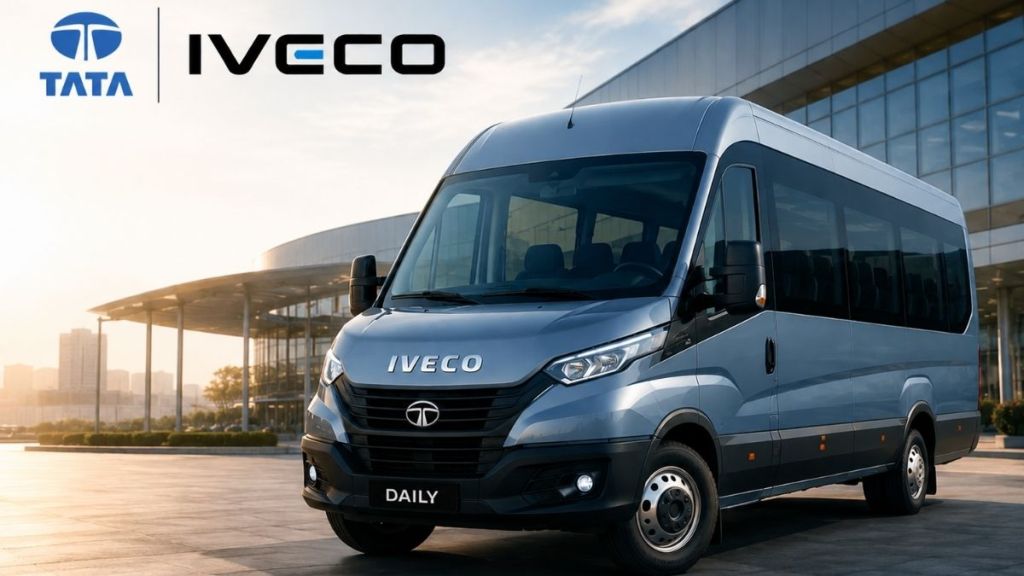
As part of the integration strategy, Tata Motors plans to introduce select IVECO products in India while expanding its own commercial vehicle portfolio into IVECO’s established overseas markets. “We will explore some of these products being brought into the Indian market,” Tata Motors Managing Director and CEO Girish Wagh said during a media roundtable on Thursday, identifying deep mining tippers and the IVECO Daily minibus as the primary candidates.
Since Tata’s existing portfolio is positioned below the IVECO Daily’s price point, Wagh said the company expects minimal product overlap.
Cross-Badging
At the same time, Tata plans to use IVECO’s established sales, service and manufacturing footprint, particularly in Latin America, to introduce Tata-branded commercial vehicles. The company is open to cross-badging and different branding strategies depending on regional requirements. While there are no immediate plans to shift manufacturing to India, Tata will utilise IVECO’s production facilities in Brazil and Argentina for regional localisation.
Supply Chain Optimisation
The company is also targeting operational synergies by optimising IVECO’s supply chain. A key focus will be shifting part of IVECO’s component sourcing from Western Europe to Eastern Europe to improve cost competitiveness.
“Even if we move some of this sourcing to Eastern Europe, like the other European OEMs, I think this itself can bring in a significant amount of savings. So I think this is a very high-level view on what is possible,” Wagh said.
Under the strategy, IVECO will continue serving premium and low-emission markets across Europe, Latin America and Australia-New Zealand, while Tata Motors will focus on value-oriented products, filling gaps in IVECO’s portfolio, particularly in the light and small commercial vehicle segments.
Alongside its global expansion plans, Tata Motors has set ambitious FY28 targets, including a 40% domestic commercial vehicle market share, double-digit EBITDA margins through the cycle, margins in the teens during upcycles and a 30-35% return on capital employed after integrating IVECO.
The company is also betting on digital platforms to build an AI-native logistics operating system while remaining cautious about commodity inflation and geopolitical disruptions. After implementing two price hikes, Tata Motors will take another price increase from July 1 to offset rising input costs and expects to end FY27 with single-digit growth.