


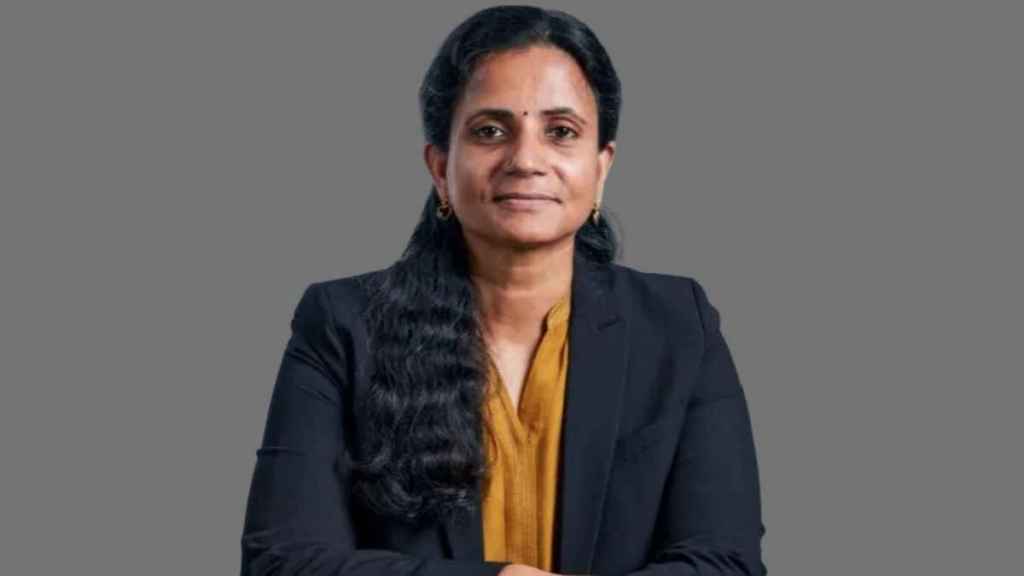

As AI adoption paces ahead, enterprises have found that forking out funds for AI infrastructure is just as vital as spending on AI models, Subhathra Srinivasaraghavan, Vice President of IBM’s India Systems Development Lab (ISDL) said. In an interaction with Poulomi Chatterjee, she talks about how tech hiring is maturing, IBM’s growing reliance on India for innovation, and measurable progress in quantum computing. Excerpts:
Q. What measures should be taken to ensure governance and “alignment” of AI agents?
As AI agents become more autonomous, the question is no longer only how capable they are, but how controllable and accountable they remain. Governance cannot be added after deployment. It must be built into the architecture from the outset.
Organisations need clear guardrails around what an AI agent can access, what actions it can take, and where human intervention is required. That entails strong identity controls, policy enforcement, monitoring, and auditability.
A recent study from IBM and IndiaAI found that 68% of Indian enterprises view gaps in AI governance as a barrier to scaling the technology. Ultimately, trusted and sovereign AI depends on maintaining control over data, operations, and decision-making. Organisations must be able to understand why an AI system acted, what it accessed, and what business impact it created.
Q. How has hiring at IBM in India changed?
India Systems Development Lab (ISDL) is a large development hub for IBM’s Infrastructure division and a microcosm of the organisation itself. ISDL brings together expertise across the stack from processor design, firmware, operating systems, virtualisation, storage, cloud, and AI technologies. Teams innovate across the IBM portfolio of Power, IBM Z, Storage, and Cloud, while working closely with IBM Software, Consulting, Research, and Sales.
As AI places new demands on performance, efficiency, and security, we increasingly need engineers who can work across disciplines and understand the full stack. India is no longer simply where technology is implemented. It is increasingly where technology is designed, engineered, and advanced for global markets.
Q. How is IBM considering its R&D footprint and investment in India?
India is a strategic hub for IBM’s infrastructure engineering and AI innovation efforts. A recent example is the Sangam Infrastructure Innovation Center at the new ISDL campus in Bengaluru, which brings together engineers, clients, and ecosystem partners to co-create enterprise AI solutions. This reflects a broader shift. An IBM study found that 58% of Indian organisations have increased infrastructure investments because of growing AI demand.
As sovereign AI gains importance, organisations have begun to recognise that AI success is not determined by the model alone. It is determined by the architecture around it. AI is not just about which model you choose. AI is also about the infrastructure you build around that model, the governance you implement, and the business outcomes you are trying to achieve. Infrastructure decisions are increasingly becoming AI decisions.
Q. How is the landscape for quantum computing evolving in the country?
The first challenge in the area most enterprises will face is not quantum computing itself. It is cryptographic modernisation.
For enterprises, the immediate priority is to prepare today’s systems for a post-quantum world. This is why post-quantum cryptography (PQC) and crypto agility are becoming critical. The issue is especially relevant for financial services, telecom, healthcare, government, and other sectors managing sensitive data with long retention periods. Data intercepted today could be vulnerable to future “harvest now, decrypt later” attacks if organisations do not prepare early.
In India, there’s also the question of digital sovereignty. Security is closely linked to control over data, infrastructure, and jurisdiction. Platforms such as IBM z17, Power11, and LinuxONE 5 are already being designed with quantum-safe protections and post-quantum cryptographic capabilities to help organisations navigate this transition securely.
The country is already taking meaningful steps. SEBI has developed a quantum-safe action plan, while RBI’s Q-SAFE initiative is examining industry readiness, cryptographic inventories, and crypto agility. The focus is rightly shifting from awareness to preparedness.