



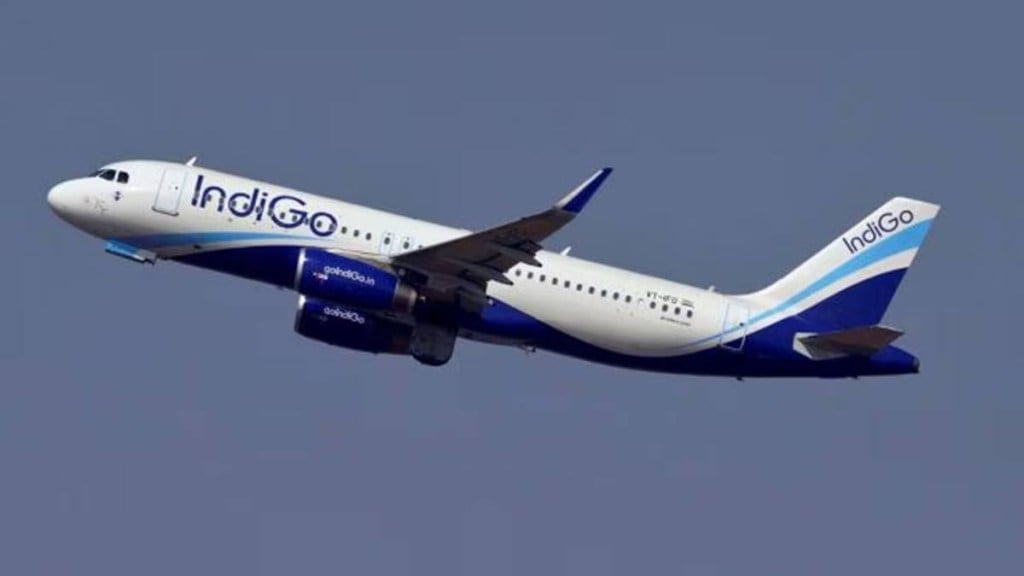
The recent IndiGo flight disruption has led to a sharp spike in domestic airfare. Responding to concerns about the impact on consumers and the overall spike seen in air ticket fares during the peak travel period and festive season, the Government, in its statement to the Parliament, reiterated that domestic airfares remain market-determined and are not subject to price regulations. It highlighted that this is despite concerns over fare spikes during peak travel periods and emergencies. However, the Civil Aviation Minister assured that it actively intervenes through capacity augmentation, fare monitoring and passenger protection rules to prevent excessive volatility.
IndiGo earnings: Morgan Stanley outlines impact
This comes at a time when IndiGo, the country’s largest airline by domestic market share, is facing operational disruptions and processing refunds as a result of the new FDTL regulations implemented recently. that analysts say could weigh on its near-term earnings, with Morgan Stanley cautioning that elevated staff, fuel and currency-linked expenses are likely to compress profitability even before accounting for higher refund outgo due to recent cancellations.
Civil Aviation Minister clarifies Govt stance on airline ticket pricing
Responding to multiple questions in the Rajya Sabha, Minister of State for Civil Aviation Murlidhar Mohol said airline ticket prices are governed by demand-supply dynamics, fuel costs, aircraft capacity, seasonal demand, and operational considerations in line with Rule 135 of the Aircraft Rules,1937. Brokerage assessments echo this, with Morgan Stanley noting that industry-wide cost inflation, particularly from pilot salaries, rupee depreciation and higher jet fuel, is already prompting gradual fare increases.
Festive surge met with 1,750 additional flights
During the festive season in October 2025, the government advised scheduled airlines to deploy additional capacity to curb abrupt fare increases. Airlines responded by announcing 1,750 additional flights across 100 sectors, which led to a general moderation in fares across most routes, the ministry said.
In the context of what it means for IndiGo, Jefferies’ report notes that IndiGo’s aggressive capacity expansion in the winter schedule coincided with the rollout of new pilot duty norms, adding strain to an already stretched network and eventually leading to cascading disruptions
While reiterating that it does not cap fares to preserve market competitiveness, the government said it has intervened in exceptional situations such as the Covid-19 pandemic, the Maha Kumbh and the Pahalgam attack to ensure affordability of air travel.
DGCA monitors fares on 78 routes
To enhance transparency in airfare pricing, the Directorate General of Civil Aviation (DGCA) has set up a Tariff Monitoring Unit (TMU), which tracks fares on 78 selected domestic routes on a random monthly basis using airline websites. This monitoring currently covers about 27% of domestic air traffic.
The regulator ensures that fares charged by airlines remain within the declared tariff bands, and in cases of non-compliance with Rule 135, directions are issued to the airlines concerned, the ministry said.
Analysts, meanwhile, expect airlines to continue pushing fares higher as a partial offset to mounting operational costs. Morgan Stanley estimates that a 10% depreciation in the rupee alone can shave 7–8% off IndiGo’s profit after tax, amplifying the earnings sensitivity to any large-scale refunds triggered by recent flight cancellations.
The potential financial impact of refunds has become more material for IndiGo after several days of cancellations linked to FDTL-related crew shortages. Jefferies notes that over 3,000 flights were cancelled over three to four days, and Morgan Stanley has already cut FY27–FY28 EPS estimates by around 20% to reflect higher costs and weaker yields. If IndiGo is required to process refunds at scale under revised norms, the hit could deepen, given already rising non-fuel expenses and lower crew productivity.
DGCA revising 48-hour free cancellation and refund norms
The DGCA is in the process of revising air ticket refund regulations, under which passengers will be allowed to cancel or amend tickets within 48 hours of booking without additional charges, subject to fare difference for the revised flight.
This facility will not apply if the domestic departure is within five days or the international departure is within 15 days of booking. The provision will apply to tickets booked directly on airline websites.
For tickets booked through travel agents or online portals, the onus of refund will remain with the airline, which must ensure that the refund is completed within 21 working days, the ministry said.
Aviation Sector: Enforcement actions by DGCA rise sharply
The government disclosed that DGCA enforcement actions against scheduled airlines for safety violations have risen steadily over the past five years, from 2 actions in 2021 to 19 actions in 2025, after peaking at 22 actions in 2024.
Major violations detected include lapses in breath analyser compliance, flight data monitoring, cockpit access, internal audits, flight simulator approvals, crew training, duty time limits, maintenance procedures and expired emergency equipment. Enforcement actions include financial penalties, suspension and warnings.
Furthermore, as per the report, the DGCA’s budget outlay increased to Rs 330 crore in FY26 as compared to Rs 242.95 crore in FY22.
Aviation sector: Over 14,000 pilots employed; training remains market-driven
On pilot employment, the government said major airlines currently employ over 14,000 pilots. Air India has 6,350 pilots employed, while Indigo comes second with 5,085 pilots. Air India Express has 1,592 pilots, and Akasa Air has 466 pilots employed.
The ministry said employment of qualified pilots depends on market forces, while the induction of foreign pilots is driven by the need for specific aircraft type ratings during fleet expansion and time-bound operational requirements.
IndiGo, however, is in a rebuilding phase. Jefferies reports that the airline acknowledged planning gaps in implementing the new FDTL norms and has submitted a roadmap to the DGCA, targeting full normalisation by mid-December, along with pilots being added in phases to stabilise operations.
India currently has 40 Flying Training Organisations (FTOs) operating across 62 bases, with 61 training aircraft inducted in 2025 (till November) and two new FTOs approved during the year, as per the reply. Modernisation of training infrastructure is described as market-driven, with the government stating that it does not directly intervene in the commercial decisions of FTOs.