


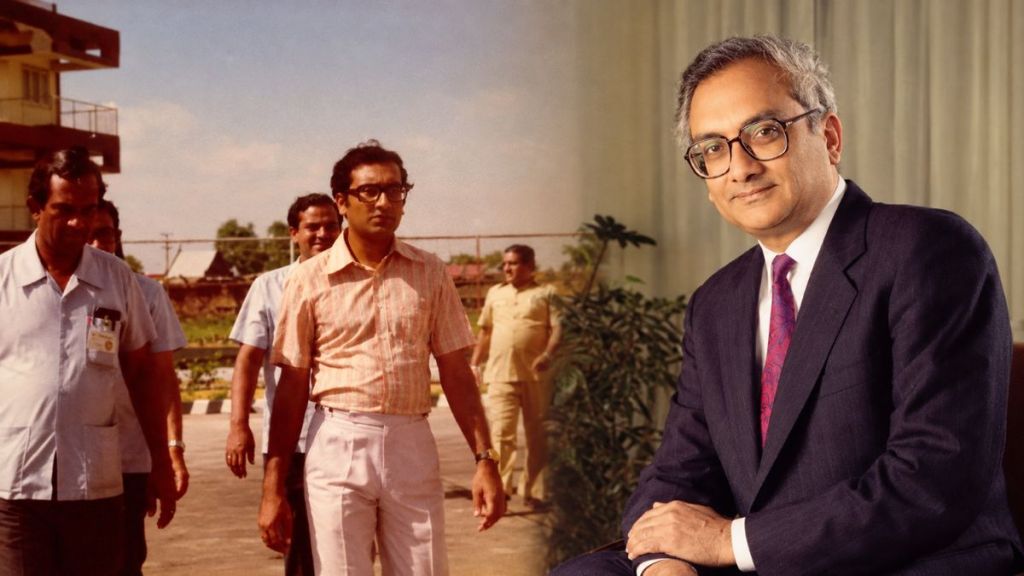

In 1965, a young man came home to Calcutta with a chemical engineering degree from MIT. His father handed him an industrial licence and told him to put up a textile mill on his own. No help from the Group or a safety net.
Four years later, this 25-year-old did something no Indian businessman had done before him. He flew to Bangkok and set up a textile venture called Indo-Thai Synthetics. This was the first factory an Indian company ever built overseas.
India was still deep inside the Licence Raj. Opening a new factory took months of paperwork. This decision, made more than twenty years before India opened its economy to the world, would define the rest of his life.
While the Aditya Birla Group is a household name, fewer know the story of the quiet, MIT-trained painter who built its foundation, one factory at a time, in countries most Indian businessmen of his generation never thought about.
Aditya Vikram Birla: Early life, education and MIT years
Aditya Vikram Birla was born on 14 November 1943 in Calcutta. His family barely needed an introduction in India’s corporate circles. His father, BK Birla, was already an industrialist and educationist. His mother, Sarala Birla, helped set up nearly 45 schools and colleges. His grandfather, GD Birla, built one of India’s largest business empires.
Two very different worlds shaped his early years. He studied Sanskrit under the scholar Durga Prasad Shastri in Kolkata. Then he went to St. Xavier’s College for a science degree. After that, he flew to the United States to study chemical engineering at MIT. He later became a serious painter. Sanskrit, however, continued to be a mainstay of his life, even after machinery, balance sheets, and boardrooms took precedence.
Beyond Textiles: How efficiency and diversification built a resilient portfolio
Back in India in 1965, Birla started from scratch. He didn’t step into the businesses his family already ran. He set up Eastern Spinning Mills & Industries in Calcutta. He built it into a strong textile and rayon business. He was later given the oil business to expand too. By the time his grandfather passed on a large share of the Birla businesses to him, Aditya had already spent nearly two decades proving he could build, not just inherit.
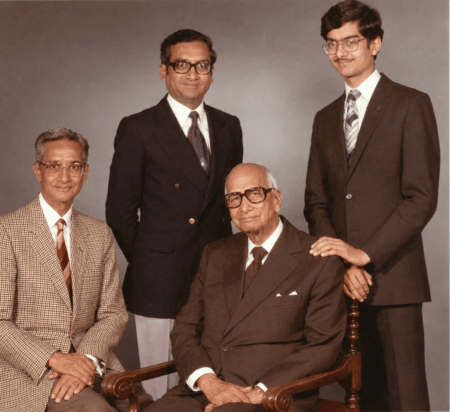
That same year, he married Rajashree Birla. The couple had two children, Kumar Mangalam Birla and Vasavadatta Birla.
Global Expansion: How 19 overseas factories defied the Licence Raj
Once the Bangkok venture proved itself, Birla kept going. Through the 1970s and early 1980s, he opened one factory after another across Southeast Asia. At the time, most Indian businessmen still thought the world ended at the country’s borders.
In 1973, he set up P.T. Elegant Textiles in Indonesia, his first venture there. That same year, he founded Sangeet Kala Kendra in India to support theatre and the performing arts. This was a passion that stayed with him even as he built factories abroad.
A year later came Thai Rayon. It was built around viscose rayon staple fibre. This business would grow into one of the group’s strongest worldwide. In 1975, the Indo Phil Group carried his textile and yarn business into the Philippines. In 1977, he set up Pan Century Edible Oils in Malaysia. It would later become one of the world’s largest single-site palm oil refineries. A year after that, Thai Carbon Black was born. This added another product line to the group’s growing global reach. By 1982, P.T. Indo Bharat Rayon made Aditya Birla Company Indonesia’s first producer of viscose staple fibre.
Over roughly two decades, he built businesses across Thailand, Indonesia, Malaysia, the Philippines, and Egypt. In the end, he ran 19 companies outside India. His overseas push came decades before Indian companies routinely built factories abroad. It earned him a title that has stuck ever since: one of India’s earliest global industrialists.
Portfolio Diversification: Scaling beyond textiles into core manufacturing
Birla never let the group depend on one product. Alongside textiles and viscose fibre, he pushed the group into aluminium, chemicals, fertilisers, petrochemicals, engineering goods, carbon black, palm oil, and insulators.
His MIT training showed in his focus on plant efficiency and scale. His Sanskrit education and love of art brought in a humane touch too. This side showed up more in his speeches and the philosophy behind his thoughts.
“How do you deal with people? This is not a science,” he told an audience in 1990. “Each person has to be dealt with differently. It is an art. One has to develop his own trait in managing people.”
Leadership & Transition: From a $2 billion foundation to a mega conglomerate
GD. Birla died in 1983. He left much of his business empire to his grandson. By then, Aditya was no beginner. He had already spent nearly 18 years building his own textile, oil, and overseas ventures.
As chairman, he took charge of Grasim Industries, Hindalco Industries, Indian Rayon, and Indo-Gulf Fertilisers, along with the overseas companies he had already built. He grew Hindustan Gas and turned around Indo-Gulf Fertilisers, which had been struggling. Under him, Grasim became the world’s largest maker of viscose staple fibre. Hindalco became one of the world’s cheapest aluminium producers. The group became a major global player in palm oil refining, and built a large carbon black business worldwide. He also served as a director of the Central Bank of India and Air India.
He also spoke plainly about leadership being lonely and about corporate India’s fear of foreign competition, which he never shared. At a Euromoney conference in New Delhi in 1994, as global investors were still sizing up India, he told the room: “We are not afraid of competition; let competition be afraid of us.”
Aditya Vikram Birla’s legacy: Awards, philanthropy and development goals
In 1990, he was named Business Man of the Year, and the Madras Management Association gave him its Business Leadership Award the same year. Two years later, the Bombay Management Association named him Management Man of the Year, and he used the platform to lay out, with unusual bluntness for the time, everything wrong with India’s licensing regime and everything that needed to change for the country to compete globally.
In 1991, he set up the Aditya Birla Foundation, built around community development, healthcare and education. He was clear that he wanted structured, long-term development in the areas around the group’s factories, not one-time charity.
Celebrating the ‘never say die’ spirit
In 1993, Birla was diagnosed with prostate cancer. As his health declined over the next two years, his father, BK Birla, and his son, Kumar Mangalam, still in his twenties, took on a bigger role in running the group. Even while unwell, Birla stayed close to his family. Even as his illness took hold, Birla He arranged the engagement of his daughter, Vasavadatta, to Kushagra Bajaj, son of the industrialist Shishir Bajaj. This match also carried forward the long ties between the Birla and Bajaj families. He lived to see the engagement, but passed away before the wedding, which took place in 1997.
How Kumar Mangalam Birla took over after his father’s death
Aditya Vikram Birla died on 1 October 1995 in Baltimore, Maryland, where he was being treated at the Johns Hopkins Hospital. He was 51. India’s Finance Minister at the time, Manmohan Singh, called him one of the best and brightest citizens of the country.
When he died, the group’s overseas businesses alone made more than Rs 8,000 crore in revenue. Worldwide turnover was close to Rs 15,000 crore. The group directly employed more than 70,000 people.
Kumar Mangalam Birla took over as chairman at 28. He inherited a business worth roughly Rs 9,000 crore in assets. Under him, the group’s scattered companies slowly came together under one name: the Aditya Birla Group. This gave the sprawling, decades-old businesses a single identity for the first time. What was a $2 billion business at the time Aditya Birla succumbed to cancer has since grown to roughly $67 billion in turnover. It now spans close to 20 sectors and more than 60 acquisitions, including UltraTech Cement and Vodafone Idea.
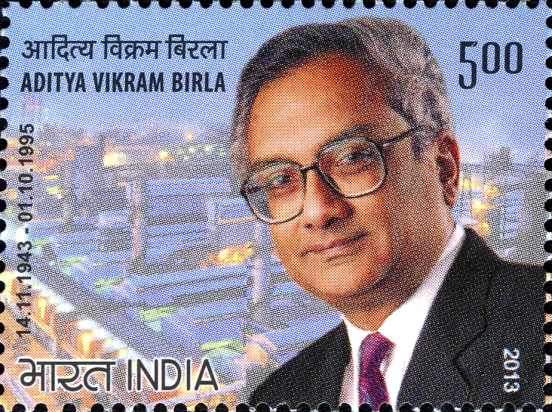
In 2013, the Government of India issued a commemorative postage stamp in his honour. It described him as India’s first global industrialist.
Aditya Vikram Birla’s Legacy as India’s First Global Industrialist
Tributes to Birla after his death came from well beyond the world of business. Sonia Gandhi recalled that he had once told Rajiv Gandhi, in one of their early meetings, that India’s entrepreneurial energy needed deregulation to be unleashed. Former President K. R. Narayanan called him a visionary whose contributions touched science, technology and education, not just industry.
His wife, Rajashree Birla, who went on to lead the group’s philanthropic work after his death, put it perhaps most simply: his philanthropy was rooted in a clear philosophy, she said: help people become self-reliant
Interestingly, Birla never stopped painting, even while he ran factories on three continents. The Sangeet Kala Kendra, which he founded in 1973, runs even today. The Kalashikhar and Kalakiran Puraskar awards, set up in his memory in 1996, still honour excellence in the performing arts he loved. As per the Group, the combined market cap exceeds $120 billion.
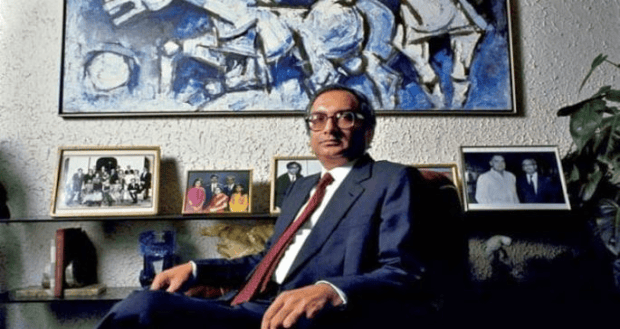
Years later, his son, Kumar Mangalam Birla, wrote his account of his father. He described him as a formidable force, someone who dared to dream of a global business empire at just 24. As Kumar Mangalam said, his father put Indian business on the world map long before globalisation became a buzzword. His success during his time was unmatched by any other Indian industrialist of that era.
Editorial Note: This profile is based on original reporting, including direct communication with Aditya Birla Group. To ensure a comprehensive perspective, FinancialExpress.com corroborated this information with public records and third-party sources. FinancialExpress.com retains full editorial independence and final authority over all editorial decisions.