


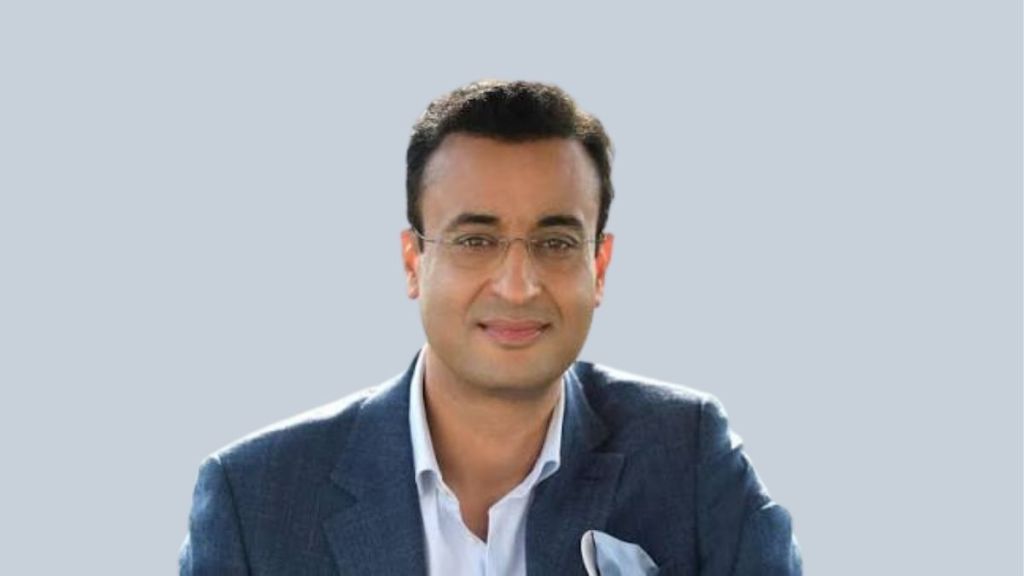

Max Healthcare is stepping up its expansion by aggressively adding new hospital beds across its network. Its new 400-bed tower at Saket takes the hospital’s total capacity to about 1,200 beds, making it the largest private hospital in Delhi by bed count. In an interview with FE’s Manu Kaushik, Max’s chairman and managing director Abhay Soi spoke about the ramp-up of the new facility, revenue growth, doctor costs, the company’s 2,800-bed expansion and the debate over hospital pricing and standardised tariffs. Edited excerpts:
FE: The hospital sector is facing calls for price regulation, margin caps and mandatory allocation of beds. What is your response?
Abhay Soi: The simple point is that the country needs more hospital beds. The median net profit of the large listed hospital players is around 8-9%, with the outlier at about 12%. This is a capital-intensive sector. With those levels of net profit, it is not even a major dividend-paying sector.
We are investing around Rs 6,000 crore to get to 10,000 beds. I have said that we are reinvesting all our free cash flows. If you reduce prices or margins, net profit will obviously fall. Take it below a certain point and companies will start making losses. That will retard the capital cycle and investment cycle. Affordability and pricing are two different things. Affordability is a function of purchasing power and per-capita income. Pricing is a function of cost and the required return on capital. If land and construction costs rise, healthcare cannot simply become cheaper.
FE: Max has said average revenue per occupied bed (ARPOB) should grow faster than inflation, partly because of technology and case-mix improvement. How much of ARPOB comes from tariff increases and how much from treating more complex cases?
Soi: Tariff hikes account for only 2.5-3% of annual growth, the rest is clinical. What happens is that robotics comes in and there’s more adoption. Tomorrow, there will be AI-led robotics, then immunotherapy and other novel therapies. It is our job to offer and introduce these therapies. We don’t know which technologies will be adopted or which therapies will get regulatory approvals. It can go the other way as well. Historically, matured facilities have seen growth of around 7-8%, helped by clinical advances.
FE: In the first quarter of FY27, Max has maintained occupancy rate of over 75%, which is above the industry average. What is the company’s competitive advantage in maintaining that level?
Soi: Ultimately, it is patient care and outcomes. Patient care starts with the facility and extends to the services we provide. It is difficult to do all of this at a high occupancy. It is a two-way street. Lower occupancy allows better services, but better services create higher occupancy, which then makes maintaining service levels more challenging. The outcomes depend on better clinicians and clinical progress. We are also strong in academics. We have around 850 students and our hospitals are teaching hospitals. We have a big focus on research and write over 650 research papers. The broader ecosystem is important to us as well. Max Healthcare treated more than 4 million patients from over 800 cities and 180-plus countries in the last financial year.
FE: Clinician costs have been going up across the industry. Is the sector entering a period where doctors capture a larger share of hospital economics, particularly as chains add beds and compete for specialists?
Soi: Not really. Salaries and capacity increase in steps, while demand increases in a linear fashion. As demand increases, salary costs as a percentage of revenue come down. Clinician costs have increased by only around 1-1.5 percentage points as a percentage of sales.
FE: Max plans to add 2,800 beds between FY27 and FY29. How much of this expansion will be organic?
Soi: It is all organic. We are building the capacity ourselves. We added around 3,000 beds over the last two years. Going forward, the 2,800 beds will also be added by building new capacity ourselves.
FE: With private equity (PE) and private credit showing increasing interest in healthcare, are hospital valuations becoming too high for strategic players like Max?
Soi: It does make acquisitions more expensive, but we have to live with what we buy. We have to make a certain return on capital. A PE investor can have 4-5 year horizon and make money through multiple arbitrage. We cannot make that bet. I won’t buy something at 20 times simply because I can sell it at 30 times tomorrow. Our focus is return on capital. Our EBITDA per bed is the highest in the industry, so our ability to write a business case is stronger than a PE player or anybody else out there. We look for roughly 20-25% returns in rupee terms over a longer period.
FE: The newly-launched 400-bed tower at Max Smart Super Speciality Hospital, Saket takes the facility’s total capacity to about 1,200 beds, making it the largest private hospital in Delhi by bed capacity. How quickly do you expect the new capacity to ramp up?
Soi: We opened the hospital in May and have currently opened a little over 200 beds. Occupancy is already above 80%. The remaining beds will open over the next 1-2 months, and my belief is that they will ramp up quickly as well. The facility is about 6-7 lakh sq ft in built-up area and has around 400 beds. We don’t provide hospital-wise revenue forecasts or investment numbers because that is competitive information. The new facility is also bringing in technologies such as robotic surgery.
FE: What is your view on the likely insurance reforms, particularly on the proposals to create a nationwide claims exchange and standardised hospital rates?
Soi: A nationwide claims exchange is a great opportunity. Standardised rates though will be difficult. How do you standardise rates? A hospital built 20 years ago had completely different land and construction costs from one being built today. The hospital being built today has to earn a return on today’s costs. The price is determined by demand and by the economics of the next hospital being built. If the rates are standardised, the economics will not work for new facilities. Free market economics determines the price.