



In 1897, a Bombay newspaper reported a rise in burglaries, and the city’s police commissioner called for better home security. A man in his late twenties read the report and began studying the locks on sale in the city. He had already walked away from law and watched a surgical instruments business collapse. He had also not yet repaid the Rs 3,000 he borrowed to start it.
Ardeshir Godrej found that most locks in Bombay were handmade, slow to produce and inconsistent. He concluded that the lock could be standardised while the key stayed unique. An idea so strong that it built a brand that became almost synonymous with the product.
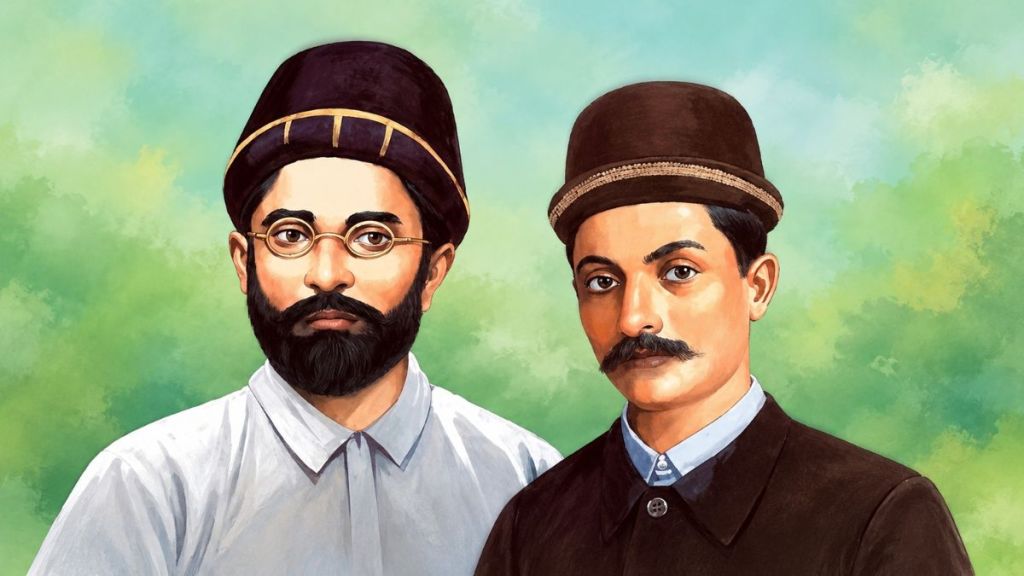
That idea became the Godrej business, which now spans consumer goods, real estate, agribusiness, chemicals and aerospace. Godrej Consumer Products says it serves more than 1.1 billion consumers in over 80 countries. The group’s early years were shaped by two brothers, Ardeshir, who invented, and Pirojsha, who built.
Legal Career To Lost Client: Why Ardeshir Godrej Abandoned Law In 1894
Ardeshir was born in 1868 in Bombay, the eldest of six children in a Parsi-Zoroastrian family. His father, Burjorji, had changed the family surname from Gootherajee to Godrej in 1871. Ardeshir studied law and qualified as a lawyer.
In 1894, shortly after leaving law school, a Bombay solicitors’ firm sent him to Zanzibar to argue a client’s case. It went well until near the end, when he was asked to present information he did not think had enough evidence behind it. He refused. His own explanation was that he had begun to see both sides of the case and could not advocate for only one.
He lost the client, returned to Bombay and gave up law.
The Scalpel Setback: How A Rs 3,000 Borrowed Capital Venture Collapsed
Ardeshir then worked as an assistant to a chemist, and the job turned his attention to manufacturing. In 1895, he approached Merwanji Cama, a wealthy Parsi businessman and a friend of his father, for money. He asked for a loan and not a gift. He was reluctant even to ask his own father, since he believed a business should be built on one’s own responsibility.
Cama lent him Rs 3,000, which the company’s account values at roughly $1,500 at the time. Ardeshir used it to make scalpels, forceps, pincers and scissors to professional specifications. An arrangement with a British buyer followed, but the two sides fell out over the label. Ardeshir wanted the instruments marked “Made in India”, and the buyer argued that they would not sell under that description.
Neither side gave way, and the business folded. Ardeshir tried several other ventures over the years, including inks, toffee, perfume, biscuits and a vineyard. Many of them did not succeed in his lifetime.
The Lalbaug Shed: Founding A Security Pioneer In A 20-Square-Metre Space
After reading the newspaper report on burglaries, Ardeshir went back to Cama. He apologised that the earlier loan was still unpaid and proposed a lock-making venture. Cama had read the same article and agreed to help raise capital. When Cama asked whether other lock-makers existed in their community, Ardeshir is reported to have replied that he did not know if he was the first, but he was determined to be the best.
The business started in a 20-square-metre shed beside the Bombay Gas Works in Lalbaug. It had 40 steam presses and a dozen skilled workers brought in from Gujarat and Malabar. Production began on 7 May 1897, the date the company now marks as its founding.
The first high-security locks were sold under the Anchor brand and guaranteed as unpickable. Cheaper tumbler locks came later without that guarantee. Ardeshir also set out to correct a common belief among buyers that adding more levers made a lock more secure.
Folded Steel & Public Demonstrations: Launching Burglar-Proof Safes In 1902
In 1901, Ardeshir moved into safes. He wanted one that was both burglar-proof and fireproof, since he believed existing designs managed only one. The design used a single sheet of steel folded 16 times, with welded joints and a double-plated door. The first safes reached the market in 1902.
Before a research trip to Europe, he visited Chubb’s factory in Wolverhampton and documented its manufacturing methods. Chubb and Milner then held exclusive rights to export security equipment to India. Demand for safes grew after the 1906 San Francisco earthquake, and a 1908 Scientific American article reported that many commercial safes were not fireproof. Ardeshir responded with a public demonstration of his own.
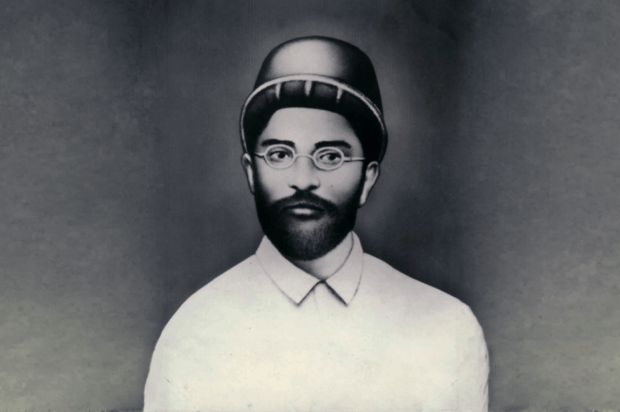
Around 1910, he tried to repay Cama’s original loan before leaving on another trip to Europe. Cama, by then seriously ill, refused the money. He asked Ardeshir to employ his nephew Boyce instead. Boyce was made a partner and the firm became Godrej & Boyce Manufacturing Company. Boyce later lost interest and left, but the name stayed as a tribute to Cama.
1908 Springless Lock Patent: The Technical Innovation That Built A Fortune
Pirojsha Godrej was born in 1882, 14 years after Ardeshir. He graduated from the Victoria Jubilee Technical Institute in Mumbai and formally joined the business in 1906, at 24. His technical training suited the engineering side of the work.
In July 1908, the brothers jointly applied for a British patent on a springless lock, which was granted in October 1909. The company describes it as the world’s first. Conventional lock levers relied on springs that could get dirty, break or jam, and a jammed spring could leave a lock open. The patent certificate attributes the invention to Pirojsha.
The invention brought the brothers a fortune, according to the company. While Ardeshir was in Europe, Pirojsha was left in charge and reportedly doubled the factory to 600 employees without being asked.
Vegetable Oil Breakthrough: Swadeshi Ideology & Launch Of Godrej No. 1
Ardeshir’s idea of self-reliance was specific. Around 1909, he read Dadabhai Naoroji’s writings on colonial taxation and the drain of India’s wealth. He concluded that independence needed domestic manufacturing that could match imports in quality. In a 1927 interview, he criticised those who urged Indians to accept poor-quality goods because they were Indian. He also donated Rs 3 lakh to the Tilak Swaraj Fund.
His next product followed from that view. Soap at the time was made with tallow, an animal fat that he considered unsuitable for many vegetarian and Hindu households. He began experimenting with vegetable oils, an idea that was widely seen as impractical. During the Spanish Flu of 1918, he launched what the company describes as the world’s first commercial vegetable-oil soap.
He called it Godrej No. 2, reasoning that buyers who liked it would assume No. 1 was even better. Godrej No. 1 followed in 1922 and became one of India’s largest soap brands. Ardeshir also published Gujarati pamphlets explaining how vegetable-oil soap could be made.
1928 Transfer Of Power: How Pirojsha Scaled Industrial Capabilities
As Ardeshir moved towards soap and new experiments, Pirojsha ran the locks and safes business. On 1 May 1928, Ardeshir transferred sole ownership and control of the company to him. Ardeshir moved to Nasik, around 185 km from Bombay, to try farming. It did not succeed.
He continued to work on soap and inventions until his death in January 1936. By then, Godrej & Boyce reported revenue of Rs 12 lakh, with soaps adding another Rs 6 lakh. Ardeshir had no children. He had refused his own inheritance in 1918 and, according to the company, was often seen waiting at bus stops with a newspaper despite his wealth.
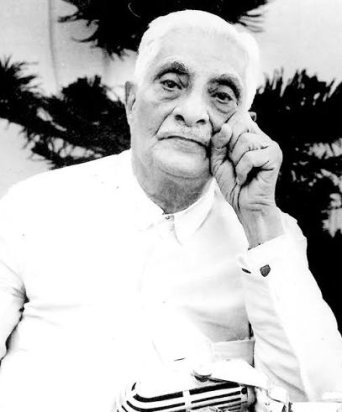
Pirojsha took the company well beyond security products. It was incorporated with limited liability on 3 March 1932. In 1938, he introduced a provident fund for employees, which the company says came about 14 years before such funds were made mandatory in India. The range grew to include steel furniture, typewriters, refrigerators, forklift trucks, machine tools and precision engineering.
3,000 Acres In Vikhroli: Building India’s First Integrated Industrial Township
By the early 1940s, the factories in Lalbaug and Parel had become too small. In 1943, Pirojsha bought a large tract of land in Vikhroli at a public auction. The first purchase was about 3,000 acres for around Rs 30 lakh, with another 400 acres added later.
He planned a township and not only a factory. It came to include manufacturing plants, subsidised worker housing, dispensaries and a school, and it was named Pirojshanagar. He also kept the mangrove belt along the property intact. A foundation set up by his sons in memory of their mother now protects it. The land later became one of the family’s most valuable assets. Godrej One, the group’s headquarters, stands in Vikhroli today.
1.7 Million Ballot Boxes & Typewriters: Engineering For A New Republic
India’s first general election, held between October 1951 and February 1952, gave the Vikhroli factory its largest test. The Election Commission needed secure ballot boxes in very large numbers, and Godrej took the order. The plant reportedly ran around the clock. The boxes had to be tamper-proof, waterproof, vermin-proof and cheap enough to mass produce.
According to the archival account, a Godrej worker named Nathalal Panchal developed the internal locking mechanism. Placing the lock inside kept costs down, since an external lock would have cost more than the Rs 5 manufacturing cost of each box. As per the corporate history accounts, there were a total of 1.7 million boxes.
In 1955, Pirojsha’s son Naval pushed the company to build India’s first indigenously made typewriter. Pirojsha asked whether Godrej could match Remington. A typewriter has roughly 1,800 to 2,000 components, and the company says only four were imported. Godrej went on to become the last company in the world still making the manual typewriter, until production stopped in 2009.
11-Year Cryogenic Engine Journey: Precision Engineering For ISRO
S.M. Vaidya, who later headed Godrej Aerospace, has named the typewriter as his favourite Godrej product. His reasoning was that it taught the company the precision it later needed for aerospace work. ISRO approached Godrej & Boyce in 1985 because of its precision machining, and the company began making satellite and rocket components.
After Russia refused in 1993 to transfer cryogenic-engine technology, India had to develop its own. Godrej spent about 11 years helping build the indigenous cryogenic engine, which flew successfully in 2014. The company also supplied a liquid-propellant motor for DRDO’s Prithvi missile.
Demergers & Public Listings: Widening Horizons From Agrovet To Real Estate
Pirojsha died in 1972. His eldest son Sohrab became chairman of the group. Naval carried forward the Godrej & Boyce business, and Naval’s son Jamshyd later became its chairman and managing director.
The group kept widening its reach. Godrej Chemicals was founded in 1963 and Godrej Properties in 1990. Godrej Agrovet followed in 1991, and the 1994 acquisition of Translektra brought in the Goodknight and HIT brands. In 2001, the soaps business was demerged into Godrej Consumer Products and Godrej Industries, which were the group’s first public listings. The current market cap of the Godrej Group companies exceeds $25 billion.
Nearly 130 years after Ardeshir Godrej began making locks in a 20-square-metre shed in Lalbaug, the Godrej name still shows up where Indian consumers place their trust. In TRA’s Brand Trust Report 2026, Godrej appears 11 times in the All India Listing, across furniture, security, appliances, personal care, home fragrance and financial services. Godrej Interio leads at rank 27, the highest-ranked furniture brand in the listing, a descendant of the steel furniture Pirojsha added to the range as he took the company beyond locks and safes.
The lock that started it all holds firm at 50, up 19 places from last year, while Godrej refrigerators stand at 61. Momentum is visible elsewhere too. Godrej washing machines climbed 84 places to 174, and Godrej No. 1, the vegetable-oil soap Ardeshir launched in 1922, rose 78 places to 910. The ranking reads like a continuation of the family’s old idea that a product built to be trusted can carry a name across categories, from the home’s security to every day staples.
Editorial Note: This profile is based on original reporting, including direct communication with Godrej Group. To ensure a comprehensive perspective, FinancialExpress.com corroborated this information with public records and third-party sources. FinancialExpress.com retains full editorial independence and final authority over all editorial decisions.