




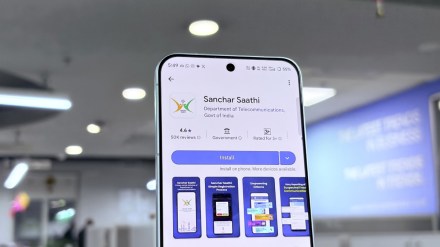
Handset majors Apple and Samsung have opened communication channels with the department of telecommunications (DoT) seeking a rollback of the directive that mandates the pre-installation of the Sanchar Saathi cyber-security app on all new smartphones sold in the country. Industry executives told Fe that the companies have proposed a middle path: instead of forcing installation at the manufacturing stage, the government should convert the order into an advisory under which brands would actively promote voluntary user downloads.
The development follows an order issued on November 28 directing smartphone manufacturers and importers to pre-load Sanchar Saathi on all devices produced or brought into the country within 90 days, and to push the app via software updates for models already in stores or in consumer use. For the first time, the government has sought uniform bundling of a specific consumer app across all smartphone brands.
What did Industry representatives say?
Industry executives said the government’s objective of bolstering user protection through the app could be met without mandatory embedding. They said DoT on Tuesday began sending SMS links to manufacturers to urge users to download Sanchar Saathi to verify the genuineness of their mobile phones. The SMS reads: “Need to check if your mobile is genuine? Download Sanchar Saathi to check”, and provides links to download the same on Android and iOS.
“The same outreach can be done at scale without tying the app to hardware,” executives said, adding that handset firms are willing to send similar messages to users. Apple and Samsung believe the government is likely to accept the suggestion and convert the mandate into an advisory. Apple and Samsung as well as other handset manufacturers did not officially comment on the matter.
Communications minister issues clarification
However, their reasoning became sharper after Communications Minister Jyotiraditya Scindia clarified on Tuesday that Sanchar Saathi is optional, can be deleted anytime and becomes active only after user registration. “If you want to delete it, then delete it,” he told reporters outside Parliament. “But not everyone in the country knows that this app exists to protect them from fraud and theft.”
Handset makers said that order creates operational complexities across a global supply chain that is finely optimised for manufacturing and export. India is a significant production and export hub for brands such as Apple and Samsung, and a mandatory India-specific application would require them to run two parallel production lines — one for domestic devices with the app and another for export units without it. Devices imported into the country would also need to be opened locally for pre-installation, undermining ease-of-doing-business efforts and adding friction to logistics, certification and delivery schedules.
Meanwhile, Scindia dismissed all allegations of phone-monitoring capabilities in the app. “There is no snooping on the basis of this, nor is there any call monitoring,” he said. According to the minister, more than 15 million users have downloaded the app, helping trace about 2 million stolen phones, return 750,000 to owners and disconnect 27.5 million fraudulent mobile connections through public reporting mechanisms.
However, critics said the government’s privacy defence contradicts the logic of compulsory embedding. “If the app can be deleted and activated only by choice, what purpose does mandatory pre-installation serve except adding friction to the manufacturing ecosystem?” an industry official said. Opposition parties called Sanchar Saathi a “snooping app”, with Congress Party general secretary Priyanka Gandhi Vadra stating that citizens must retain the right to communicate without the state “looking at everything”. MP Renuka Chowdhury moved an adjournment notice in the Rajya Sabha seeking discussion on the directive, while K C Venugopal said the mandate violates the fundamental right to privacy.
Scindia rejected the criticism, saying the Opposition is “trying to find an issue out of nowhere” and that Sanchar Saathi is “a step towards public participation”. He maintained that the app is harmless and protective in nature.


