


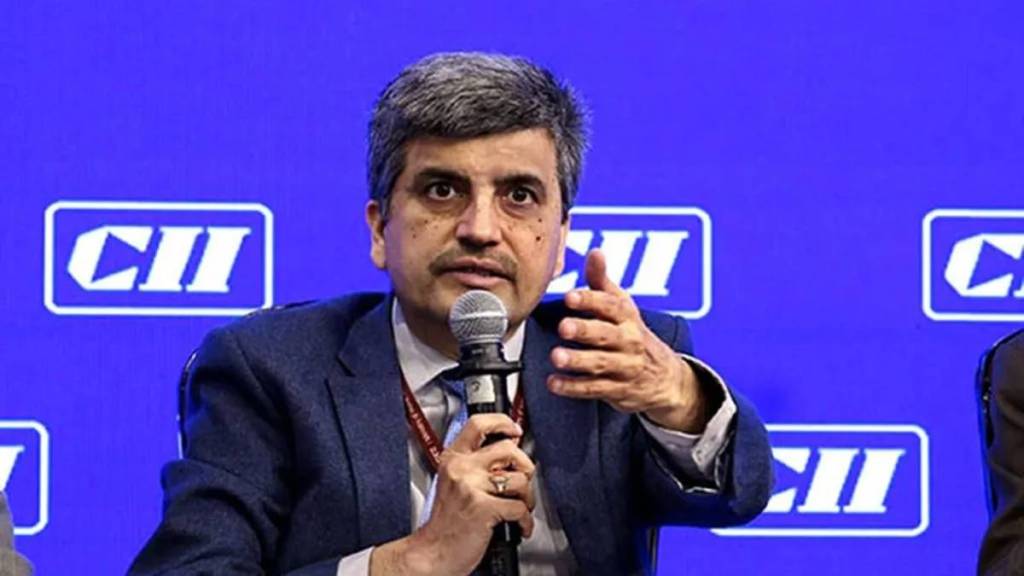

The proposed insurance distribution reforms aim to simplify the architecture, widen consumer choice and align remuneration with the effort and constraints of each channel, rather than favouring one model over another, said Insurance Regulatory and Development Authority of India (IRDAI) Chairman Ajay Seth. In an interview with Prasanta Sahu, Seth also outlined the role of digital and interoperable infrastructure such as Bima Sugam and the proposed Public Insurance Registry (PIR) in shifting insurance towards a more choice-driven, transparent and digitally enabled ecosystem.
Q: The consultation paper on distribution reforms lays greater emphasis on agency channels with higher incentives than on channels such as bancassurance and web aggregators. Will this single-channel focus not affect penetration?
I would not characterise the reform as a single-channel strategy or as focusing on a single channel. The objective is actually to reform the distribution architecture and create greater choice, while aligning remuneration with the nature of the channel and the effort involved.
An individual agent operating in a closed architecture has restrictions on the products that can be offered. Therefore, it is reasonable to allow relatively higher commission limits for such channels. In contrast, entities that can operate in an open architecture and offer products from multiple insurers will have relatively lower commission limits because they have greater choice and flexibility.
At the same time, digital and marketplace models are being strengthened. Bima Sugam and other Market Infrastructure Institutions are intended to provide fully digital, pull-based alternatives, while IDEs can also opt for an open architecture.
So, the objective is not to favour one channel at the expense of another. It is to remove regulatory arbitrage, widen distribution options and ensure that remuneration reflects the constraints, complexity and effort involved in each channel.
Q: Insurers are worried about a full overhaul of their existing distribution networks, requiring more investment in building agency and proprietary channels?
The intent is not to require insurers to dismantle their existing distribution networks and start afresh. What we are trying to do is simplify the regulatory architecture and create more flexibility within it. Today, there are multiple categories of distribution entities with different capital requirements, scopes and obligations, even where they perform similar functions.
We are proposing to bring these into three broad categories: Insurance Distribution Entities (IDEs), Insurance Distribution Persons (IDPs) and Market Infrastructure Institutions (MIIs).
Importantly, insurers will continue to have the ability to engage agents and associates. At the same time, they will have greater flexibility to distribute products of a group insurer in a non-competing segment through their branch network, subject to safeguards. The reforms also reduce entry and capital requirements for distribution entities and allow greater non-insurance business opportunities.
Therefore, the objective is not to force a particular distribution model, but to make the architecture simpler, more competitive and more economically sustainable, while allowing insurers to decide the mix that works for their customers and business.
Q: The industry has broadly argued that a one-size-fits-all approach may not be feasible for everyone. Are you open to a scale-based Expenses of Management limit or something similar?
There is a thought and rationale behind the consultation paper. I would request that readers read it a couple of times. The focus is on expanding coverage and on taking insurance beyond the areas where it is currently concentrated. The document points out that the insurance business is concentrated in 10 states and, within those states, in about 8 to 10 districts.
Q: How do we take insurance to all parts of the country—to smaller cities, smaller towns and rural areas?
One incentive is the reduction in the capital requirement for becoming a broker. Today, the requirement is ₹75 lakh. How many families can afford to put ₹75 lakh into starting a financial services business where earnings come through commissions? This is proposed to be brought down to ₹10 lakh. The fee has also already been reduced. It used to be ₹1 lakh every three years and has been brought down to a flat ₹10,000. Once the business grows beyond ₹100 crore, the fee will increase.
In smaller towns with populations of less than 50,000 and in rural areas, an incentive of 20% has been proposed. If the commission is 20%, another 4% can be available there. Similarly, for cities with populations of less than 10 lakh—there are around 74 such cities—a 10% increase is available. So, if the commission limit is 20%, another 2% would be available.
Until now, an insurance broker could not sell anything else. They could not sell pension products, capital market products and so on. We are opening that up as well. Similarly, hospitals can also sell health insurance, but at a lower commission.
Q: IRDAI has proposed a 15% Expenses of Management (EoM) limit for life insurers, 20% for general insurers and 30% for standalone health insurers. Is a standard EoM limit across small, mid-sized and large insurers reasonable?
The objective is not to impose a blunt cost ceiling without considering the economics of the business. The proposed approach is to move towards greater expense discipline at the company level through a glide path, while allowing insurers sufficient time to adjust.
For life insurance, the proposed EoM level is 15% of premium within two years and 12.5% within five years. For general insurance, including standalone health insurers, the corresponding levels are 25% within two years and 20% within five years. Insurers that are already operating below the benchmark have a separate convergence path.
The underlying principle is that EoM should ultimately reflect an efficient and sustainable cost structure rather than the size of an insurer. Larger insurers should also be able to benefit from scale economies, while smaller insurers need time to build scale and improve efficiency. We have therefore proposed a medium-term glide path rather than an overnight adjustment, and the framework will be reviewed as the sector transitions.
Having said that, we are open to all kinds of suggestions and feedback, including on the pace of convergence and its impact across different types of entities.
Q: Is there any scope to relax the proposed EoM and commission limits after receiving feedback?
From the regulatory perspective, what we have tried to do is put relevant data in the public domain, not in raw form but in an analysed form that is easy to understand and comprehend, with inferences drawn. I would not like to comment on what the outcome will be. These proposals have been made with a certain thought process and economic rationale. If somebody has a different rationale or perspective, they should put it forward. Each comment will be carefully considered.
Q: There is a view that lower commission rates will force distributors to junk low-value yet crucial policies such as motor insurance and personal accident cover in favour of high-value products. Your views?
That is precisely why we have not proposed a uniform commission rate across products. The central principle is to link commission to the complexity of the product and the effort required to sell and service it.
For products that are mandatory or require very little selling effort, the commission can legitimately be lower. For example, the proposed commission for new-vehicle third-party motor insurance is nil because insurance is mandatory before the vehicle can leave the showroom. But own-damage, personal accident and legal-liability covers have separate and higher proposed limits.
Similarly, more complex products can carry higher commission limits. There are also additional incentives proposed for business sourced from underserved areas, including rural areas and smaller towns. So, the objective is not to make distributors abandon essential products. It is to remove excessive remuneration where there is little selling effort, while ensuring adequate incentives where genuine distribution effort, advice and servicing are involved. This should help move the industry from commission-led selling towards needs-led distribution.
Q: Some foreign insurers have expressed concerns about frequent policy and regulatory changes, including surrender value guidelines, GST changes, Ind AS, and now the proposed commission reforms…
First, one should look at what those changes were about. Two were to enhance value for the policyholders.
If someone surrenders a policy after one year, they would get only about ₹33 to 45 out of ₹100, even after the surrender guidelines, because of the very high upfront commission. Even after five years, the person would get anywhere between ₹61 and ₹74. Someone may change jobs, see income decline or have other liabilities. If they are unable to continue the policy, the surrender value becomes important.
Second, on GST, the government has provided a huge benefit. GST on retail policies has been exempted. As a result, prices came down. When prices come down, more business can come in. It is not only the consumer who benefits; it can also lead to more business.
Third, India has been moving towards global accounting norms. All other sectors of the economy have adopted IndAS. The RBI has done this in phases and has brought banks broadly to the same level. It was therefore time for the insurance sector to move in the same direction.
The proposed levels of commission and expense of management are broadly of the same order as they were seven or eight years ago. So, when we talk about too many changes, it is important to understand the rationale behind each of them.
Q: The PIR is envisaged as a population-scale, interoperable and non-exclusionary digital public infrastructure for the insurance sector. How will this change the way insurance products are sold and serviced today?
The biggest change that we envisage will be a gradual shift from a predominantly push-based model of “insurance being sold” to a complementary model where insurance can also be “easily discovered, compared and purchased” by customers. Today, product information, policy records, claims history and service information are fragmented across insurers and distribution channels.
PIR can create a common information layer that allows verified information to flow securely, with appropriate consent and safeguards. This can enable easier product comparison, suitability assessment, portability, onboarding, servicing and claims.
It can also reduce repetitive KYC, documentation and verification, allowing distributors and insurers to spend more time on advice and service rather than information collection. At the same time, this does not mean eliminating intermediaries.
Assisted distribution will remain important, particularly for complex products and customers who need advice. The objective is to give customers more choice, lower friction and better information, while allowing insurers and distributors to compete on product, price and service quality.
Q: Insurers are worried about proprietary data sharing on an interoperable system. Your views?
That concern is understandable, and interoperability should not mean indiscriminate sharing of proprietary or commercially sensitive information. PIR is not intended to become a central repository of every piece of information held by an insurer. The principle is to collect or make available only the information necessary for a defined purpose.
Detailed product files, pricing models, actuarial documentation, product strategy and other commercially sensitive information can remain with the originating institution. Where information is required across insurers, access will be purpose-bound and consent-based wherever required. The architecture also incorporates tokenisation, role-based access, audit trails and privacy safeguards.
For insurers, the objective is actually to reduce the need for multiple bilateral data exchanges by creating common standards and protocols.
So, we are trying to achieve interoperability without compromising commercial confidentiality. Competition should increasingly be based on: product innovation, pricing, underwriting, service quality, and customer experience, rather than simply on ownership of fragmented information.
Q: The final rollout of the Bima Sugam portal has seen inordinate delays. Is there any specific timeline to operationalise the platform? Which leg of the process is holding up the process?
Bima Sugam falls within a broader framework of Market Infrastructure Institutions for insurance. The objective is to create a fully digital, pull-based alternative through which customers can discover, compare and purchase insurance products.
We expect Bima Sugam to become operational in the next four to six months. At the same time, we are looking at the possibility of more MIIs being promoted by insurers, so that the ecosystem does not depend on a single platform.
I would therefore look at the rollout less as one particular technology deployment and more as the establishment of the complete operating ecosystem: insurers, products, APIs, customer journeys, regulatory safeguards, payments, servicing and grievance mechanisms all have to work together.
The objective is to ensure that, when the platform goes live, it provides a genuine digital, pull-based purchasing experience, rather than simply becoming another front end layered over existing processes.
Q: Property insurance premium rates are crashing due to steep discounting. How is IRDAI planning to address the problem of excess insurance and reinsurance capacity?
The issue here is not simply the quantum of insurance or reinsurance capacity. Capacity is valuable when it supports risk transfer, but it should not result in underwriting that is disconnected from the underlying risk. Sustainable insurance ultimately requires appropriate risk assessment, pricing and underwriting discipline.
The distribution reforms address one part of this equation by bringing greater transparency and discipline to commercial insurance. For property insurance, the proposed commission structure itself recognises the scale of the risk, with commission limits reducing as the sum insured increases. For very large risks, the proposed limits are substantially lower.
There is also a wider need for better risk information.
A more interoperable insurance information architecture can improve visibility on: loss experience, catastrophe exposure, risk accumulation, and emerging risks, which can support better underwriting and reinsurance decisions. So, the approach is not to restrict capacity. It is to improve the quality of risk information, strengthen underwriting discipline, and ensure that competition takes place on the basis of risk, service and efficiency rather than unsustainable price discounting.
Q: Another digital public infrastructure, National Health Claims Exchange (NHCX), failed to take off due to push back from hospitals. Do you think the PIR will succeed?
First of all, it would not be right to say that NHCX has failed to take off. NHCX went live in June 2024 and has demonstrated significant adoption on the government side, with 8.7 crore claim API requests through nearly 47,000 hospitals as of last week.
The private health insurance ecosystem, however, is at an early stage, with 864 private hospitals onboarded and 28,609 claim requests processed. The experience does highlight an important lesson: digital infrastructure succeeds when integration is simple, standards are clear and every participant sees value. NHCX is addressing these issues through greater standardisation, reduced integration costs, structured FHIR-compliant data and 24×7 support. The one-time cost of direct integration has already been reduced from ₹25 lakh to around ₹10 lakh.
PIR is being designed with that understanding. It is not intended to centralise the operations of insurers or replace existing systems. It provides common information standards, protocols and shared services, while allowing different market participants and Market Infrastructure Institutions to build solutions.
We are also proposing a phased implementation, beginning with use cases where the data is relatively mature and the value is clear. Stakeholder participation in design and implementation is critical, particularly because insurers, intermediaries and other participants will have to integrate their systems and processes.
Ultimately, the success of PIR will depend on whether it reduces friction and creates tangible value for policyholders, insurers, distributors and regulators.
That is why adoption, transition support and continuous stakeholder engagement are being treated as integral to the architecture, rather than as an afterthought.