


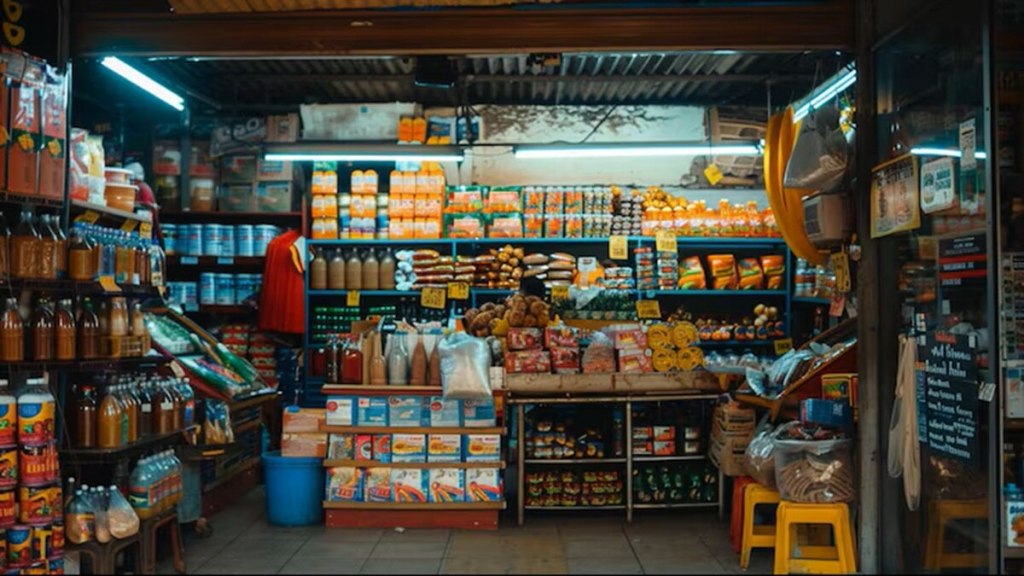

The government has called on leading fast-moving consumer goods (FMCG) companies to commit to a common digital platform for procurement by India’s 14 million neighbourhood retail stores, as it seeks to improve supply-chain efficiency and reduce working capital requirements in the general trade ecosystem.
At a roundtable with CEOs of over 40 FMCG companies on Friday, Commerce and Industry Minister Piyush Goyal urged the industry to work together to expand the reach of DigiDukaan, a business-to-business (B2B) retail initiative of the Department for Promotion of Industry and Internal Trade (DPIIT) and the Open Network for Digital Commerce (ONDC).
The initiative aims to digitise kiranas as buyers rather than merely enable them to sell online, allowing neighbourhood stores to discover and order products from multiple brands, distributors and wholesalers through a single digital interface.
Chairing the Bharat Commerce Chintan Shivir, Goyal said open digital infrastructure could simplify procurement, improve price transparency and strengthen existing distribution networks. He urged FMCG companies to participate in taking the initiative across the country.
India’s general trade ecosystem remains heavily dependent on traditional procurement practices, with many small retailers relying on manual ordering and fragmented relationships with distributors. DigiDukaan seeks to address this by providing a common digital infrastructure for ordering, inventory replenishment and, eventually, access to logistics and formal credit.
Unlike conventional retail digitisation initiatives, the platform is designed to complement rather than replace existing distributor networks.
The discussions focused on five areas: developing a common digital identity for kiranas; creating shared logistics and micro-warehousing infrastructure; improving access to formal credit through digital transaction records; simplifying technology integration through standardised catalogues and distributor management system (DMS) connectors; and aligning commercial incentives for FMCG companies, distributors and their sales teams with digital ordering.
The platform has connected over 21,000 retailers with more than 450 brands across Hyderabad, Jaipur and Mumbai as of September 2026, up from over 12,000 retailers in the previous quarter.
Hyderabad accounts for more than 16,000 onboarded retailers, with monthly repeat ordering rates of 73-78%. An initial ONDC study found that 40% of surveyed retailers reported lower inventory holdings for products procured through DigiDukaan, indicating potential working capital savings.
Goyal said the initiative could become a model for other countries by demonstrating how open digital infrastructure could strengthen small retailers and improve the efficiency of distribution networks.
The initiative seeks to provide retailers access to multiple brands through one interface, with greater visibility into prices, trade schemes and product availability. It also envisages faster replenishment and access to formal credit through the connected ecosystem.
Among the FMCG companies participating through their distribution networks are Hindustan Unilever, Marico, Colgate-Palmolive, Emami and Amul. ITC, Tata Consumer Products and Britannia are at various stages of integration or discussions.
Technology partners Paytm for Business, Qwipo and Mulltiply.ai are already live on the network, while Bizom, Botree, QuIDPe and ENS are progressing towards integration. Logistics and warehousing partners include ElasticRun, Shiprocket, India Post and Moeving.
In the next phase, ONDC plans to deepen brand and distributor participation in Mumbai, particularly North Mumbai, while consolidating operations in existing markets.