


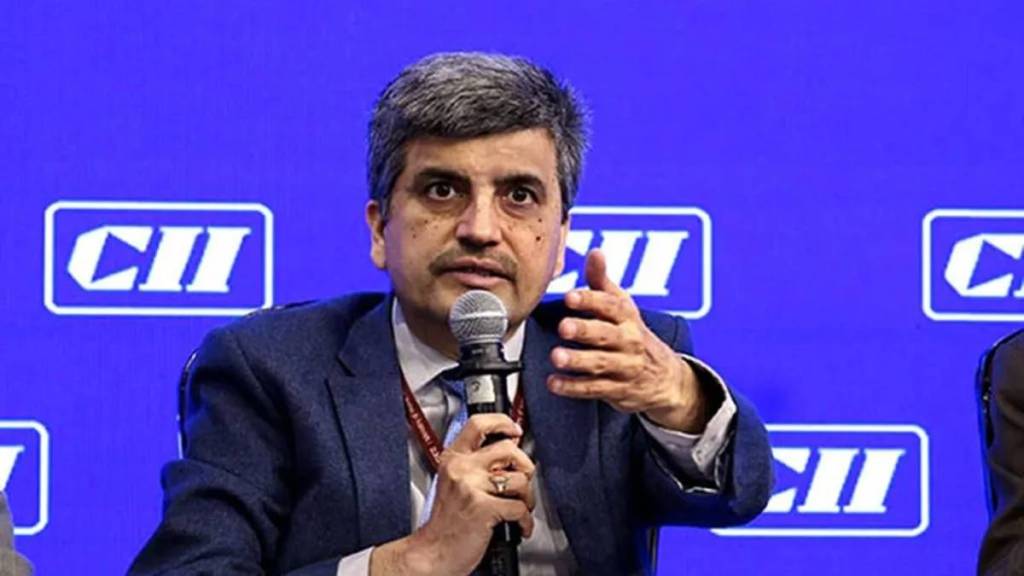

The Insurance Regulatory and Development Authority of India’s (IRDAI) proposed overhaul of insurance distribution economics is not intended to dismantle insurers’ existing distribution networks, Chairman Ajay Seth said. “The objective is to simplify the distribution architecture and create greater choice and opportunities, while aligning remuneration with the range of the channel’s offerings and the effort involved,” Seth told FE in his first media interaction since the regulator unveiled its draft distribution reforms.
New commission rules from 2027
IRDAI on Wednesday proposed reintroducing commission caps and linking remuneration to the effort involved in selling and servicing policies.Seth said the regulator was considering January 1, 2027, or April 1, 2027, as the possible effective dates for the new rules.
The consultation paper proposes effort-based reductions in product-wise commissions across channels such as bancassurance, brokers and digital intermediaries. At the same time, it seeks to incentivise individual agents who are in closed architecture and limited to the products of one insurer in each class of business. The proposed structure of first-year and renewal commissions is intended to improve the quality of sales and policy persistency.
Seth, however, said he would not characterise the reforms as targeting any single distribution channel. An individual agent operating within a closed architecture faces restrictions on the range of products that can be offered which restricts his sales avenues, he said.
According to Irdai’s consultation paper, bancassurance entities generate around 45% of private life insurers’ total premiums, while the average commissions paid to them range from 4% to 37% across insurers. In general insurance, bancassurance accounts for about 5% of premiums but receives an average commission of 26%.
“Therefore, it is reasonable to allow relatively higher commission limits for such channels,” Seth said, referring to agency distribution.
On expenses of management (EoM), Seth said the regulator did not intend to impose a blunt cost ceiling without considering the underlying economics of the business. However, he said, the proposed limits are akin to what have existed in the sector. The reforms seek to achieve these levels again and improve on them.
In life insurance, the cost of doing business is about 12% for Life Insurance Corporation of India and 11% for SBI Life Insurance. Together, the two insurers account for roughly two-thirds of the market.
“So, two-thirds of the market can manage at 11-12%, while the rest of the market operates at 22%. There is no level playing field here,” Seth said.
Explaining the impact on policyholder funds, he said that out of every ₹100 of life insurance premium collected, ₹22 currently goes towards acquiring and managing the business. That leaves ₹78 in the pool from which life cover and other policy benefits are provided.
In general insurance, the cost of doing business is around 32%, leaving ₹68 out of every ₹100 collected for claims and other requirements, he said.
IRDAI’s draft proposes linking EoM limits to gross direct premium income (GDPI) for general insurers. For life insurers, the base is proposed to be total premium, i.e. new business and renewal. The EoM limit would decline to 15% within two years and 12.5% within five years.
EoM ceiling set to fall
For general insurers, the EoM ceiling is proposed to fall from 30% of gross written premium to 20% of GDPI over five years. Standalone health insurers have also been clubbed with general insurers and are expected to reach the same levels.
“There is a thought behind it. I would ask all readers to read it a couple of times. There is a logic and a rationale, which have been mentioned there,” Seth said.
He also urged the public to participate more actively in the consultation process. “As a regulator, we receive a lot of input from regulated entities. But these consultations are the occasions on which we solicit input from the public,” he said.
The proposal is open for comments from the public and other stakeholders until October 25. After considering the feedback, Irdai will issue another set of draft regulations before notifying the final framework.
(With inputs from Narayanan V)