


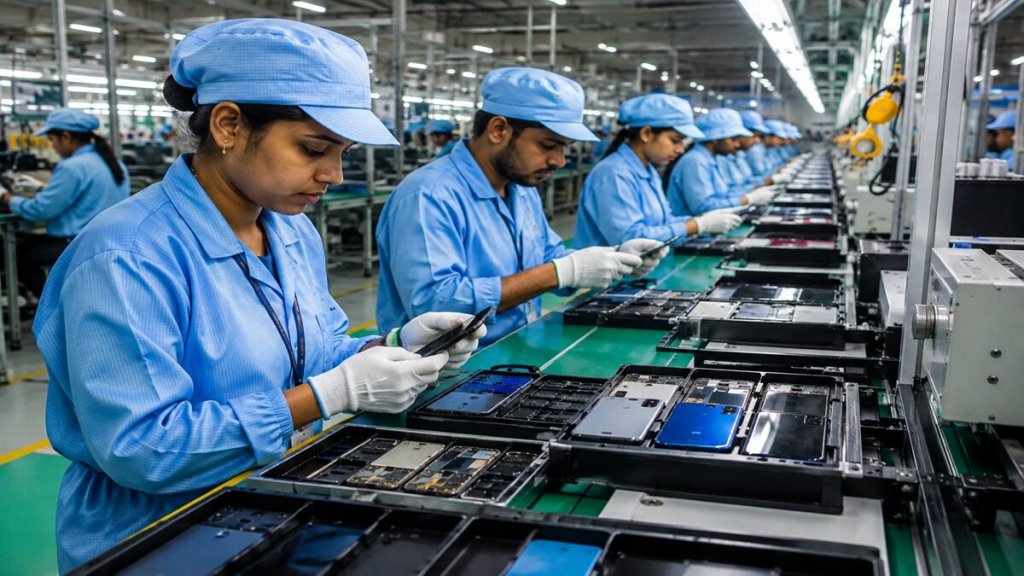

Cyient DLM expects its electronics design and manufacturing business to grow at a compound annual growth rate (CAGR) of 25-30% over the next three to five years, driven by rising demand for safety-critical electronics and products designed and developed in India.
The business includes contract manufacturing of electronics as well as the development of products where the company owns the underlying intellectual property (IP).
The company has an order book of around $1 billion for its own-designed electronic products over the seven-year period from FY27 to FY34, Kaushal Jadia, CTO, Cyient DLM said in an interaction with Fe. The figure is about five times the unit’s current revenue, even as it keeps more than 90% of that design-led business export-oriented.
“Over 90% is export. That’s been our legacy from an engineering services side, we have been working with the likes of Boeing and Airbus in commercial aviation, similarly in medical and automotive. Previously we were only doing engineering services, but now we are doing the whole bit, whenever there’s a custom need,” Jadia said, referring to the share of the company’s design business currently sold overseas. The company works with customers across Europe and the US on product design, certification and qualification.
A key focus for Cyient DLM is to develop safety-critical electronics for sectors such as commercial aviation, defence, automotive and railways. Its product portfolio includes power electronics, communication systems, radio-frequency (RF) and microwave systems, and displays. The company is increasingly focusing on products where it owns the design and IP. Jadia said the complete design cycle, from system design and hardware to software and certification is undertaken in-house in India.
For semiconductor fab equipment, however, the company operates as a contract manufacturer. It assembles electronic cards, wire harnesses and boxes used in semiconductor manufacturing equipment, purchasing components such as semiconductors and PCB blanks before assembling, testing and delivering the finished systems.
Cyient DLM currently has manufacturing operations in Mysore, Hyderabad, Bengaluru and the US, while its engineering operations are primarily based in Bengaluru.
While artificial intelligence and machine learning can help automate parts of verification and certification, Jadia said the underlying safety and certification requirements cannot be bypassed.
India’s cost structure also provides an advantage for developing such products. “Engineering costs in India are about 50% lower than in Western countries, while manufacturing costs can be around 15-20% lower even when semiconductors are imported,” Jadia said. He added that this combination of domestic engineering, product ownership and manufacturing could allow Indian firms to develop globally competitive electronics products rather than remaining limited to contract manufacturing.