


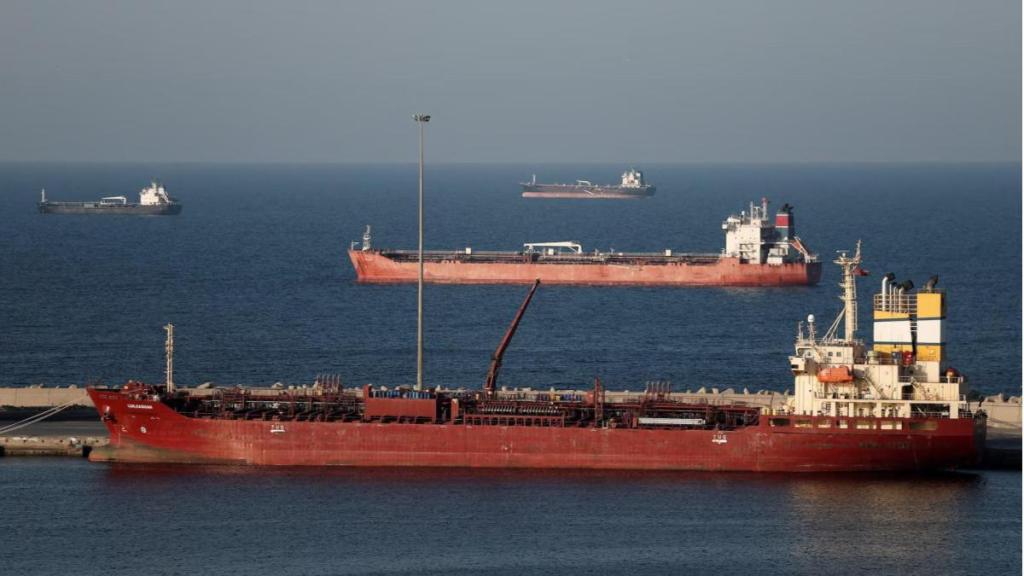

The West Asia conflict has thrown global energy corridors into turmoil — with oil prices skyrocketing amid a series of deadly attacks. Brent crude hit $117 last week as Iran ramped up its attacks against tankers transiting the Strait of Hormuz and the Persian Gulf. Meanwhile, Houthi rebels have extended their control along the Red Sea to pressurise transit through the Bab al-Mandeb Strait.
Existing alternative energy export routes provide incomplete protection — with only Saudi Arabia and the UAE operating major pipeline bypasses. Kuwait, Qatar and Bahrain lack independent alternatives while Iraq faces severe export disruptions due to heavy reliance on southern ports. According to a recent EY report, active bypass capacity of approximately 8.8 million barrels per day covers only 45% of the 19.9 million barrels per day normally exported through Hormuz. This leaves an 11.1 million-barrel-per-day structural deficit.
The West Asia conflict has created simultaneous constraints at the Strait of Hormuz and Bab el-Mandab to significantly limit the region’s principal export pathways. Routes passing through Yanbu also remain exposed to constraints the Suez Canal, the SUMED pipeline and the Cape of Good Hope — resulting in longer transit times and higher handling costs. The growing weaponization of energy supply chains has also intensified calls for alternative export infrastructure, such as the India-Middle East-Europe Economic Corridor and a proposed GCC energy corridor through the Arabian Sea.
The region presently relies on three primary operational pipeline bypass routes to export crude oil entirely outside the Strait of Hormuz. The Saudi East-West pipeline presently carries approximately 5.8 million BPD — with expansion planned up to 10 million BPD. The Abu Dhabi crude oil pipeline carries another 1.5 to 1.8 million BPD while the Ira-Turkey pipeline is projected to carry approximately 750,000 BPD under a one-year oil pipeline renewal deal signed at the beginning of August.
Changing energy routes
The war on Iran has exposed vulnerabilities along existing trade and energy routes in West Asia. Countries that invested early in alternative export infrastructure are now in a better position to cushion the blow. The leading example is Saudi Arabia with its 1,200 km-long east-west crude pipeline from Abqaiq to Yanbu in the Red Sea. The kingdom also operates a parallel petroline for natural gas liquids, or NGLs. Meanwhile the United Arab Emirates has benefited from its 380-kilometer Abu Dhabi crude oil pipeline that runs from Habshan to the Fujairah port. But others have seen energy exports plummet sharply as they remain locked into the Strait of Hormuz.
According to a note released by analysts at Goldman Sachs in July, there are seven pipeline and export infrastructure projects presently under construction, planned, or considered potentially feasible in this region. By the end of next year that capacity (plus existing pipelines) could insulate more than 45% of the prewar level of Persian Gulf producer exports from any potential future Hormuz shocks. Two projects are already under construction: the West-East pipeline in the UAE and the Basra-Hadhita pipeline in Iraq.
A $50 billion overland bet
The proposed $50 billion cross-border Arabian Sea Energy Corridor would connect southern Iraq with Saudi Arabia, Kuwait and the UAE. The land-based multi-state infrastructure framework is designed to bypass the vulnerable Strait of Hormuz and carry crude overland to deepwater terminals on the open Omani coast.
“A proposed GCC energy corridor could comprise two large pipelines with a combined capacity of approximately 10 million barrels per day…The estimated investment of $50 billion is substantial but materially lower than the quantified economic burden of a prolonged disruption, “closed,” EY analysed in a recent note.
The project remains at a discussion stage — while some segments have moved to an independent study. Saudi Arabia and Oman have bypassed the full four-nation framework to look at the feasibility of a single line segment to Duqm. State-owned Saudi Aramco is separately evaluating a single-line bypass route spanning approximately 1,200 km across the Empty Quarter to connect Saudi oil fields to Duqm port and storage complex in Oman.
TotalEnergies CEO Patrick Pouyanne revealed at the end of September that Saudi Arabia had already started work towards developing a new oil pipeline to the Omani coast. Reports citing Rystad Energy have outlined an estimated development cost of up to $7 billion.
“Asian economies depend heavily on Gulf energy supplies and many refineries process medium and heavy sour crude grades that cannot be replaced quickly at scale. Greater energy security for the continent would help sustain refinery and industrial operations, reduce exposure to volatile acquisition and shipping costs, and limit inflation and balance of payments pressure when conventional supply routes face prolonged disruption or capacity constraints,” EY added.
Is India involved?
The Petroleum Ministry issued a clarification in mid-June this year, denying reports of active involvement in a deep-sea energy pipeline. This hypothetical route would have connected Gujarat to Oman and other Gulf countries — sometimes referred to as the Middle East India Deepwater Pipeline. The government clarified that there was no such proposal currently under consideration or in active discussions, negotiations with Gulf countries at any level.
Despite official government denials, the 2,000 km deep sea project has seen renewed interest from the South Asia Gas Enterprise. According to an EY report, Oman could facilitate a wider regional corridor since its Arabian Sea terminals lie beyond both the Strait of Hormuz and Bab al-Mandab Strait. The port infrastructure can accommodate large crude carriers while Ras Marqa’s storage hub provides storage and blending potential, and Salalah’s logistics hub provides connectivity. This essentially gives Oman strategic energy infrastructure that could connect Gulf production with Asian demand.
A separate but linked project called the India-Middle East-Europe Economic Corridor (IMEC) was set into motion in September 2023. But progress remains fractured — affected by multiple wars, affected by multiple conflicts across West Asia and heavy security risks.