


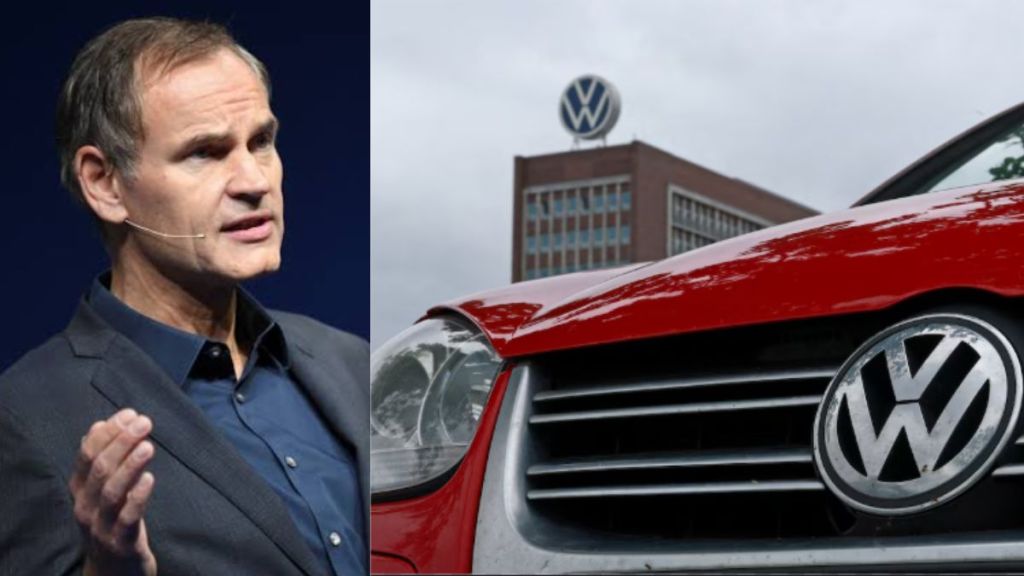

Volkswagen will cut around 100,000 jobs and halve its vehicle offerings under an aggressive restructuring bid announced on Friday. The supervisory board of the German automobile company unanimously approved the massive cost-cutting plan, shaping up to be the carmaker’s biggest overhaul in its 89-year history. As part of the extensive shake-up, dubbed ‘Future Plan 2030,’ the company aims not only to facilitate a product overhaul but also to severely cut its workforce.
Eyeing the goal of restoring competitiveness, Volkswagen Group says it will cut an additional 50,000 jobs, on top of roughly 50,000 previously agreed to over the past two years. The plan, which the company called its “most strategically profound transformation program in the Volkswagen Group’s history,” in its latest press release, also includes ending auto production at four German plants.
The automaker’s most recent financial report also revealed that its employment in Germany shrunk from 275,000 in 2023 to 254,000 as of June 30, 2026. Meanwhile, its 2025 annual report disclosed that the Volkswagen Group employed an average of 667,164 people in fiscal year 2025, a decrease of 2.3%.
CEO Oliver Blume further asserted that the company plans to invest a three-figure-billion sum in the coming years to make its iconic brands “more attractive, stronger and more competitive.”
The automaker group comprises 10 brands from five European countries: Volkswagen, Volkswagen Commercial Vehicles, ŠKODA, SEAT, CUPRA, Audi, Lamborghini, Bentley, Porsche and Ducati, in addition to offering a wide range of further brands and business units, including financial services, according to its website.
Why is Volkswagen going ahead with ‘Future Plan 2030’
Volkswagen’s ‘Future Plan’ appears to be the automaker’s answer to a series of predicaments, including US import tariffs, a weak Chinese market and rising low-cost competition from the Asian country.
As highlighted in the official company note, the company is proceeding with the workforce structure adjustment in light of intensifying global competition, shifting demand and technological change in the automotive industry.
VW posted a 30% drop in after-tax earnings for the year’s first half as sales crumbled in China, despite China previously being German automakers’ strongest overseas market, the Associated Press reported.
The Volkswagen Group’s troubles, however, aren’t isolated, as German automakers at large are facing heightened pressure amid US President Donald Trump’s tariff regime and the rise of electric vehicles and hybrids. Volkswagen has been particularly hit hard by the developments owing to its lack of a big manufacturing base in the United States.
Just recently, the company’s CEO Oliver Blume told employees, “Tariffs, new competitors and geopolitical risks: The entire automotive industry is under enormous pressure.”
Cars, among other big-ticket goods, have long constituted the heartbeat of the German economy. However, as Chinese exports have come to match Germany’s quality, while also selling for far less, the European country has had to suffer from what economists have long labelled as the “China Shock.” The surge of Chinese imports into foreign markets has, therefore, served as a major factor influencing Germany’s economic stagnation since the Covid-19 pandemic, the Associated Press reported earlier this week.
Volkswagen’s finance chief, Arno Antlitz, also noted that costs must come down “in an environment where the Chinese total market is down by 20%, and Chinese competitors are increasing exports and thereby competitive pressure in Europe,” as quoted by the AP.
Main takeaways from Volkswagen’s restructuring plan
According to a Wall Street Journal analysis of Volkswagen data, the company is employing more workers per car produced than its rivals, with the group making around 150 vehicle models, including those of Audi, Porsche and other brands it has acquired over the years.
This is exactly why CEO Blume presented the massive overhaul plan to cut jobs, among other big decisions that the company believes are now crucial to its progress in the future.
As part of the ‘Future Plan 2030,’ the Volkswagen Group announced that its additional 50,000 job cuts will include shedding management positions.
“We are taking responsibility for our entire workforce, for our partners and for industrial jobs worldwide,” Blume said in a press release published after the comprehensive plan’s approval. “Over the coming years, we will invest a three-figure billion sum to make our iconic brands even more attractive, stronger and more competitive.”
Yet another priority of the Volkswagen Group right now is to streamline its model range by about 50% and reduce complexity by around 75%, as focus remains on “the most compelling vehicles,” and excelling in design and technology. The company’s systematic tailoring on all level will aim to cater the needs of both the Western and Eastern hemisphere, with the motto, “Higher volumes per model, lower costs, stronger economies of scale,” according to its new press release.
Another major point highlighted was simplification, which will involve developing a model for evolved decision-making and group structure for the company. The revised structure will lay down the basis for actualising technological and other synergies that would ultimately aim at the cost-cutting process across the larger company hierarchy.
Consequently, the portfolio mapping out shareholdings and businesses will be aggressively assessed to keep only those with a “clear strategic and financial contribution to the core business.” Meanwhile, non-strategic activities will be divested or realigned, with the goal to maintain a “leaner” structure and “more effective use” of capital.
Volkswagen Group’s European capacity currently exceeds demand by more than 500,000 units. As focus shifts to the company’s most profitable market segments in North America and adapting expectations in China, Volkswagen noted that it can’t guarantee future product allocations for its plants in Emden, Zwickau, Hanover and Neckarsulm from 2031-2034. As a result, alternative uses for these German plants are still being assessed.
More importantly, VW Group emphasised that it wants to sell 9 million vehicles per year, while targeting an operating margin of 9% by 2030, as opposed to its 3.8% in the first half of 2026.