


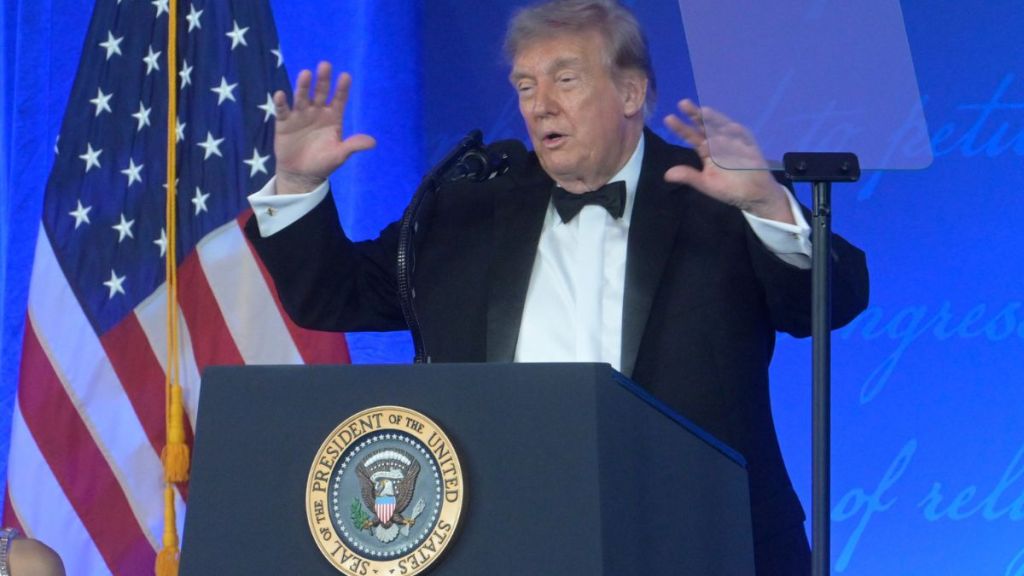

In a high-stakes legislative battle, the US House of Representatives has moved a Russia sanction bill to a final vote. This bill could authorise US President Donald Trump to impose tariffs of up to 100% on multiple countries, including India, for buying Russian oil and gas. Co-authored by the late Lindsey Graham, the South Carolina senator who passed away earlier this year, it would allow Trump to expand his secondary tariff authority amid Russia’s ongoing war on Ukraine.
The legislation also extends sanctions on Iran, which are set to expire at the end of the year, seeking to restrict funding for its energy and weapons sector.
Russian sanctions bill targets India and other countries
Called the Lindsey O. Graham Sanctioning Russia and Iran Act of 2026, the bill was previously introduced in the House by Democratic Congressman Steny Hoyer alongside over a dozen bipartisan colleagues who proposed naming 10 countries as eligible for levies of up to 100% under the bill’s secondary tariff provisions. Last month, it passed the US Senate in an 86-11 vote.
The list includes China, India, Turkey, Azerbaijan, Hungary, the Slovak Republic, the United Arab Emirates, Singapore, Kazakhstan and the Kyrgyz Republic. While it remains to be seen how much tariffs would ultimately be levied on these countries, given their respective share of Russian trade, the bill, as of now, simply identifies them as countries eligible for such tariffs if the legislation is formally implemented.
On the other hand, the version of the legislation passed by the US Senate didn’t specifically single out any countries. Instead, it only refers to the five largest importers of oil and gas by volume. This particular version aims to impose tariffs on Russia’s leadership, its energy sector, and Russia’s “shadow fleet” of vessels engaging in sanctions evasion, while also allowing the POTUS to impose tariffs of up to 100% on major Russian energy buyers.
India’s Russian energy ties
After Russia’s 2022 invasion of Ukraine, India emerged as the top buyer of Russian seaborne crude. However, its refiners reversed course to some extent in January by reducing purchases. At the time, it helped New Delhi avoid 25% tariffs imposed by Washington and secure an interim trade deal with the US.
Despite a recent decline in export volumes, Russia continues to benefit from high global energy prices. India remained its second-largest fossil-fuel customer in August, behind China.
India imported 4.8 billion euros of Russian hydrocarbons last month, while crude oil accounted for 4.1 billion euros, or 87% of its purchases, according to a report by the Centre for Research on Energy and Clean Air (CREA).
Nonetheless, Indian imports of Russian crude fell 24% from July, having reached record highs in the previous two months. Jamnagar refinery’s imports dropped 15%, while Vadinar’s rose 5% and Paradip’s surged 1%.
On the flip side, CREA reported that as Russia’s largest fossil-fuel customer in August, China invested 8.4 billion euros, 51% of the revenues generated by its five largest buyers. Russian seaborne crude imports into the Asian country surged 16% month-on-month and were 62% above August 2025 levels.
As the bill moves ahead for a final vote, the US House of Representatives is left with a limited window before the early recess ahead of the upcoming November 3 mid-term elections.
In the meantime, a separate bill backed by Democratic Congressman Gregory Meeks and several others aims to eliminate the Russian sanctions provision.