


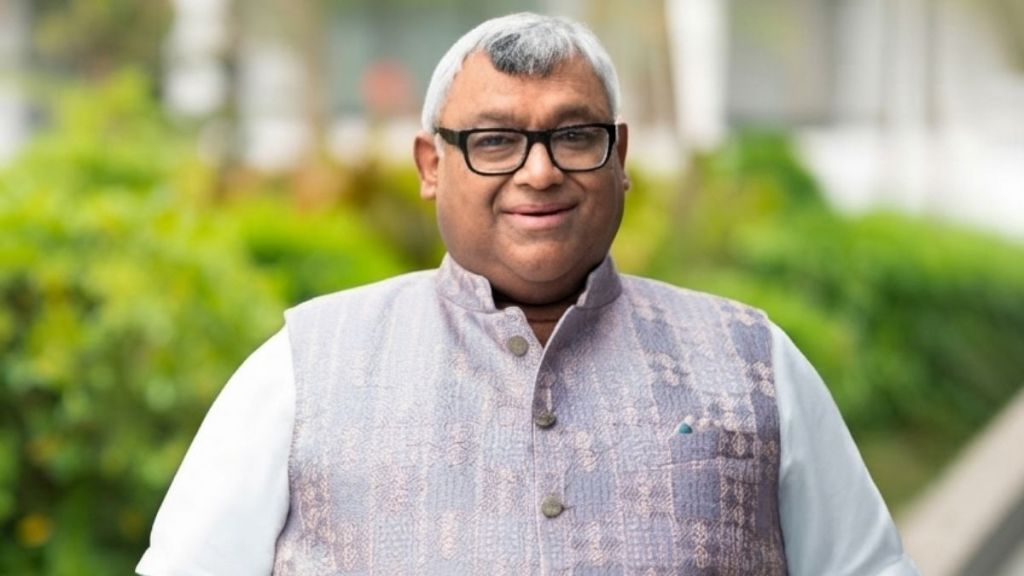

Having signed the first property for luxury brand Kimpton in India, to open in Jaipur in 2030, Sudeep Jain, managing director, south-west Asia, InterContinental Hotels Group, tells Sreya Deb the company’s plans for India and brands they would like to introduce in the country. Edited excerpts:
Tell us about bringing the Kimpton brand to India in partnership with the Adani Group.
Bringing Kimpton to India was largely based on the partners we signed up with (Kimpton and Adani Airport). You need the right partner, the right location and the right meeting of minds. The most important thing is that the investment makes financial sense. We have the right partner in the Adani Group, the right location — Jaipur — which is a city that is growing and increasingly popular with international tourists. We also have confidence that the product will be worthy of the Kimpton brand. Had those same conditions existed three years ago, we would have brought Kimpton to India three years back.
Along with Jaipur, we’re looking at potential Kimpton projects in other locations – Mumbai, Mangalore and Thiruvananthapuram — to start with.
What is IHG’s strategy for the Indian luxury market?
We have an ambition to have 400 hotels either open or in the pipeline in India by 2030. That’s across all our brands. At the moment, we have seven brands in India. By 2030, I would expect us to have at least a dozen. That’s our stated goal, and we’re well on our way towards it. We’re hoping to sign another 50 hotels by the end of this year.
We would also like to bring Indigo and Regent to India because I think both have significant potential. We don’t have a specific target by brand, but we certainly want to make a significant push in luxury and lifestyle. In our signings over the past two to three years, there has been an increased focus on that segment, whether it’s InterContinental or Kimpton.
Today we have a relatively small number of InterContinental properties in India, but we have around 14 under construction. They are spread across major metros as well as resort destinations, coming up in Mumbai, Delhi, Hyderabad and Bengaluru, as well as destinations such as Kodaikanal, Kasauli and Jaipur, among others. We also have a broader regional presence in places such as Dhaka, Colombo, Kathmandu, Pokhara and Chitwan. A lot of these hotels are going to open in fairly quick succession.
What kind of potential do you see in India for the future?
We entered India in 1965, so we’ve had a long time to establish ourselves. The brand has recognition and awareness, and we have a solid foundation in the country through our operations and existing properties. The newly renovated InterContinental property in Chennai is going to set a standard for what luxury can be, and should be, particularly from an IHG perspective. Today, luxury and lifestyle may represent a certain proportion of our portfolio, but by the time we reach 400 hotels, that proportion will certainly be different.
Our strategy is very clear. We need to grow aggressively in our core brands, introduce new brands to India when required, evolve with the market and bring new products into the country. In the coming years, by the time we open in India, the expectations from luxury hotels like Kimpton and others may well have shifted. I predict an emerging focus on sustainability, technology, interaction, and personalisation, especially from the younger crowds that will be in the workforce at the time.
How rapidly is IHG expanding across the region? Is India’s pace comparable with other markets?
At the moment, we have around 60 properties operating across south-west Asia, with close to 130 more under construction in some form. We’re also signing deals at a very strong pace. This year, I’m hoping we’ll be at around one deal a week.
As for how India compares to other markets, China and the US are obviously huge markets for us, but they also have huge existing bases. From a percentage-growth standpoint, southwest Asia may be one of the fastest-growing regions for IHG, although we have to recognise that we’re starting from a smaller base. The fundamentals are very strong: a growing middle class, economic growth and expanding infrastructure. Airports are growing, as are road and rail networks. I don’t think this growth is going to stop.
Kimpton typically offers an immersive experience of the country or city where it stands. Is that what primarily sets it apart from other luxury IHG brands?
Lifestyle can be a wellness lifestyle, a sustainable lifestyle, an energetic lifestyle or one focused heavily on food and beverage. There are elements of all of these in most luxury hotels. The difference is the degree to which each brand emphasises one particular direction.
Take InterContinental, for example. You might describe the luxury there as more subtle. At Kimpton, that isn’t necessarily the case. Both are offering luxury experiences, but the Kimpton lifestyle is more about high energy and a strong food-and-beverage focus.
It’s not like being in the middle of a nightclub. It’s still soothing, calming and enjoyable. You’re entertained and engaged, but it doesn’t demand much from you. Whether you’re introverted or extroverted, you still want to be around the right energy. I think Kimpton provides that. Food and beverage is also a big part of creating that energy, and that goes beyond what you might traditionally expect from a luxury property.
What about mid-segment brands like Holiday Inn; what is your strategy for them?
Those are about smart and simple living without too much complexity. Unlike our luxury properties, Holiday Inns are more accessible and affordable and we’ve established them as touchpoints for most budget travellers. Recently we have signed a Holiday Inn in Sriperumbudur, a 200-key hotel which should open doors in 2029; one in Goa Kadamba, a 100-key property, and in Mandi and Alwar, which will open around 2030. These properties are getting more and more relevant because of the rise in commercial, leisure, spiritual-tourism and transit markets. And we see great potential there. Not just that, but the marriage market has also become very specialised and curated, which is a new addition we have been making to our repertoire when it comes to events hosted at these properties.
The writer was in Bangkok at the invitation of IHG.