


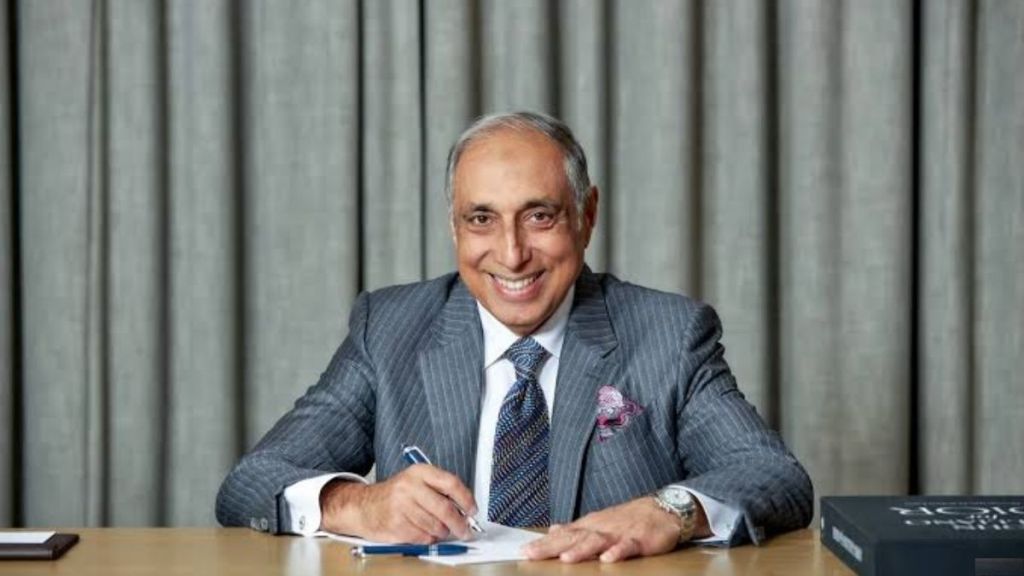

Prestige Estates Projects recently announced a deal with the Canada Pension Plan Investment Board (CPP Investments), under which the latter will invest Rs 3,000 crore in its hospitality arm for a 27% stake. The company is also launching multiple residential projects across cities. Irfan Razack, chairman and managing director of Prestige Estates Projects, speaks to Raghavendra Kamath about the company’s growth plans and the real estate market. Excerpts:
How do you plan to grow your hospitality business after the deal with CPP Investments?
In our hospitality vertical, we currently have around 1,445 operating keys in Bengaluru and a pipeline of over 4,000 keys across the NCR, Mumbai, Hyderabad, Chennai, Goa and other key markets. We are building this portfolio in partnership with some of the most reputed hospitality brands, including Marriott, Hilton and Oberoi, among others.
With the partnership with CPP Investments, we now have sufficient capital within the company to take our hospitality platform to the next level of growth. Our immediate focus will be on executing the existing pipeline and bringing these marquee assets to fruition. At the same time, we will continue to evaluate attractive asset-acquisition opportunities that can complement and strengthen our hospitality portfolio.
Do you plan to bring in any other investor into your commercial properties? If yes, in which assets?
Our immediate focus and priority is on scaling our commercial portfolio. We currently have around 35 million square feet under development across Bengaluru, Mumbai, Delhi, Kochi, Chennai and Kolar.
Our exit rental income is around Rs 860 crore today, and with the completion of this portfolio by FY30, we expect that to grow to more than Rs 4,000 crore. Our vision is to build this portfolio to a meaningful scale and, once we reach that critical mass, evaluate the right monetisation route, including a potential REIT.
How has residential demand been in your key markets? How does the early festive trend look?
So far, the demand environment has remained strong across our key markets, and the projects we have launched in recent times have seen very good traction.
We started FY27 with a large project in Tellapur, Hyderabad, called Prestige Golden Grove, where we clocked sales of over Rs 3,000 crore in the launch quarter itself. More recently, our launches in Bengaluru, including Prestige Parklane and Garden Breeze at The Prestige City, Sarjapur, have also witnessed strong momentum and high sales velocity at launch. As we enter the festive period, we remain optimistic about the demand environment and expect well-positioned projects to continue to see healthy traction.
Experts have said there has been an oversupply of luxury projects in Mumbai, Bengaluru and other markets. What is your view?
I would look at the market a little differently. There has certainly been an increase in the supply of luxury housing in markets such as Mumbai and Bengaluru, but what ultimately matters is the depth of demand and the ability of the market to absorb well-located, well-designed projects at the right price points.
Our experience has been that there is strong demand for differentiated luxury products in the right locations. For instance, our luxury projects such as Prestige Nautilus and Prestige Ocean Towers in Mumbai have seen a very strong market response.
The traction we have seen across our recent launches also gives us confidence that the demand environment remains healthy. That said, we remain disciplined in our approach to new launches, with a clear focus on location, product quality and pricing rather than simply adding supply to the market.
Many developers are calibrating launches because of approval delays and market softness. What has been your strategy?
Our approach is fairly straightforward. Our model is based on capital efficiency. Once the necessary approvals are in place and the project is ready, we go ahead and launch.
We do not believe the current demand environment warrants holding back launches. In fact, the response to our recent launches has been quite encouraging, which gives us further confidence in this approach.
We will continue to launch projects as they become ready, while remaining focused on delivering the right product at the right location and price point.
How has the West Asia conflict affected your business?
So far, we have not seen any material impact from the West Asia conflict on our business. There was some temporary uncertainty around material supplies and supply chains, but that has largely eased, and we continue to see healthy operations and demand across our key markets.
We remain mindful of the broader global environment and its potential impact on interest rates, commodity prices and investor sentiment. But as of now, we have not seen anything that warrants a change in our business strategy or growth plans.