


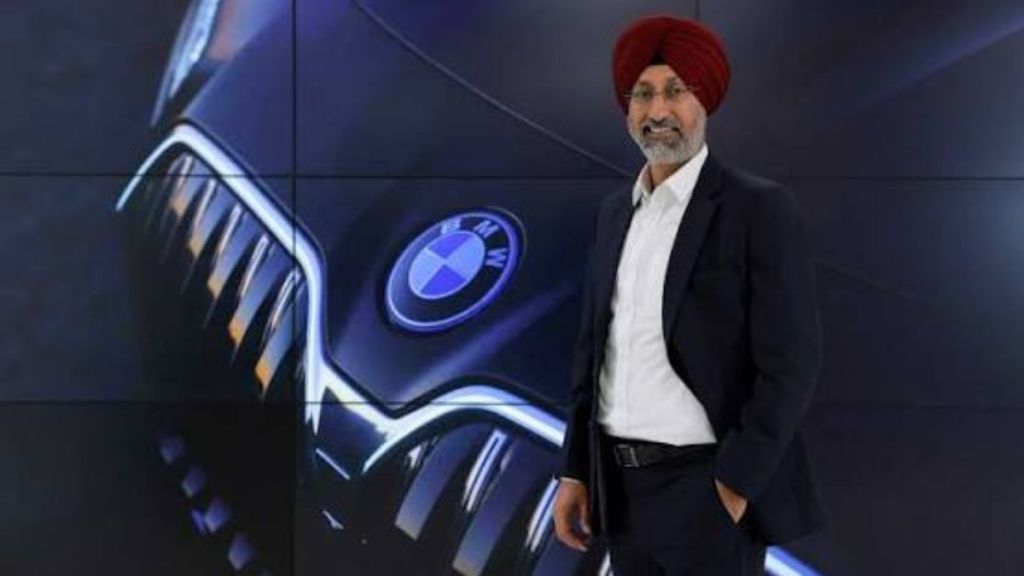

As demand for luxury cars remains strong and electric vehicles (EV) emerge as a key growth driver, BMW Group India aims to become the first luxury carmaker in the country to cross 20,000 units in annual sales. Hardeep Singh Brar, president & CEO, BMW Group India, spoke to Nitin Kumar about the company’s EV strategy, localisation, capacity, pricing, and competition. Excerpts:
What is BMW’s growth ambition?
We are growing at around 15% and want to continue the strong momentum. Nobody in luxury has crossed 20,000 units so far, so our aim is to cross that this year. Every month, so far, has been the best-ever month in BMW’s history. As the base effect comes in, growth will moderate, but we expect festive-season growth to remain around 10-15%.
Why do you see little scope for hybrids in the luxury segment?
Electric range is much better today. The BMW i7, for example, offers up to 728 km. In terms of torque, electric is number one, diesel number two, petrol number three and hybrid number four. If EVs offer the range and torque you need, why go for another powertrain?
How do you see EV penetration evolving?
Our EV penetration was around 26% in the first half of 2026 and should cross 30% in the second half. Next year, with more EV launches, I believe we will reach close to 40%. If EV adoption reaches those levels, there will be even less need for an intermediate technology.
We are witnessing rising customer interest in EVs and demand is so high that we are not able to meet it. In models offered with both petrol and electric powertrains, around 50% of sales are coming from EVs. This indicates why we are bringing EVs into every category.
What is the waiting period for BMW’s EVs?
The iX1 and i5 have waiting periods of around two to three months, while the i7 is around one to two months.
Is there a production shortfall, or can you increase capacity to meet demand?
Production planning works on roughly a six-month cycle. Our operating capacity is around 17,500 units on a single shift. If demand requires it, we can introduce a second shift on the same assembly line and increase capacity without fresh investment in the factory.
You recently announced a price hike. How much do price increases affect luxury car demand?
If all players increase prices, there is hardly any impact. But if only one player increases prices while others do not, a 1% price increase can impact volumes by 4%. In our industry, however, all players tend to follow each other on price hikes.
Luxury customers are relatively price inelastic. Sentiment is a bigger concern than money. Around 70% of our customers are from the business class, so purchasing decisions are influenced by their businesses, geopolitics and broader macroeconomic conditions.
Mercedes-Benz says it is not chasing volumes. Now that BMW is ahead in registrations, how important is being No. 1 to you?
I think we are all in the business of numbers. Whether it is volumes or profitability, the numbers are important. They have to go hand-in-hand. You can’t focus on one number and ignore the other.
Will the India-UK and India-EU free trade agreements (FTAs) impact BMW?
Our strategy is focused on localisation. Even under the India-UK FTA, duty will come down to around 40%, whereas local production attracts around 10-15%. Local manufacturing, therefore, remains more beneficial. With the locally produced MINI Countryman C, we brought the price down to around ₹47.5 lakh. Even under the trade pact, the cost would not have been reduced to this level.
Could BMW bring more products under the FTA?
Products priced above ₹1 crore could be considered. There could be some higher-end, completely built units that we could consider bringing under the FTA, such as the BMW i7 M70 xDrive.
How will Chinese luxury carmakers affect BMW if they enter India?
When customers buy a BMW, they buy the brand first and then the car. Other cars may offer many features, but BMW differentiates itself through driving dynamics, precision and craftsmanship. We believe Bavarian engineering and precision are difficult to match. The brand is strong, so even if Chinese players enter, we believe we can withstand the competition.