


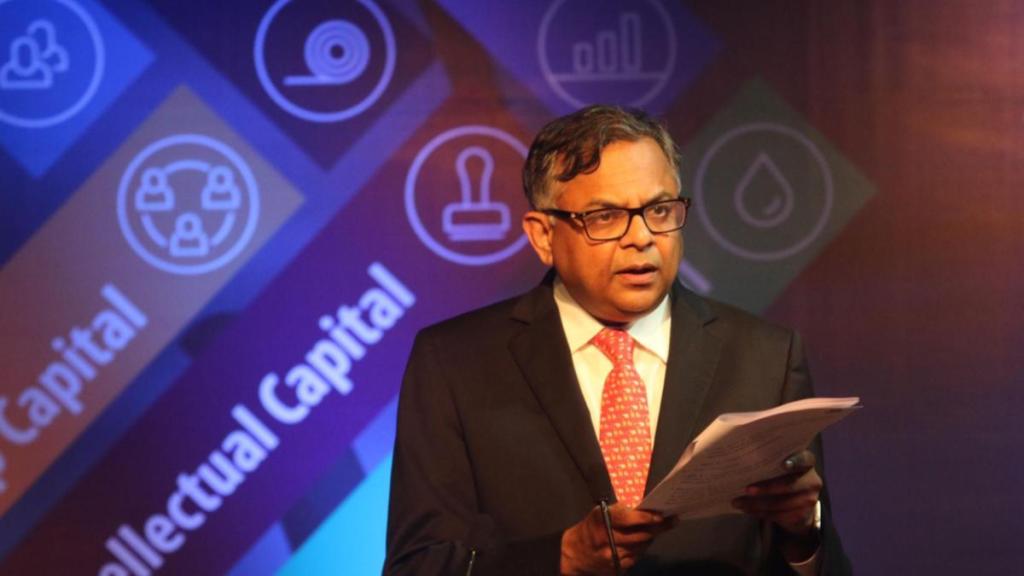

N Chandrasekaran’s fresh five-year term as Tata Sons chairman could run into a wall at the company’s annual general meeting, where shareholders must first ratify his continuation as a director.
Chandrasekaran is liable to retire by rotation and must be re-elected to the Tata Sons board. Since the chairman must also be a director of the company, rejection of that resolution would automatically end his run as chairman, irrespective of the board’s decision to give him another term.
Tata Trusts, which collectively owns about 66% of Tata Sons, is certain to oppose Chandrasekaran’s re-election as a director, people aware of the developments said. Backed by Trusts chairman Noel Tata, such a move would have enough shareholder support to defeat the resolution.
Tata highlighted this issue in a letter to board members on Thursday. “There is a logically prior question which remains unresolved,” he said.
“The chairmanship of this Company is an office held by a director of this company. The chairman’s own position as a director is presently uncertain, the general meeting at which that question falls to be determined not having been able to proceed for want of quorum,” Tata wrote.
“Until that question is resolved, a resolution upon the chairmanship rests upon a foundation which has not yet been laid. We cannot put the cart before the horse.”
The immediate complication, however, is that it remains unclear when a valid AGM can be held.
Chandrasekaran’s re-election as a director was among the resolutions scheduled to be considered at the August 18 AGM. The meeting was adjourned for want of quorum—the first such instance in Tata Sons’ history—and no fresh date has yet been finalised.
Under Tata Sons’ Articles of Association, at least five shareholders must be personally present to constitute a quorum. They must include an authorised representative jointly nominated by the Sir Dorabji Tata Trust and the Sir Ratan Tata Trust, which together own about 52% of Tata Sons.
SRTT, which holds approximately 23.56%, has been unable to convene meetings because of a restraint imposed by the Maharashtra Charity Commissioner. The proceedings concern the composition of the Trust’s board and its compliance with the statutory ceiling on lifetime trustees.
In the absence of a valid SRTT meeting, the Trust cannot join SDTT in nominating the representative required for the Tata Sons AGM. The same restriction has held up the constitution of a selection committee for a new Tata Sons chairman.
Tata Sons has received an extension to hold the AGM by December 31. Unless the Charity Commissioner grants relief or the company finds another legally sustainable way to meet the quorum requirement, the shareholder meeting—and Chandrasekaran’s directorship—could remain in limbo.
Under the Companies Act, a director liable to retire by rotation ordinarily remains in office until the relevant AGM decides whether to reappoint him or fill the vacancy. The law, however, does not expressly address a situation in which the AGM itself cannot be validly constituted because of a continuing lack of quorum.
This has produced an unusual sequencing problem. The Tata Sons board has approved a new term for Chandrasekaran as chairman even though the shareholder decision necessary for him to remain a director is still pending.
The AGM vote offers the Trusts a route to prevent Chandrasekaran from continuing without relying solely on their separate legal challenge to the board resolution reappointing him as chairman. With a two-thirds shareholding, the Trusts can vote against his re-election as a director once a valid meeting is convened.
The impasse therefore works in two stages. For now, the restrictions on SRTT prevent the Trusts from helping constitute the quorum necessary to hold the AGM. If that obstacle is removed, their controlling vote could then be used to reject Chandrasekaran’s directorship.
Until both questions are resolved—whether the AGM can be held and whether shareholders will re-elect him as a director—the board’s approval of a new five-year term cannot provide certainty over Tata Sons’ leadership.