


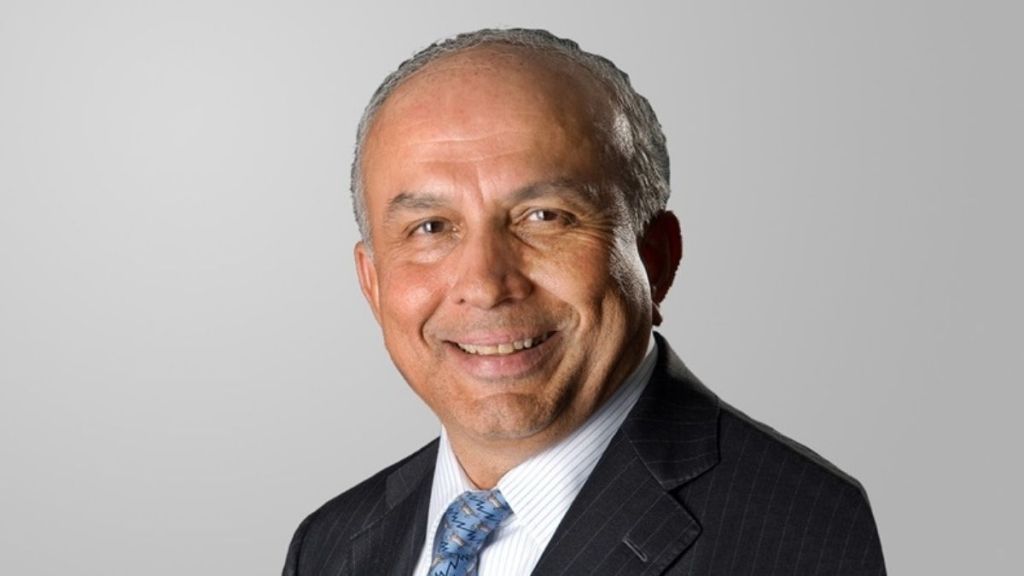

When Prem Watsa arrived in Canada from Hyderabad in 1972, he had, by his own account, just $8 in his pocket. More than five decades later, the man who once sold air conditioners and furnaces door to door to fund his education has pulled off one of India’s biggest banking deals: Fairfax Financial Holdings‘ Rs 52,878-crore acquisition of a controlling stake in IDBI Bank.
For the 76-year-old billionaire, the journey has been anything but conventional. Watsa had little desire to leave India. It was his father’s persuasion that took him to Canada, where he did an MBA at the University of Western Ontario’s business school. His first break in investing came almost by accident. Of four candidates shortlisted for an analyst’s position at Confederation Life in 1974, Watsa was reportedly the only one who turned up for the interview. He got the job.
That chance beginning eventually produced one of the world’s most formidable value investors.
Dubbed the Warren Buffett of Canada, Watsa has spent four decades building an empire on a deceptively simple principle: buy businesses with enduring value and give them time to flourish. His intellectual influences include Benjamin Graham, Buffett and legendary contrarian John Templeton.
“Like Templeton, I take the long-term view, buy the best and short the worst,” Watsa has said.
His contrarian instincts were spectacularly vindicated during the 2008 global financial crisis. While much of Wall Street remained bullish, Fairfax had positioned itself defensively, including through credit protection that paid off handsomely when markets collapsed. The episode cemented Watsa’s reputation as an investor willing to stand apart from the crowd.
Contrarianism has not always paid, though. Fairfax’s bearish equity hedges, held for years after the crisis, cost it dearly during the long bull run of the 2010s, and Watsa finally dropped them in 2016. He has since acknowledged the mistake, a candour that has only added to his standing among shareholders.
IDBI Bank is his biggest Indian wager yet. Unlike private equity investors, who typically seek exits within five to seven years, Watsa prefers to own businesses for decades. Fairfax is built around insurance, whose float, the premiums collected before claims are paid, provides capital for long-term investments.
The resemblance to Buffett’s Berkshire Hathaway is unmistakable. Both built their fortunes on insurance and disciplined capital allocation. Their Indian trajectories, however, have diverged. Berkshire exited its Paytm investment in 2023, while Watsa has steadily deepened his exposure to India.
His Indian journey began in 2001, when Fairfax partnered with ICICI Bank to set up ICICI Lombard General Insurance. Starting with 26%, Fairfax later raised its stake to 35% before exiting completely by 2019.
In 2015, he listed Fairfax India Holdings in Toronto as a dedicated vehicle for Indian investments. Through it and other entities, Watsa has since assembled interests spanning airports, logistics, chemicals and financial services.
Bengaluru International Airport illustrates his patience particularly well. Fairfax progressively increased its investment, eventually securing around 74% ownership of an asset whose value has grown with India’s air traffic. It also acquired roughly 91% of National Collateral Management Services, an agricultural storage and collateral management company.
Banking, however, presents a different challenge. Fairfax already holds a significant stake in CSB Bank, and regulatory restrictions mean it must resolve the overlapping ownership within two years of signing the IDBI share purchase agreement, potentially through a merger or divestment, a call that will test his famed patience.