


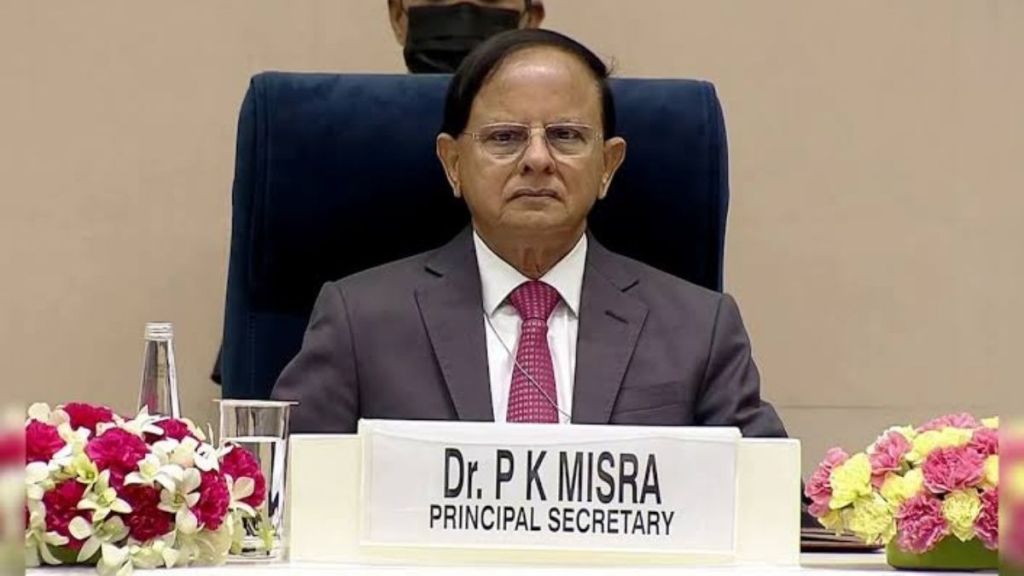

India will need a deeper and more diversified financial system to finance the next phase of growth, with stronger banks complemented by deeper corporate bond markets, foreign direct investment and infrastructure funds for its development ambitions, Principal Secretary to the Prime Minister PK Mishra said on Wednesday.
“The financial system must now increasingly move from accommodating growth to enabling growth,” Mishra said virtually, addressing the SBI Banking & Economics Conclave in Mumbai. He said India will need to mobilise very large volumes of capital for infrastructure, manufacturing, urbanisation, energy transition, enterprise and innovation.
“Banks will, of course, remain central. But a much larger and more sophisticated economy cannot be financed by banks alone,” it said. The financial system will therefore need stronger channels to convert domestic savings into productive investment, alongside greater bond-market liquidity and a larger role for institutional investors.
He also stressed the need to attract foreign direct investment at a time when global capital is increasingly mobile. “We need to focus on foreign direct investment,” he said, calling for stability of tax policy, reliable contracts and logistics, and clearances that actually clear. These, he said, would be important as India seeks to strengthen its external accounts and expand its productive capacity.
The next phase of India’s industrial journey, meanwhile, will have to go beyond manufacturing capacity. The country needs greater domestic value addition, stronger component ecosystems, design capabilities, intellectual property and globally competitive Indian brands.
“The journey must move from make in India to design in India, innovate in India, and ultimately lead from India,” Mishra said.
This transition will also require a change in how capital is allocated. “Capital markets, our venture ecosystem, and our banks must be equally willing to finance ideas and not merely factories,” he said, noting that innovation is inherently uncertain and therefore difficult to finance through conventional lending.
The reconfiguration of global supply chains, opening of markets through trade agreements and technological changes in the location of production provide an opportunity for India to emerge as a major production and innovation hub rather than remain primarily a large market.
The financial system will also have a role in supporting India’s growing international economic presence. GIFT IFSC can facilitate international financial activity, while wider settlement of trade in rupees and the expansion of Indian payment platforms can strengthen India’s role in global financial infrastructure.