


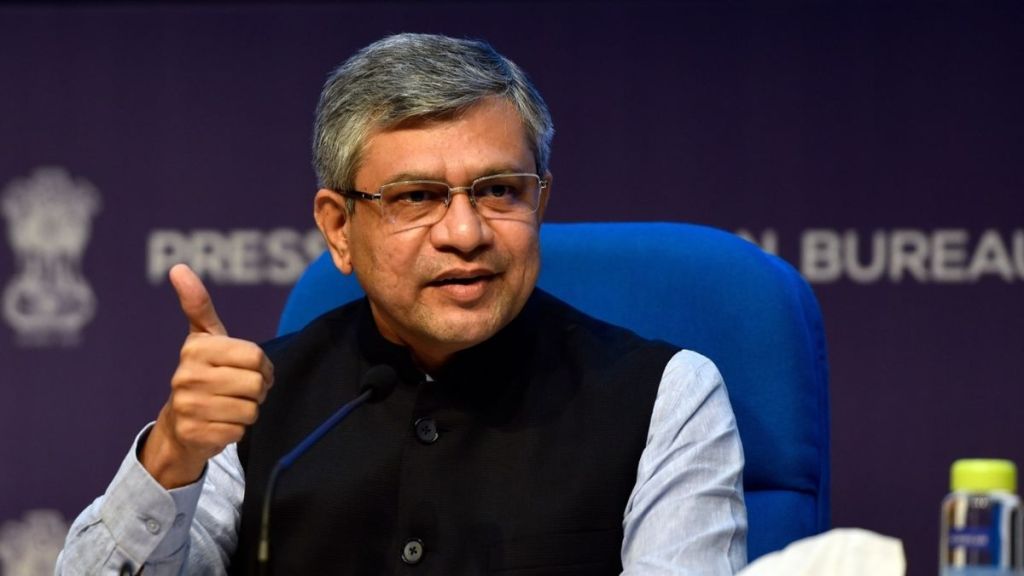

Union Minister for electronics and IT, Ashwini Vaishnaw highlighted on Wednesday that the world should brace for a rougher economic stretch, given tech disruptions, artificial intelligence and financial risks. India, he said, is working to insulate its growth from those shocks.
Speaking at the Bloomberg New Economy Forum 2026, Vaishnaw said that technology supply chains will remain spread across many countries, but governments and companies must keep reassessing whom they depend on so that no single country or firm becomes a weak point.
“The global value chains (GVCs) will definitely be multi-border, multi-country, multi-geography. That is the nature of this industry, that will remain as such… strategic dependencies — which are the countries you can trust, which are the places where you believe that your production, your design, your dependency on a particular country or a company – doesn’t make you lose your resilience. Those are the decisions which will have to be taken again and again, continuously, evaluate the partners,” he said.
Vaishnaw said high debt levels in developed economies could begin to unravel within three to five years. By then, he added, artificial intelligence would already have disrupted employment, particularly in the services sector, where the way people work is changing. Together, he said, these pressures could make the coming years extremely challenging, and everyone needs to be prepared for the turbulence ahead.
He added that trust is becoming as important as price when choosing suppliers. Rising cybersecurity threats and the concentration of certain semiconductor segments in a few hands have sharpened that concern.
He added that the country’s dependence on critical materials is among the biggest vulnerabilities in the country’s push for technological sovereignty. Dependence is deepest in materials, he said, and the fact that their supply is concentrated in just a few countries makes it a serious challenge. He singled out the chemicals, gases, substrates and other inputs used in semiconductor manufacturing as areas that need more attention.
The minister noted that countries with mature materials ecosystems took twenty years or more to build them, and said India cannot wait that long. “We don’t have that luxury of time,” he said. India, he stressed, must quickly develop in-house expertise to understand, handle, manufacture, process and store critical materials.