


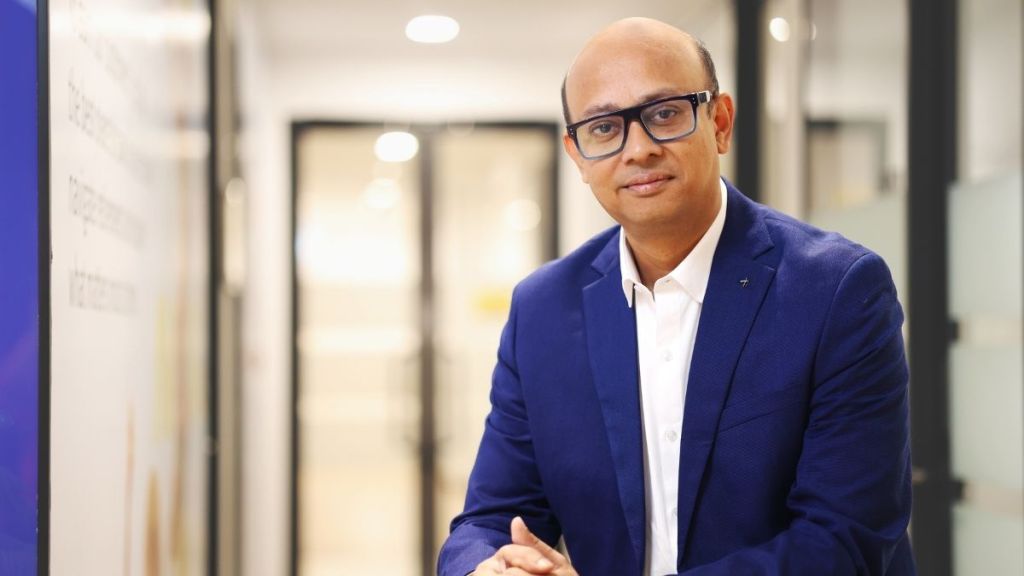

The full takeover of its India life insurance subsidiary from Dabur Invest Corp gives UK-based insurer Aviva a greater control over capital allocation and strategic decisions. Asit Rath, chief executive and managing director of Aviva Life Insurance Company India, speaks to Narayanan V about the company’s growth plans, a possible foray into health insurance, and its product and distribution strategy. Excerpts:
Aviva has acquired the remaining 26% stake in Aviva India. How has that changed your future strategy?
We have had a great partnership with Dabur (since 2001). Even in the last four years, when we had to take difficult decisions on reducing our distribution costs, there was not any problem. At the same time, what it really matters is the flow of capital.
In the last three years, we did not require any capital to sustain or grow our business. But in case we get some really good organic or inorganic opportunities and we need to bring in capital, those decisions can be taken much faster. Our focus now is to create a business in India comparable to those in the UK, Canada or other places. To do that, we need to be very predictable, have a very clean business and show the headquarters in the UK that our business practices are pristine and the quality of business is improving.
Do you have plans to enter the health insurance segment?
Our existing licence allows us to create some defined-benefit health products like critical illness products. We are trying to create a reimbursement-led health product, which our present licence allows us to do. Once we see the velocity of claims and get better at underwriting, we would definitely want to go into health insurance. If you have strong internal distribution, a health insurance composite licence makes much more sense as the same distribution can be leveraged to sell health and protection products.
What is your current product and distribution mix?
Our channel mix is 33% each across bancassurance, agency and direct. The direct business is not D2C digital — a direct employee visits existing customers and does cross-selling. So, 66% of our channel mix is proprietary, which means we control 66% of our own business in terms of a close monitoring of selling practices. We also have a partnership with Bank of Maharashtra. Our current product mix comprises 20% traditional (endowment) products and 60-65% ULIPs. The product mix and channel mix will remain the same. This is a very comfortable position to be in. We don’t have any huge concentration risk.
Irdai will come out with a consultation paper for distribution reform. How will it affect your business?
We, in fact, are big proponents of that regulation. We feel everybody is outdoing others trying to give more commissions to the distributor. Staggering of the distribution commission, which is a very large expense for us, will allow us to put more money into marketing and create more awareness around protection and pension products. I think it’s going to be great news for players like us.
What are your long-term growth plans?
The most important metric for us is 13th-month to 61st-month persistency ratios. Our 13th-month persistency is around 70%; we want to hit 80% in the medium term. Our 61st-month persistency is in the 40s. We want this to cross 50. That’s our target for the next two-three years. In terms of new business premium, I would like to see ₹500 crore in the next two-three years, with ₹300 crore in retail and ₹200 crore in the group business.