


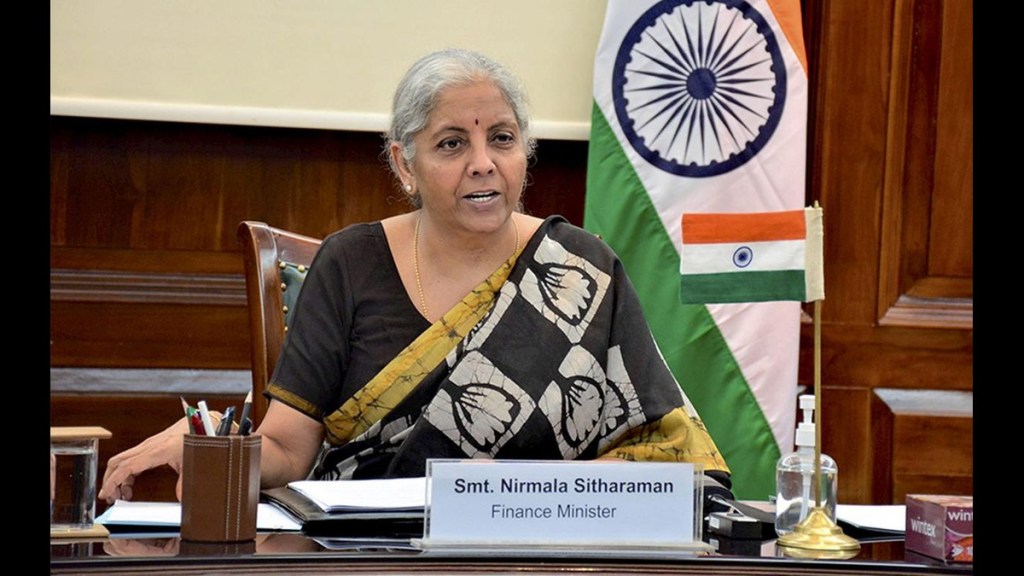

Finance Minister Nirmala Sitharaman on Tuesday said Indian businesses, particularly family-run enterprises, need to strengthen their management capabilities and build institutions that can outlast individual founders as the economy enters a new phase of growth.
Trust between businesses cannot be demanded but must be built through the conduct of both sides, Sitharaman said while addressing an event organised by the All India Management Association (AIMA) here.
“Businesses must engage constructively with government and regulators. Legal recourse will always remain available, but every disagreement need not begin as litigation,” she said, speaking on corporate governance and resilience.
She said the challenge of institutionalisation was equally relevant to family businesses. As companies grow, founders need to move beyond personally managing every function and establish systems for delegation, professional decision-making and succession.
The objective, the finance minister said, should be to preserve entrepreneurial energy while creating professionally managed and enduring corporations.
“A large share of India’s MSMEs and mid-sized enterprises are family-owned. Many have strong products, loyal customers and significant growth potential, but expansion can be held back by unclear roles, succession disputes, informal decision-making and disagreements within the family,” she said.
“The challenge is often not entrepreneurship, but institutionalisation. We need professionalisation: separating ownership from management, defining responsibilities, preparing the next generation, and resolving conflicts before they affect the business itself.”
India currently has more than 230,000 Department for Promotion of Industry and Internal Trade (DPIIT)-recognised startups, with more than 120 companies having crossed the billion-dollar valuation mark.
“Over the next 20 years, the challenge is not simply to keep creating more startups. It is to see how many of today’s startups can become large, professionally managed and enduring corporations,” she said.
The minister said AIMA and established corporate leaders could help these enterprises make the difficult transition from “founder-led ventures to institution-led companies — without losing the entrepreneurial energy that created them in the first place.”
“As we work towards Viksit Bharat by 2047, the contribution of Indian management will be measured by the quality of enterprises and institutions we build today. Let us therefore build not only bigger companies, but better companies — competitive, innovative, trusted and resilient enough to lead India through the decades ahead,” Sitharaman said.
Sitharaman linked this corporate transformation to broader changes in the Indian economy. With global trade and supply chains becoming less predictable, resilience, she said, cannot mean economic isolation. Instead, India needs stronger domestic capacity, greater industrial scale, fiscal strength and businesses capable of absorbing external shocks.