


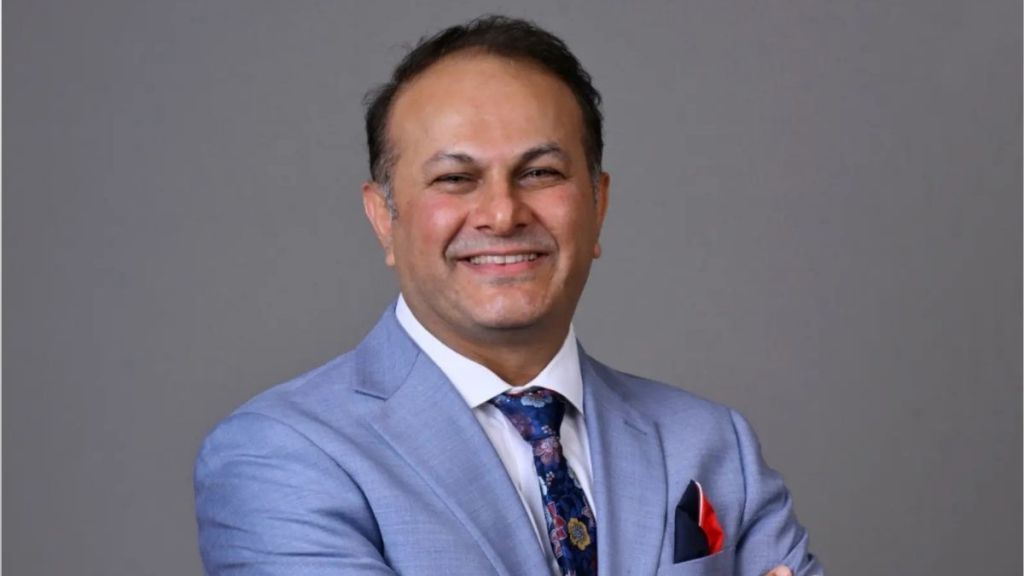

Aditya Birla Housing Finance is targeting a 15% return on equity (ROE) as it scales up its loan book and improves operating efficiency. Pankaj Gadgil, MD & CEO, Aditya Birla Housing Finance, told Kshipra Petkar and Christina Titus that the lowest-ticket informal-income segment could rise from around 6% of the portfolio to 11% over the next 8-10 quarters.
Q. What is the growth outlook for Aditya Birla Housing Finance over the next two years?
We have publicly stated that we want to take AUM to Rs 1 lakh crore over the next 8-10 quarters. That implies a CAGR of 25-40%, depending on whether we get there in 2 or 2.5 years. We want to achieve this responsibly, while maintaining asset quality and improving profitability. We are targeting a 15% ROE, with ROA reaching about 2.4%.
Q. What are the key levers to achieve this growth?
This year, we are focusing on expanding capacity and presence. Currently we have 209 points of sale and will add a minimum of 100 branches this year, of which 67 have already been launched. We have also added around 1,000 employees, taking our employee base to about 5,900 currently.
Q. Will the company require fresh capital to support this growth?
The Rs 2,750 crore capital infusion from Advent International should be sufficient for the next 18-24 months as we move towards Rs 1 lakh crore of AUM. However, if we maintain a 35-40% CAGR, we will require additional capital after two years.
Q. How do you see borrowing requirements evolving?
If we move from around Rs 48,000 crore of AUM to Rs 68,000-70,000 crore, we will need incremental borrowing of around Rs 20,000-22,000 crore. We will continue to diversify our liabilities. NCDs account for about 45% of our liability profile, term loans 32%, NHB funding 12% and short-term funding 11%.
Q. Are you looking to change the portfolio mix between prime, affordable and construction finance?
We have decided to remain a full-stack player. Currently, around 47% of our portfolio is prime, 38% affordable and 15% construction finance. We don’t expect a significant change in this mix. Prime could move to around 45%, while construction finance will remain around 15-16%. Within affordable housing, the lowest-ticket informal-income segment currently accounts for around 6% of the portfolio. We see this increasing to about 11% over the next 8-10 quarters.
Q. How important will AI be in improving productivity?
AI is a significant lever. We currently have 22 AI use cases in housing finance, of which 13 are live, spanning acquisition, underwriting, portfolio management, customer service, sales coaching, software development, audit and compliance. Our objective is to improve productivity even as we add capacity.
Q. What kind of efficiency gains are you targeting from technology and AI?
Our cost-to-loan-book ratio has declined from 2.93% at the end of FY25 to around 2.21%. Our ambition over the next 8-10 quarters is to bring this down to 1.7%. Technology, digital and AI will be critical to achieving that.
Q. Since you are also the Head of Digital Platforms and Payments Strategy at Aditya Birla Capital, what impact are you seeing from AI across the group?
We are seeing impact across businesses. In health insurance, AI now processes nearly 74% of cashless claims, while more than 35% of pre-authorisation requests are processed straight-through. In life insurance, 100% of new-business processing is digital, while the ZARA bot collected around Rs 411 crore in renewal premium during Q1 FY27. Across the business, agentic voice bots have enabled 90%+ first-call resolution and generated more than Rs 1,500 crore in impact across renewal premium, GMV (gross merchandise value) and AUM. In mutual funds, the Disha platform has contributed to 12% incremental portfolio creation.
Q. What is the next big focus area in AI?
We are building an enterprise-wide knowledge layer so that data created for one use case can be used across others. We are also focusing on ontology and semantic layers, data engineering and APIs that allow AI agents to interact with our technology platforms.