


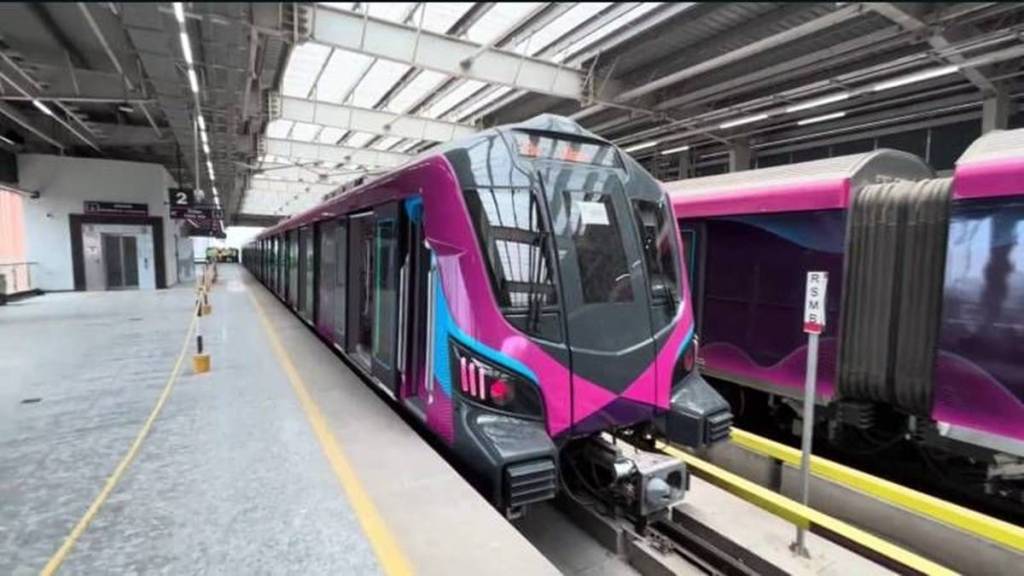

Pune’s public transport network is set to get a new addition with the opening of Metro Line 3, connecting the Hinjawadi IT hub with Shivajinagar in the city.
The 23.3-km corridor will pass through several residential, commercial and employment areas, providing commuters with another option for daily travel.
Union Minister of State for Civil Aviation and Cooperation Murlidhar Mohol announced that Prime Minister Narendra Modi will virtually inaugurate the Pune Metro Line 3 on November 3, 2026.
Mohol shared the update on X, highlighting the importance of the project for IT professionals, students and thousands of people who commute across Pune every day.
Pune Metro Line 3: Route and all 23 stations
Pune Metro Line 3 will cover 23.3 km and have 23 stations. The entire corridor will be elevated, connecting Maan in the Hinjawadi area with District Court in central Pune.
The 23 stations along the route are Maan, Maan – MIDC Circle, Phase II, Maan Bus Depot, Hinjawadi Phase II – Circle II, Hinjawadi Phase II – Circle I, Padmabhushan Chowk, Shree Shiv Chhatrapati Shivaji Maharaj Chowk, Hinjawadi, Hinjawadi Phase I, Wakad Chowk, Shree Shiv Chhatrapati Sports Complex, Mahalunge, Mitcon Balewadi, R K Laxman Museum Balewadi, Balewadi High Street, Balewadi Phata, Baner Gaon, Baner Pashan Link Road, Aundh, Sakal Nagar, Savitribai Phule Pune University, Bhosale Nagar, Agriculture College, Shivaji Nagar and District Court, Pune.
A new metro route through Pune’s employment and residential hubs
One of the main advantages of the corridor will be improved access between Hinjawadi and central Pune. Hinjawadi is a major IT and employment hub, attracting thousands of employees from different parts of the city.
The new metro route will connect this employment centre with residential and commercial areas such as Wakad, Baner, Balewadi, Aundh and Shivajinagar.
The stations along the corridor will also provide access to educational institutions, business centres and residential neighbourhoods.
A new way around Pune’s peak-hour traffic jams
For people travelling to and from Hinjawadi, the new metro line will provide an alternative to road-based transport, particularly during busy office hours.
The IT hub attracts a large workforce every day, resulting in considerable movement of private vehicles and other traffic on connecting roads.
With a dedicated metro corridor, commuters will have another option besides cars, two-wheelers and buses. The shift towards public transport could help reduce dependence on private vehicles and ease pressure on busy roads.
The project is also expected to support more comfortable and predictable daily journeys for employees, students and other regular commuters.